Enter your ZIP to see whether this is legal to plant in your state, and whether it survives your winter.
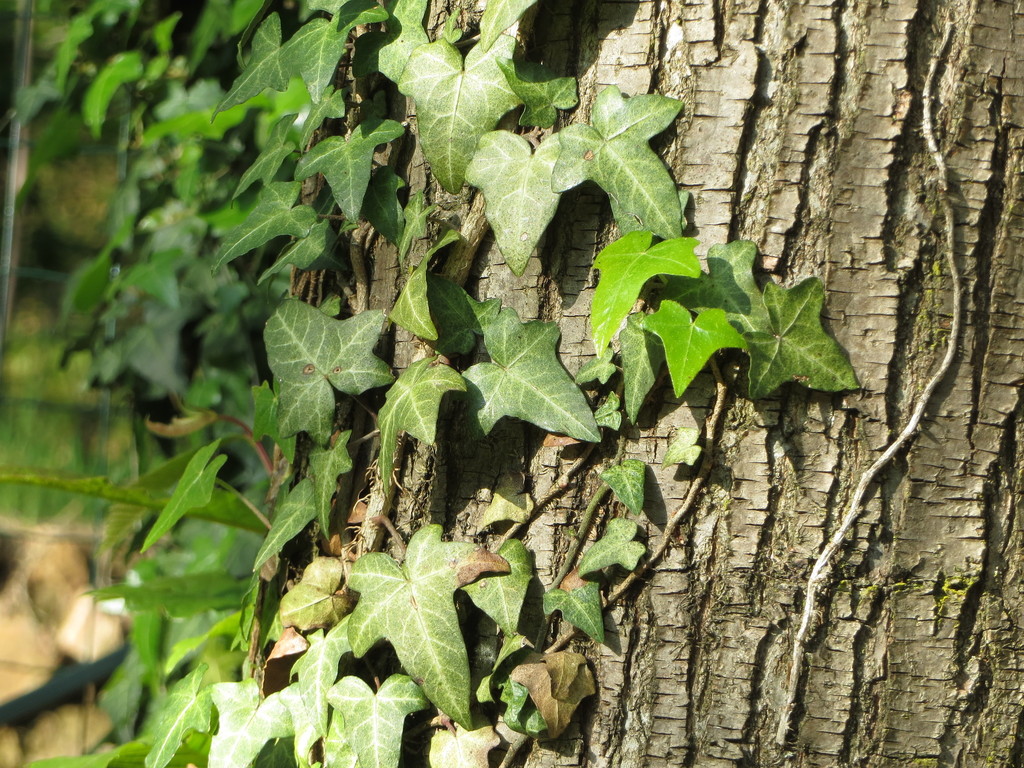
English ivy is generally rated fire resistant, though one eastern U.S.
Firewise program places it in its least favorable category.
Five of six sources favor English ivy. Ohio State University Extension gives the vine an L, the low band on its five-point flammability scale. For wildland-urban-interface gardens, the Generalitat Valenciana recommends English ivy among low-flammability climbers; Michigan State University Extension considers it wildfire-resistant and recommends it for Michigan’s climate. Utah State University Extension’s recommendation is conditional: English ivy can be firewise when properly placed, used, and maintained.
France’s Office national des forêts rates English ivy faible, or low, in overall fire sensitivity. That assessment brings foresters’ observations of fire damage together with laboratory measurements of inflammability, intensity, and combustion. In contrast, the USDA Forest Service Northeastern Area and participating state Firewise programs rate English ivy “Not Firewise,” the least favorable result on their four-part scale.
The balance supports calling English ivy fire resistant, but not treating that conclusion as universal. Fire behavior is also only part of the choice. Ohio State says the vine can be invasive, and it is flagged as invasive in three jurisdictions. English ivy may satisfy several fire-resistant planting guides while remaining unsuitable where invasive-plant rules or concerns apply.
Form
vine
Mature height
~40 ft
Light
Part sun
Water need
moderate
Rated in
California; Catalonia, Spain; Global; Mediterranean southeast France +6
On this lot
1. Fire evidence and conditions
Fire evidence
Fire-resistant — location does not change the cited classification.
The UC Forest Products Laboratory says the guide covers properties of common California landscaping plants and was prepared for California fire agencies. FireApproved publishes 130 exact owners at historical California publication scope. The report is a 1997 compilation, not a current endorsement, site rating, or independent test of every row.
Michigan State University Extension Bulletin E2948 is explicitly a list of wildfire-resistant landscape plants for Michigan and includes a Michigan-native field. FireApproved publishes 221 exact GBIF owners from 226 represented source rows and holds 15 complex or non-exact rows. This dated publication scope is not a current site-suitability determination.
Ohio State University Extension Bulletin 921 is an Ohio publication that describes Ohio fire seasons and landscape conditions and labels nativity to Ohio. FireApproved publishes 352 exact source-owning plant records from its eight rated tables. This historical publication scope does not assert current extension endorsement or that a listed plant suits every Ohio site.
Utah State University Extension states that this fact sheet selects examples for Utah landscapes and that they require proper placement and maintenance. FireApproved publishes 83 exact source owners at Utah publication scope. The table is not a site-specific planting clearance.
2. Why this plant is relevant here
State distribution
Documented in AL, AR, AZ, CA, CT, DC, DE, FL, GA, HI, ID, IL, IN, KY, LA, MA, MD, MI, MO, MS, NC, NJ, NY, OH, OR, PA, SC, TN, TX, UT, VA, WA, WV.
Native range
Introduced / established
35 sourced range or established records. This is not an invasive warning.
USDA hardiness
2 applicable cited hardiness statements overlap but have different boundaries; compare each complete source row.
3. Legal, ecological, and broader status
Legal-list status
1 legal-list record; the Place chip matches exact scope.
Seed-list status
Reported invasive here
3 ecological invasive reports.
Broader regional context
Federal context
How to read this page
The status above is computed from the cited rows below: independent recommendations can support a fire-resistant result, an avoid row can produce keep-away, and disagreement stays visible as conflict. Placement notes preserve each source’s own scheme rather than translating unlike rules into one scale. This is evidence about a plant, not permission to plant it in every part of the defensible space; Zone 0 remains noncombustible.
Native and introduced range evidence
These are exact U.S. botanical-area records from the cited range source. Native and
introduced describe biogeographic relationship, not fire performance or planting approval.
Doubtful and extinct rows stay visible but do not count as current presence.
The lossless worldwide derivative is retained once in the research corpus; object pages repeat only exact U.S. areas needed by the local lens. The JSON twin carries the same page assertions.
Plant hardiness evidence
These values describe the plant source. Your ZIP zone comes from the separate 2023 USDA
Plant Hardiness Zone Map. Whole-zone values stay whole-zone, and a single unresolved value
is not treated as a tolerance range. Different source boundaries stay separate: overlapping
statements are compared independently, while only ranges with no shared zone are called a conflict.
Source prints 5 · single-value meaning unresolved · whole zone precision · source stated
Source taxon: Hedera helix · exact match.
Source location: Cold Hardiness Zone field in the recovered selector record.
Not used for comparison: The recovered selector prints one Cold Hardiness Zone value but does not define it as a minimum threshold or a one-zone range.
Placement rules below use each source's own distances or named zones, tied to its rating.
They are not interchangeable with the directory's current Zone 0 guidance.
Eastern United States Fire Performance Plant Selector: Landscape Zone 3 — 10–30 ft from the structure; thin vegetation, remove debris, and minimize plant massing [Fire Performance Plant Selector landscape zone] (with its avoid rating)
Fire-Retardant Plants for Brush Fire Prevention in Hillsi…: Category 4 [la-arboretum-1970-leaf-moisture-fire-retardance] (with its recommendation)
Guía de pirojardinería: suitable inside or outside the 25-metre maximum-risk zone [girona-2020-iuf-25m-suitability] (with its recommendation)
Defensible Space Landscaping in the Urban/Wildland Interf…: Chapter 4, Landscape Vegetation Database [ucfpl-1997] (mid-scale rating)
The evidence
Grouped by what each source concluded. Primary evidence rated the plant itself
(a lab, field program, or original curation); corroboration compiled or
republished another source's rating and resolves to its root lineage.
The fiche's overall sensitivity combines experimental-bench inflammability, intensity, and combustion measurements with foresters' observations of fire damage.
“CATEGORY 4 — LEAST FIRE RETARDANCE Plants with medium leaf moisture content capacity (60-70%)”
· condition: green
Hedera helix (English Ivy) is one of 30 low-growing plants in the source's recommended Table 1. The category reflects leaf moisture capacity under normal garden conditions at the Arboretum.
Hedera helix is rated “MUY RECOMENDADA” by the guide's qualitative IUF garden-suitability method. The method assumes species-specific care and integrates fire evidence with fuel structure, maintenance, origin, invasiveness, and expert fire-service experience.
13 cited rows from this source; its identity, lineage and tier are stated once.
Primary study Dahanayake2018: Dahanayake, K. C., & Chow, C. L. (2018). Moisture Content, Ignitability, and Fire Risk of Vegetation in Vertical Greenery Systems. Fire Ecology, 14, 125-142.
Shared row context: plant part leaves; fuel live; predrying no; device calorimeter; site Dahanayake2018-1; sampling ND.
FLAMITS record 9686; Ignitability measurement; plant part leaves; fuel live; predrying no; device muffle furnace; site Murray2013-1; sampling march to april. Primary study Murray2013: Murray, B. R., Hardstaff, L. K., & Phillips, M. L. (2013). Differences in leaf flammability, leaf traits and flammability-trait relationships between native and exotic plant species of dry sclerophyll forest. PLoS One, 8, e79205.
Primary study Salvo2015: Salvo-Aires, F. (2015). Effects of woody weeds on fuels and fire behaviour in Eastern Australian forests and woodlands. PhD. Dissertation. University of Sydney.
Shared row context: plant part leaves; fuel live; predrying yes; device calorimeter; site Salvo2015-1; sampling ND.