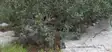
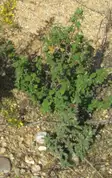
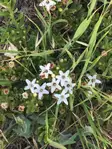
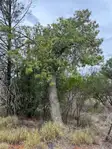
finger hakea
Hakea dactyloides
A genus split is not a placement verdict.
Is this one for your yard?
Enter your ZIP to see whether this is legal to plant in your state, and whether it survives your winter.
- Form
- shrub
- Region
- Australia
- Rated in
- Global
United States / Grow / finger hakea
Hakea dactyloides
A genus split is not a placement verdict.
Is this one for your yard?
Enter your ZIP to see whether this is legal to plant in your state, and whether it survives your winter.
The status above is computed from the cited rows below: independent recommendations can support a fire-resistant result, an avoid row can produce keep-away, and disagreement stays visible as conflict. Placement notes preserve each source’s own scheme rather than translating unlike rules into one scale. This is evidence about a plant, not permission to plant it in every part of the defensible space; Zone 0 remains noncombustible.
FLAMITS: FLAMmability plant traiTS database
Primary study Grootemaat2015: Grootemaat, S., Wright, I. J., Bodegom, P. M., Cornelissen, J. H., & Cornwell, W. K. (2015). Burn or rot: leaf traits explain why flammability and decomposability are decoupled across species. Functional Ecology, 29, 1486-1497.
“time to flaming (s): 5.79”
FLAMITS record 4073; Ignitability measurement; fuel dead; predrying no.
“flaming duration (s): 5.7”
FLAMITS record 4105.
“smouldering duration (s): 28.88”
FLAMITS record 4137.
“burning duration (s): 34.58”
FLAMITS record 4169.
“time to flaming (s): 12.58”
FLAMITS record 4201; Ignitability measurement; fuel live; predrying no.
“burning duration (s): 34.81”
FLAMITS record 4233.
“smouldering duration (s): 27.95”
FLAMITS record 4265.
“flaming duration (s): 6.86”
FLAMITS record 4297.
“time to flaming (s): 3.4”
FLAMITS record 4328; Ignitability measurement; fuel live; predrying yes.
“flaming duration (s): 8”
FLAMITS record 4358.
“smouldering duration (s): 27.7”
FLAMITS record 4388.
“burning duration (s): 35.7”
FLAMITS record 4418.
Primary study Grootemaat2017a: Grootemaat, S., Wright, I .J., Van Bodegom, P. M., & Cornelissen, J. H. (2017). Scaling up flammability from individual leaves to fuel beds. Oikos, 126, 1428-1438.
“maximum flame temperature (°C): 752.47”
FLAMITS record 4474; Combustibility measurement.
“rate of burning spread (cm/s): 0.15”
FLAMITS record 4498; Sustainability measurement.
“burnt biomass (%): 91.17”
FLAMITS record 4524; Consumability measurement.
Primary study Krix2019: Krix, D. W., Phillips, M. L., & Murray, B. R. (2019). Relationships among leaf flammability attributes and identifying low-leaf-flammability species at the wildland-urban interface. International Journal of Wildland Fire, 28, 295-307.
“time to flaming (s): 10.7”
FLAMITS record 5976.
“time to smoke (s): 6.5”
FLAMITS record 6063.
“smoke duration (s): 7.3”
FLAMITS record 6150.
“burning duration (s): 16”
FLAMITS record 6210.
Primary study Murray2023: Murray, B. R., Hawthorne, T., Curran, T. J., Krix, D. W., Wallace, M. I., Young, K., ... & Webb, J. K. (2023). Shoot flammability patterns among plant species of the wildlandurban interface in the fire-prone Greater Blue Mountains World Heritage Area. International Journal of Wildland Fire, Online early.
“time to flaming (s): 2.88”
FLAMITS record 19389; Ignitability measurement.
“burning duration (s): 30.66”
FLAMITS record 19390; Sustainability measurement.
“maximum flame temperature (°C): 425.22”
FLAMITS record 19391; Combustibility measurement.
“estimated burnt biomass (%): 23.55”
FLAMITS record 19392; Consumability measurement.