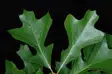
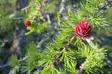
Home / Plants / Grow / Diospyros hispida
Diospyros hispida
Diospyros lasiocalyx
Your local evidence lens
Separate evidence questions, never one approval badge
A genus split is not a placement verdict. Set a ZIP to read the local documented split.
1. Fire evidence and conditions
- Fire evidence
- Mixed evidence — location does not change the cited classification.
- Fire-performance conditions
- No test or rating condition is normalized.
- Fire ecology context
- No section-reviewed fire-ecology context is normalized.
- Placement evidence
- 0 source placement records; source schemes remain separate.
- Evidence regions
- Global
- Maintenance
- No sourced horticultural maintenance assertion is normalized; fire-test conditions do not supply maintenance advice.
2. Why this plant is relevant here
- State distribution
- No state distribution is normalized.
- Native range
- No current cited or legacy state native range is normalized.
- Introduced / established
- No introduced or established row is normalized; that does not prove native status.
- USDA hardiness
- No hardiness value is normalized.
3. Legal, ecological, and broader status
- Legal-list status
- Set a location for an exact legal-list result; source silence is not clearance.
- Seed-list status
- Set a location to compare the separate state noxious-weed seed layer.
- Reported invasive here
- No ecological invasive report is normalized; that does not prove noninvasiveness.
- Broader regional context
- Aggregate AK, HI, and L48 evidence is shown only as regional context, never as an exact-state finding.
- Federal context
- Federal designations remain separate from state legal-list results.
How to read this page
The status above is computed from the cited rows below: independent recommendations can support a fire-resistant result, an avoid row can produce keep-away, and disagreement stays visible as conflict. Placement notes preserve each source’s own scheme rather than translating unlike rules into one scale. This is evidence about a plant, not permission to plant it in every part of the defensible space; Zone 0 remains noncombustible.
- Form
- tree
- Region
- Brazil
- Rated in
- Global
- Family
- Ebenaceae
- Evidence
- 4 cited sources
The evidence
Listed without a rating (4)
-
FLAMITS: FLAMmability plant traiTS database
-
“time to flaming (s): 20.35”
FLAMITS record 11995; Ignitability measurement; plant part twigs; fuel live; predrying no; device epiradiator; site Santos2018b-1; sampling ND. Primary study Santos2018b: Santos, J. F. L., Machado, I. E. S., Soares, R. V., Batista, A. C., Neves, P. C., & Tetto, A. F. (2018b). Flammability of native species of two Brazilian ecosystems. In: D. X. Viegas, Advances in Forest Fire Research 2018 (pp. 227-231), Portugal, University of Coimbra.
-
“burning duration (s): 11.45”
FLAMITS record 12006; Sustainability measurement; plant part twigs; fuel live; predrying no; device epiradiator; site Santos2018b-1; sampling ND. Primary study Santos2018b: Santos, J. F. L., Machado, I. E. S., Soares, R. V., Batista, A. C., Neves, P. C., & Tetto, A. F. (2018b). Flammability of native species of two Brazilian ecosystems. In: D. X. Viegas, Advances in Forest Fire Research 2018 (pp. 227-231), Portugal, University of Coimbra.
-
“flame height (cm): 15.21”
FLAMITS record 12017; Combustibility measurement; plant part twigs; fuel live; predrying no; device epiradiator; site Santos2018b-1; sampling ND. Primary study Santos2018b: Santos, J. F. L., Machado, I. E. S., Soares, R. V., Batista, A. C., Neves, P. C., & Tetto, A. F. (2018b). Flammability of native species of two Brazilian ecosystems. In: D. X. Viegas, Advances in Forest Fire Research 2018 (pp. 227-231), Portugal, University of Coimbra.
-
“ignition frequency (%): 32”
FLAMITS record 12028; Ignitability measurement; plant part twigs; fuel live; predrying no; device epiradiator; site Santos2018b-1; sampling ND. Primary study Santos2018b: Santos, J. F. L., Machado, I. E. S., Soares, R. V., Batista, A. C., Neves, P. C., & Tetto, A. F. (2018b). Flammability of native species of two Brazilian ecosystems. In: D. X. Viegas, Advances in Forest Fire Research 2018 (pp. 227-231), Portugal, University of Coimbra.
-