Enter your ZIP to see whether this is legal to plant in your state, and whether it survives your winter.
Chinese hawthorn has a low-flammability tag, but the evidence does not establish a firm landscape fire-resistance verdict.
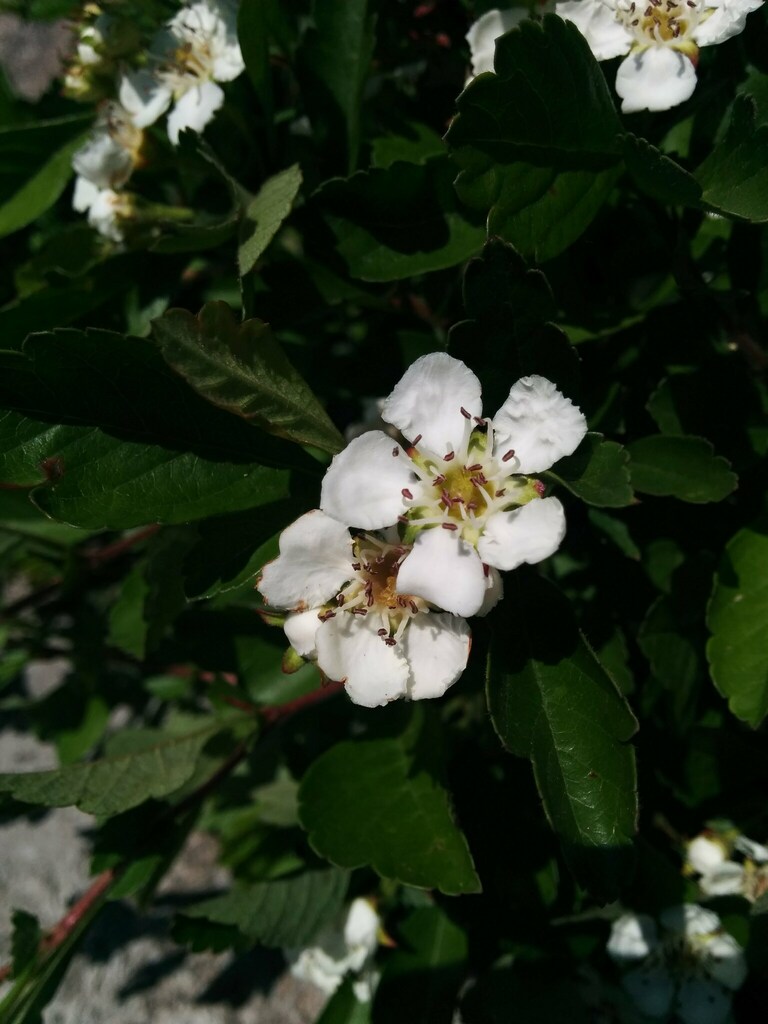
NC State's Plant Toolbox lists Crataegus pinnatifida as low flammability. That favorable tag belongs to Chinese hawthorn specifically. It should not borrow the stronger regional agreement available for other hawthorns, and the profile does not explain how its fire-risk category was assigned.
The laboratory evidence concerns prepared foliage. Shan and colleagues measured an ignition point using milled samples and a pilot ignition source, then combined physical and chemical properties in a comparative analysis. The authors explicitly caution that an individual property cannot evaluate flammability on its own. An ignition measurement therefore cannot serve as a temperature below which a planted tree is safe.
For garden selection, the Toolbox describes a preference for moist, well-drained loam, with drought tolerance once established. Those growing requirements help assess whether Chinese hawthorn suits a site. They do not turn the foliage experiment into proof of how its whole canopy would behave beside a house.
Form
tree
Rated in
Global; North Carolina / southeastern US
On this lot
1. Fire evidence and conditions
Fire evidence
Mixed evidence — location does not change the cited classification.
The status above is computed from the cited rows below: independent recommendations can support a fire-resistant result, an avoid row can produce keep-away, and disagreement stays visible as conflict. Placement notes preserve each source’s own scheme rather than translating unlike rules into one scale. This is evidence about a plant, not permission to plant it in every part of the defensible space; Zone 0 remains noncombustible.
Plant hardiness evidence
These values describe the plant source. Your ZIP zone comes from the separate 2023 USDA
Plant Hardiness Zone Map. Whole-zone values stay whole-zone, and a single unresolved value
is not treated as a tolerance range. Different source boundaries stay separate: overlapping
statements are compared independently, while only ranges with no shared zone are called a conflict.
Source location: Crataegus pinnatifida profile, USDA Plant Hardiness Zone field.
Where its sources say to plant it
Placement rules below use each source's own distances or named zones, tied to its rating.
They are not interchangeable with the directory's current Zone 0 guidance.
North Carolina Extension Gardener Plant Toolbox: crataegus-pinnatifida [nc-toolbox-flammability-facet] (with its recommendation)
The evidence
Grouped by what each source concluded. Primary evidence rated the plant itself
(a lab, field program, or original curation); corroboration compiled or
republished another source's rating and resolves to its root lineage.
2 cited rows from this source; its identity, lineage and tier are stated once.
Primary study Shan2008: Shan, Y., Liu, N., & Shu, L. (2008). Flammability ranking of foliage species by factor analysis of physical and chemical pyric properties. Fire and Materials: An International Journal, 32, 371-382.
Shared row context: plant part leaves; fuel live; predrying no; site Shan2008-1; sampling ND.
“temperature at flaming (°C): 272”
FLAMITS record 12574; Ignitability measurement; device ignition temperature tester.
“calorific value (kcal/kg): 4457.93”
FLAMITS record 12575; Combustibility measurement; device calorimeter.