Enter your ZIP to see whether this is legal to plant in your state, and whether it survives your winter.
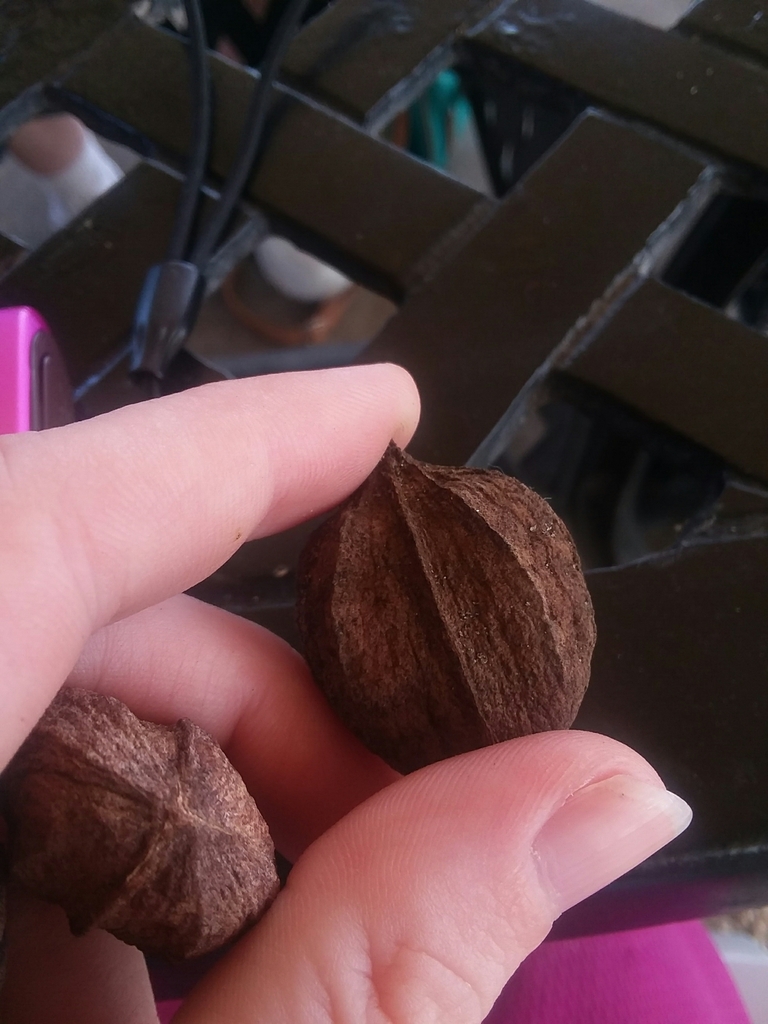
Hybrid hickory is not settled as fire resistant: one field trial warns against it, while four eastern and southeastern sources favor it.
Idaho Firewise gives hybrid hickory a fire-resistance score of 1 out of 10. On its scale, that score calls for keeping the tree 100 feet or more from a structure. This field-trial finding applies to southern Idaho and the Intermountain region.
The favorable assessments come from different kinds of guidance. University of Tennessee Extension lists hybrid hickory as a Firewise plant. The South Carolina Forestry Commission places hickory among less flammable plants with some fire resistance, while the Alabama Forestry Commission includes Carya species among suggested large hardwoods. A USDA Forest Service and state Firewise workbook gives hickory an “L” value attributed to FPS.
These sources are not applying one common scale. Idaho Firewise connects a numerical score to planting distance, Tennessee uses a binary plant table, and the South Carolina and Alabama commissions sort plants into broader landscaping categories. Differences in method and region may help explain the conflict, but they do not cancel it. Near a home, hybrid hickory should be treated as a disputed choice: eastern and southeastern programs favor it, while the Idaho field trial calls for substantial separation.
The Alabama Forestry Commission's five-page AFC-FP-04 booklet is an Alabama publication and contains 31 printed suggested or fire-prone plant occurrences. FireApproved publishes 27 exact species or genus owners and holds one infraspecific form plus two named cultivars; this historical source scope does not establish current site suitability for a particular Alabama property.
Southern Idaho (ID footprint); partial normalized coverage · 2013-11-08
The official database labels itself "For Southern Idaho" and describes Idaho residents at the urban-rangeland interface. FireApproved publishes 419 existing plant owners that cite its scored rows. This bounded Southern Idaho scope is regional context, not statewide coverage or a conclusion that the score transfers unchanged to every Idaho site.
South Carolina Forestry Commission publishes this explicitly as its Fire Smart Plant List for South Carolina. FireApproved publishes 63 exact genus owners from 72 unique common-name labels; unsafe common-name mappings and duplicates are not broadened. The brochure calls the list non-inclusive and does not establish species-level or site-specific suitability.
University of Tennessee Extension SP685 is Tennessee landscape guidance and publishes 78 represented plant owners. Most table rows are a carrier of Virginia Firescapes rather than an independent rating; Tennessee source scope does not change that lineage or establish site suitability.
2. Why this plant is relevant here
State distribution
Documented in ID.
Native range
Introduced / established
USDA hardiness
3. Legal, ecological, and broader status
Legal-list status
Seed-list status
Reported invasive here
Broader regional context
Federal context
How to read this page
The status above is computed from the cited rows below: independent recommendations can support a fire-resistant result, an avoid row can produce keep-away, and disagreement stays visible as conflict. Placement notes preserve each source’s own scheme rather than translating unlike rules into one scale. This is evidence about a plant, not permission to plant it in every part of the defensible space; Zone 0 remains noncombustible.
Where its sources say to plant it
Placement rules below use each source's own distances or named zones, tied to its rating.
They are not interchangeable with the directory's current Zone 0 guidance.
Fire Resistance of Plants Master Database: plantable at 100'+ from home [Idaho minimum planting distance] (with its avoid rating)
Eastern United States Fire Performance Plant Selector: Master Plant DB row 267 [lwf-2024-fps-carrier] (with its recommendation)
Landscaping Can Be Attractive & FIREWISE: TREES [SCFC Fire Smart plant-form sections] (with its recommendation)
Firewise Landscaping for Woodland Homes: Large sized hardwoods [Alabama Forestry Commission booklet section] (with its recommendation)
The evidence
Grouped by what each source concluded. Primary evidence rated the plant itself
(a lab, field program, or original curation); corroboration compiled or
republished another source's rating and resolves to its root lineage.