Enter your ZIP to see whether this is legal to plant in your state, and whether it survives your winter.
Common box is rated fire resistant overall, though two extension services give it high flammability ratings.
Four of six sources favor it: FireSmart BC approves it while flagging a need for more research, Michigan State University Extension considers it wildfire resistant, and the Generalitat Valenciana recommends it for low-flammability gardens.
The disagreement reflects different methods and settings. Ohio State University Extension assigns common box an H, the fourth band on its five-band expert scale. Virginia Cooperative Extension also assigns it an H on a three-point scale, but every evergreen tree and shrub in that source’s list receives the same rating. Those broad expert judgments differ from the INRA station in Avignon, which tested ignition monthly with an epiradiator. Its notes were 0 in May, 1 in June and July, and 2 for every month from August through April. On that source’s scale, scores from 0 through 2 support a recommendation.
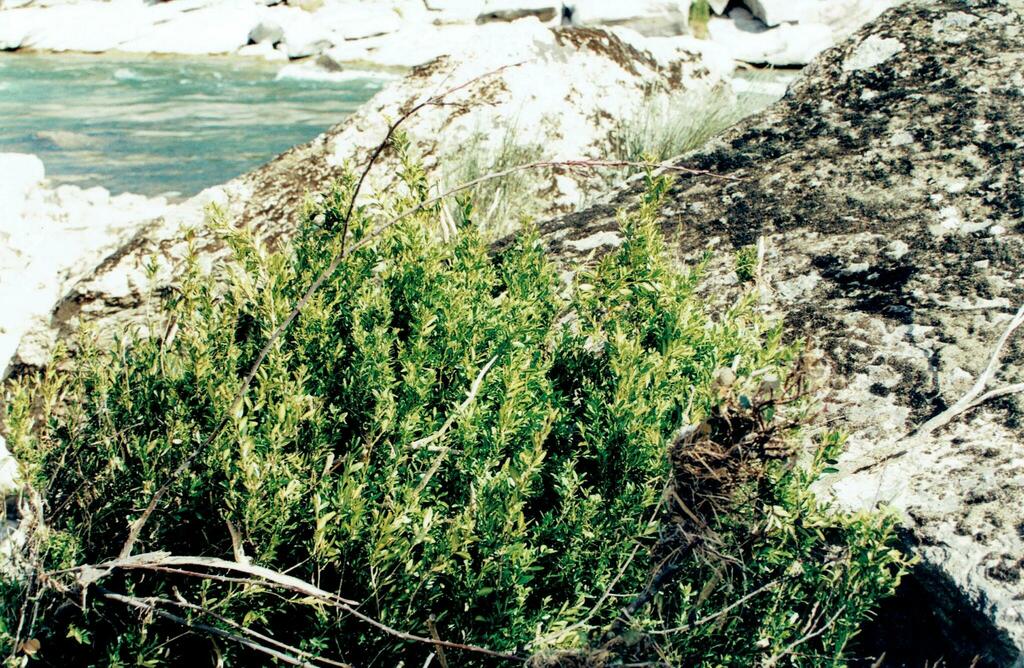
Common box belongs to the Buxaceae family, grows as a tree, and reaches about 25 feet at maturity. The balance of the findings supports calling it fire resistant, but the two high ratings prevent a blanket reassurance. FireSmart BC’s research flag adds another reason for care. Near a home, common box is better understood as generally supported by the cited authorities, with meaningful disagreement about how readily it may burn.
Form
tree
Mature height
~25 ft
Light
Part sun
Rated in
British Columbia; Catalonia, Spain; Global; Greece +7
On this lot
1. Fire evidence and conditions
Fire evidence
Fire-resistant — location does not change the cited classification.
British Columbia; Catalonia, Spain; Global; Greece; Mediterranean France / Provence; Mediterranean southeast France; Michigan / Great Lakes; Ohio / Midwest; Valencia, Spain / western Mediterranean; Virginia / Mid-Atlantic; eastern US
Maintenance
Typed publication scope: 3 scopes across 3 cited fire sources
Michigan State University Extension Bulletin E2948 is explicitly a list of wildfire-resistant landscape plants for Michigan and includes a Michigan-native field. FireApproved publishes 221 exact GBIF owners from 226 represented source rows and holds 15 complex or non-exact rows. This dated publication scope is not a current site-suitability determination.
Ohio State University Extension Bulletin 921 is an Ohio publication that describes Ohio fire seasons and landscape conditions and labels nativity to Ohio. FireApproved publishes 352 exact source-owning plant records from its eight rated tables. This historical publication scope does not assert current extension endorsement or that a listed plant suits every Ohio site.
Virginia Cooperative Extension's publication opens with Virginia wildfire conditions, identifies its Virginia Firewise Landscaping Task Force, and labels plants native to Virginia. FireApproved publishes 306 exact source owners. Publication scope does not establish parcel suitability or current endorsement of this archived 2009 list.
2. Why this plant is relevant here
State distribution
Documented in DC, DE, MD, NC, NJ, NY, OH, PA, TN, VA, WV.
Native range
Introduced / established
11 sourced range or established records. This is not an invasive warning.
USDA hardiness
Documented range 5–8.
3. Legal, ecological, and broader status
Legal-list status
Seed-list status
Reported invasive here
Broader regional context
Federal context
How to read this page
The status above is computed from the cited rows below: independent recommendations can support a fire-resistant result, an avoid row can produce keep-away, and disagreement stays visible as conflict. Placement notes preserve each source’s own scheme rather than translating unlike rules into one scale. This is evidence about a plant, not permission to plant it in every part of the defensible space; Zone 0 remains noncombustible.
Native and introduced range evidence
These are exact U.S. botanical-area records from the cited range source. Native and
introduced describe biogeographic relationship, not fire performance or planting approval.
Doubtful and extinct rows stay visible but do not count as current presence.
The lossless worldwide derivative is retained once in the research corpus; object pages repeat only exact U.S. areas needed by the local lens. The JSON twin carries the same page assertions.
Plant hardiness evidence
These values describe the plant source. Your ZIP zone comes from the separate 2023 USDA
Plant Hardiness Zone Map. Whole-zone values stay whole-zone, and a single unresolved value
is not treated as a tolerance range. Different source boundaries stay separate: overlapping
statements are compared independently, while only ranges with no shared zone are called a conflict.
Source prints 6 · single-value meaning unresolved · whole zone precision · source stated
Source taxon: Buxus sempervirens · exact match.
Source location: Cold Hardiness Zone field in the recovered selector record.
Not used for comparison: The recovered selector prints one Cold Hardiness Zone value but does not define it as a minimum threshold or a one-zone range.
5–8 explicit range · whole zone precision · source stated
Source taxon: Buxus sempervirens · exact match.
Source location: Table 1, shrub row.
Where its sources say to plant it
Placement rules below use each source's own distances or named zones, tied to its rating.
They are not interchangeable with the directory's current Zone 0 guidance.
Eastern United States Fire Performance Plant Selector: Landscape Zone 3 — 10–30 ft from the structure; thin vegetation, remove debris, and minimize plant massing [Fire Performance Plant Selector landscape zone] (mid-scale rating)
Firewise Landscaping: do not plant within 5 ft of structures (keep out of Zone 1) [OSU B921 source-category siting] (with its avoid rating)
Guía de pirojardinería: suitable inside or outside the 25-metre maximum-risk zone [girona-2020-iuf-25m-suitability] (with its recommendation)
Les franges perimetrals de protecció contra els incendis …: page 4 species-selection panel [catalonia-perimeter-strip-maintain-remove] (with its recommendation)
Κανονισμός Πυροπροστασίας Ακινήτων εντός ή πλησίον δασικώ…: section 5.4.2, Table 2δi [greece-2023-particularly-flammable] (with its avoid rating)
The evidence
Grouped by what each source concluded. Primary evidence rated the plant itself
(a lab, field program, or original curation); corroboration compiled or
republished another source's rating and resolves to its root lineage.
Buxus sempervirens is rated “MUY RECOMENDADA” by the guide's qualitative IUF garden-suitability method. The method assumes species-specific care and integrates fire evidence with fuel structure, maintenance, origin, invasiveness, and expert fire-service experience.
The fiche's overall sensitivity combines experimental-bench inflammability, intensity, and combustion measurements with foresters' observations of fire damage.
Source wording: “Sensibilité au feu : Moyenne”
Listed without a rating (11)Corroboration (11 rows from 1 source)
FLAMITS record 7882; Combustibility measurement; sampling ND.
“flammability value: 2”
FLAMITS record 7929; Ignitability measurement; sampling ND.
“flammability value: 2”
FLAMITS record 13310; Ignitability measurement; plant part leaves; fuel live; predrying no; device epiradiator; site Valette1990-1; sampling june to september. Primary study Valette1990: Valette, J.-C. (1990). Flammabilities of Mediterranean forest species. Effects on the combustibility of the forest communities inflammabilités des espèces forestières méditerranéennes. Conséquences sur la combustibilité des formations forestières. Revue forestière française, 42, 76-92.