Native and introduced assertions appear together in range evidence, while the cured experimental detail remains under test conditions. Those are separate dimensions of the record, not extra votes in the fire conflict. If their combined picture changes the planting choice, related plants offers cited same-form alternatives and leaves each dimension tied to its own evidence.
Questions
Why does this record show a conflict?
The computed recommendation is conflict. Ordering and sorting of fire resistance of tree leaves is one named lineage in that split, not a tie-breaker. Native and introduced range are both cited. Two ecological invasive reports, two hardiness assertions, and a cured test condition sit beside that split.
Alaska Division of Forestry opens with the wildfire threat to Alaskans and publishes Alaska firewise-landscape examples. FireApproved publishes 58 exact source owners from its 60 taxon entries and holds the taxon-free fern label. State publication scope does not establish suitability for every Alaska climate, site, or home-ignition-zone placement.
Ohio State University Extension Bulletin 921 is an Ohio publication that describes Ohio fire seasons and landscape conditions and labels nativity to Ohio. FireApproved publishes 352 exact source-owning plant records from its eight rated tables. This historical publication scope does not assert current extension endorsement or that a listed plant suits every Ohio site.
Virginia Cooperative Extension's publication opens with Virginia wildfire conditions, identifies its Virginia Firewise Landscaping Task Force, and labels plants native to Virginia. FireApproved publishes 306 exact source owners. Publication scope does not establish parcel suitability or current endorsement of this archived 2009 list.
2. Why this plant is relevant here
State distribution
Documented in CO, CT, DC, DE, IA, IL, IN, KY, MA, MD, ME, MI, NC, NH, NJ, NY, OH, OR, PA, VA, VT, WA, WI, WV.
Native range
Current cited native range in AK.
Introduced / established
12 sourced range or established records. This is not an invasive warning.
USDA hardiness
Documented minimum 3b; no upper limit is documented.
3. Legal, ecological, and broader status
Legal-list status
Seed-list status
Reported invasive here
2 ecological invasive reports.
Broader regional context
Federal context
How to read this page
The status above is computed from the cited rows below: independent recommendations can support a fire-resistant result, an avoid row can produce keep-away, and disagreement stays visible as conflict. Placement notes preserve each source’s own scheme rather than translating unlike rules into one scale. This is evidence about a plant, not permission to plant it in every part of the defensible space; Zone 0 remains noncombustible.
Native and introduced range evidence
These are exact U.S. botanical-area records from the cited range source. Native and
introduced describe biogeographic relationship, not fire performance or planting approval.
Doubtful and extinct rows stay visible but do not count as current presence.
The lossless worldwide derivative is retained once in the research corpus; object pages repeat only exact U.S. areas needed by the local lens. The JSON twin carries the same page assertions.
Plant hardiness evidence
These values describe the plant source. Your ZIP zone comes from the separate 2023 USDA
Plant Hardiness Zone Map. Whole-zone values stay whole-zone, and a single unresolved value
is not treated as a tolerance range. Different source boundaries stay separate: overlapping
statements are compared independently, while only ranges with no shared zone are called a conflict.
Source prints 4 · single-value meaning unresolved · whole zone precision · source stated
Source taxon: Betula pendula · exact match.
Source location: Cold Hardiness Zone field in the recovered selector record.
Not used for comparison: The recovered selector prints one Cold Hardiness Zone value but does not define it as a minimum threshold or a one-zone range.
Placement rules below use each source's own distances or named zones, tied to its rating.
They are not interchangeable with the directory's current Zone 0 guidance.
Eastern United States Fire Performance Plant Selector: Landscape Zone 3 — 10–30 ft from the structure; thin vegetation, remove debris, and minimize plant massing [Fire Performance Plant Selector landscape zone] (with its recommendation)
Fire Resisting Garden Plants for the Urban Fringe and Rur…: remove from the Building Protection Zone; avoid in the Fuel Modified Zone [Texas Building Protection Zone] (with its avoid rating)
Guía de pirojardinería: suitable inside or outside the 25-metre maximum-risk zone [girona-2020-iuf-25m-suitability] (with its recommendation)
Protect Your Home from Wildfire: Trees [Alaska DNR brochure sections] (with its recommendation)
The evidence
Grouped by what each source concluded. Primary evidence rated the plant itself
(a lab, field program, or original curation); corroboration compiled or
republished another source's rating and resolves to its root lineage.
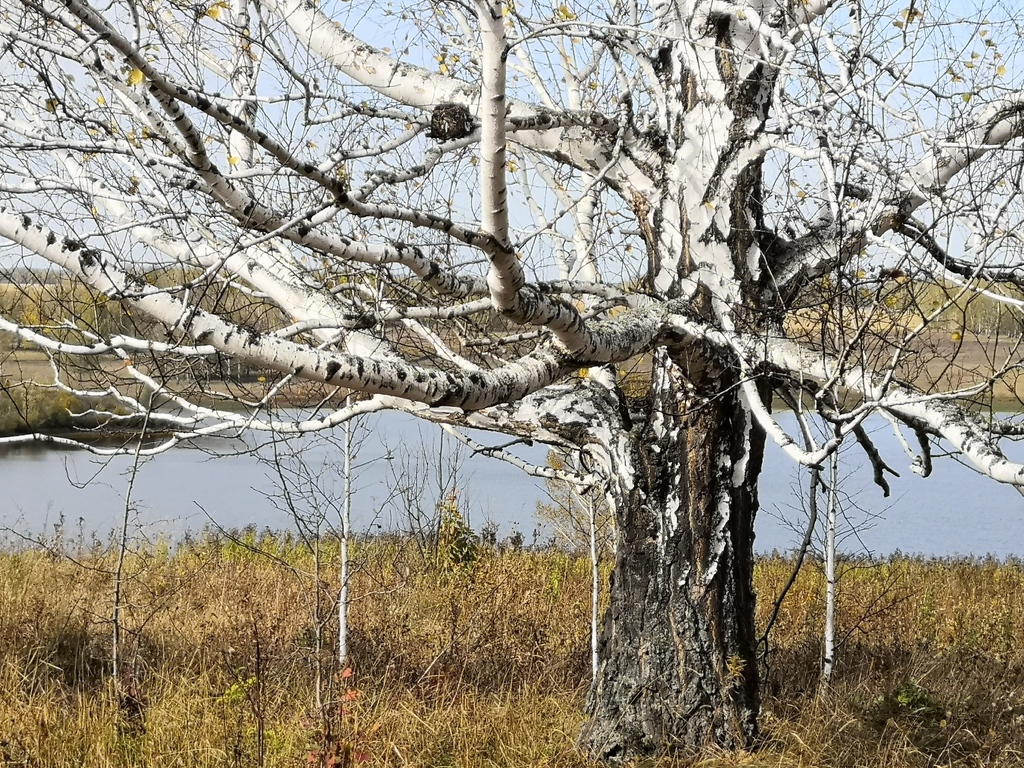
Betula pendula: Peeling papery bark and multi-trunk trees add fire potential. | Betula platyphylla 'Whitespire': Peeling papery bark and multi-trunk trees add fire potential.
Betula pendula is rated “MUY RECOMENDADA” by the guide's qualitative IUF garden-suitability method. The method assumes species-specific care and integrates fire evidence with fuel structure, maintenance, origin, invasiveness, and expert fire-service experience.
29 cited rows from this source; its identity, lineage and tier are stated once.
Primary study Cui2020a: Cui, X., Paterson, A. M., Wyse, S. V., Alam, M. A., Maurin, K. J. L., Pieper, R., ... Curran, T. J. (2020a). Shoot flammability of vascular plants is phylogenetically conserved and related to habitat fire-proneness and growth form. Nature Plants, 6, 355-359.
Shared row context: plant part branches; fuel all; predrying yes; device grill; site Cui2020a-1; sampling ND.
“ignition frequency (%): 100”
FLAMITS record 1342; Ignitability measurement.
“maximum sample temperature (°C): 490”
FLAMITS record 1536; Combustibility measurement.
“burning duration (s): 16.3”
FLAMITS record 1730; Sustainability measurement.
“estimated burnt biomass (%): 45.8”
FLAMITS record 1924; Consumability measurement.
Primary study Zhao2018: Zhao, W., van Logtestijn, R. S., van der Werf, G. R., van Hal, J. R., & Cornelissen, J. H. (2018). Disentangling effects of key coarse woody debris fuel properties on its combustion, consumption and carbon gas emissions during experimental laboratory fire. Forest ecology and management, 427, 275-288.
Shared row context: plant part litter; fuel all; predrying yes; device burning bench; site Zhao2018-1; sampling november and december.
Primary study Zhao2019: Zhao, W., van Logtestijn, R. S., van Hal, J. R., Dong, M., & Cornelissen, J. H. (2019). Non-additive effects of leaf and twig mixtures from different tree species on experimental litter-bed flammability. Plant and Soil, 436, 311-324.
FLAMITS record 14739; Sustainability measurement; plant part leaves.
“burning duration (s): 242.57”
FLAMITS record 14740; Sustainability measurement; plant part twigs.
Shared measurement context: Consumability measurement; plant part leaves.
“burnt biomass (%): 13”
FLAMITS record 14747.
“burnt biomass (%): 99.13”
FLAMITS record 14755.
Shared measurement context: Consumability measurement; plant part twigs.
“burnt biomass (%): 79”
FLAMITS record 14748.
“burnt biomass (%): 99.78”
FLAMITS record 14756.
Primary study Hostikka2017: Hostikka, S., & Matala, A. (2017). Pyrolysis Model for Predicting the Heat Release Rate of Birch Wood. Combustion Science and Technology, 189, 13731393.
Shared row context: plant part wood; fuel live; predrying yes; device thermal analyzer; site Hostikka2017-1; sampling ND.