United States / Grow / garlic mustard
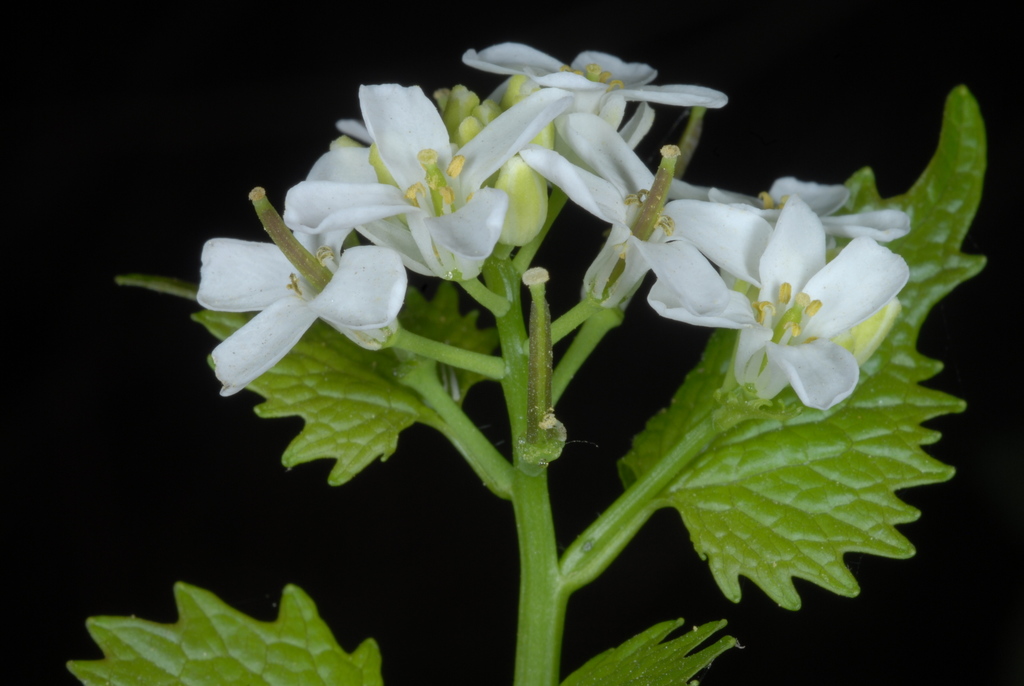
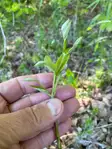
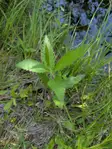
Photo: (c) Douglas Goldman, some rights reserved (CC BY-SA), uploaded by Douglas Goldman (CC BY-SA),
via iNaturalist. Species-typical, not necessarily this cultivar.
Keep away. Condemned as highly flammable by direct fire evidence (Combustion characteristics of north-eastern USA vegetatio…), with no recommendation on record. This status is computed from the cited evidence by the published rule, never hand-assigned. The page keeps its cited source rows visible for readers and separates each evidence channel from the computed result on this record.
▼ Combustion characteristics of north-eastern USA vegetatio… · fire-tested
Computed class: Highly flammable (limited-evidence) —
derived from the cited evidence by a published rule , never hand-assigned.
Each chip above is one independent primary-evidence lineage and its direction.
No plant is fireproof; condition and placement govern. Zone 0 is
hardscape regardless.
The Place chip compares this record with your lot.
A genus split is not a placement verdict.
Is this one for your yard?
Enter your ZIP to see whether this is legal to plant in your state, and whether it survives your winter.
Nine legal-list rows —DE, IN, ME, MA, NY, OH, UT, WA, and VA—form garlic mustard's opening status trail. A separate seed-list row and two ecological invasive reports add other regulatory and ecological context; none of those channels is used as a substitute for fire evidence.
The fire record comes from a cone-calorimeter study of northeastern vegetation using cured material, preserved under test conditions . It supports an avoid recommendation while remaining limited evidence in the evidence table . Range evidence and related plants stay distinct, so legal status, distribution, alternatives, and combustion findings are not blended into one claim.
On this page
Fire-resistant perennials instead
Form perennial
Rated in Global; north-eastern and mid-Atlantic United States On this lot 1. Fire evidence and conditions
Fire evidence Highly flammable — location does not change the cited classification.
Fire-performance conditions 1 condition stated in cited fire-evidence rows.
Fire ecology context
Placement evidence
Evidence regions Global; north-eastern and mid-Atlantic United States
Maintenance Typed publication scope: 1 scope across 1 cited fire source Combustion characteristics of north-eastern USA vegetation tested in the cone calorimeter · Official scoped edition Northeastern and mid-Atlantic study sites (ME, MD, MA, NY, VA footprint); partial normalized coverage · 2007-08-20 The authors collected foliage and twigs across study sites in Maine, Maryland, Massachusetts, New York, and Virginia, then conditioned and tested the samples in a cone calorimeter. FireApproved publishes 37 exact source owners only as multi-state laboratory context. The source does not establish that every taxon was sampled in every named state, whole-plant behavior, landscape suitability, or state planting guidance.
2. Why this plant is relevant here
State distribution Documented in AK, AR, CO, CT, DC, DE, GA, IA, ID, IL, IN, KS, KY, MA, MD, ME, MI, MN, MO, NC, ND, NE, NH, NJ, NY, OH, OK, OR, PA, SC, TN, UT, VA, VT, WA, WI, WV.
Native range
Introduced / established 37 sourced range or established records. This is not an invasive warning.
USDA hardiness 3. Legal, ecological, and broader status
Legal-list status 9 legal-list records; the Place chip matches exact scope.
Seed-list status 1 state noxious-weed seed record; the Place chip matches exact scope.
Reported invasive here 2 ecological invasive reports.
Broader regional context
Federal context How to read this page The status above is computed from the cited rows below: independent recommendations can support a fire-resistant result, an avoid row can produce keep-away, and disagreement stays visible as conflict. Placement notes preserve each source’s own scheme rather than translating unlike rules into one scale. This is evidence about a plant, not permission to plant it in every part of the defensible space ; Zone 0 remains noncombustible.
Native and introduced range evidence
These are exact U.S. botanical-area records from the cited range source. Native and
introduced describe biogeographic relationship, not fire performance or planting approval.
Doubtful and extinct rows stay visible but do not count as current presence.
Current native
0 exact source areas
Current introduced
37 exact source areas
Qualified
0 doubtful or extinct source rows
37 introduced source areas · World Checklist of Vascular Plants, version 16 v16, as of 2026-06-04 Alabama (AL) Colorado (CO) Connecticut (CT) District of Columbia (DC) Delaware (DE) Iowa (IA) Idaho (ID) Illinois (IL) Indiana (IN) Kansas (KS) Kentucky (KY) Massachusetts (MA) Maryland (MD) Maine (ME) Michigan (MI) Minnesota (MN) Missouri (MO) Montana (MT) North Carolina (NC) Nebraska (NE) New Hampshire (NH) New Jersey (NJ) New York (NY) Ohio (OH) Oklahoma (OK) Oregon (OR) Pennsylvania (PA) Rhode I. (RI) South Dakota (SD) Tennessee (TN) Utah (UT) Virginia (VA) Vermont (VT) Washington (WA) Wisconsin (WI) West Virginia (WV) Wyoming (WY) The lossless worldwide derivative is retained once in the research corpus; object pages repeat only exact U.S. areas needed by the local lens. The JSON twin carries the same page assertions.
Legal restrictions and listings.
DE · prohibited · Invasive Plant List — specified viable-material activities prohibited · Authority: Delaware Department of Agriculture. Source: Delaware 3 DE Admin. Code 806 Invasive Plant and Plant Watch Lists , record delaware:806:invasive:010, 2026-08-26.
activity restriction: No person may import, export, buy, sell, transport, distribute, or propagate any viable portion, including seeds, of a plant on the Invasive Plant List without the Secretary's prior written approval. (official condition ) permit required: The Secretary may provide prior written approval for disposal, control, research or education, or export for one of those purposes. (official condition ) IN · prohibited · Prohibited invasive terrestrial plant — current rule fully enforceable since April 18, 2020 · Authority: Indiana Department of Natural Resources. Source: Indiana 312 IAC 18-3-25 Prohibited Invasive Terrestrial Plants , record indiana:312-iac-18-3-25:a:003, 2026-08-26.
activity restriction: The rule applies to any part or life stage of each listed species. A person must not sell, offer or grow for sale, gift, barter, exchange, distribute, transport, or transfer that material in Indiana. (official condition ) activity restriction: The rule applies to any part or life stage of each listed species. A person must not introduce that material in Indiana. (official condition ) operational exception: This section does not apply to a person who possesses a listed species under a permit issued by the Indiana State Entomologist. (official condition ) operational exception: This section does not apply to a person engaged in a project approved by the Indiana State Entomologist for destruction of a listed species. (official condition ) ME · prohibited · Specified living-plant trade activities prohibited since 2018-01-01 · Authority: Maine Department of Agriculture, Conservation and Forestry. Source: Maine Chapter 273 Do Not Sell and Special Concern Lists , record maine:prohibited:005, 2026-08-26.
activity restriction: Living viable material may not be imported, exported, bought, sold, or intentionally propagated for sale or distribution. (official condition ) permit required: The State Horticulturist may permit importation and field experimentation for scientific, educational, or other approved purposes under prescribed conditions. (official condition ) material scope exception: Preserved herbarium specimens and material preserved by other means are exempt from Chapter 273. (official condition ) MA · prohibited · Prohibited · Authority: Massachusetts Department of Agricultural Resources. Source: Massachusetts Prohibited Plant List , record massachusetts:060:alliaria-petiolata, 2026-08-26.
NY · prohibited · Prohibited invasive species — specified possession, trade, transport, introduction, propagation, and disposal rules · Authority: New York State Department of Environmental Conservation. Source: New York 6 NYCRR Part 575 Prohibited and Regulated Invasive Species , record new-york:part-575:plant:003, 2026-08-26.
activity restriction: No person may knowingly possess this prohibited invasive species with intent to sell, import, purchase, transport, or introduce it; sale, import, purchase, transport, introduction, and propagation are prohibited, and disposal must render it nonliving and nonviable. (official condition ) operational exception: Possession or transport for identification or disposal, and control or management of pre-existing invasive species, remain exempt when handled within Part 575's no-spread boundary. (official condition ) permit required: A New York State Department of Environmental Conservation permit is required to carry out a prohibited activity for research, education, or another approved activity: possession with intent to sell, import, purchase, transport, or introduction. (official condition ) OH · prohibited · Listed invasive plant — specified sale, propagation, distribution, import, and dissemination activities prohibited · Authority: Ohio Department of Agriculture. Source: Ohio OAC 901:5-30-01 Invasive Plant Species , record ohio:901-5-30-01:A:002, 2026-08-26.
activity restriction: No person may sell, offer for sale, propagate, distribute, import, or intentionally cause the dissemination of this listed invasive plant in Ohio. (official condition ) material scope exception: Cultivated plants grown as food or livestock feed in accordance with generally accepted agricultural practices, including plants authorized by USDA APHIS, are excluded from the ORC 901.50 definition of invasive plant species. (official condition ) operational exception: Disposal and control are allowed only in a manner that does not result in further spread. (official condition ) permit required: Research or educational use requires an Ohio Department of Agriculture compliance agreement and must not result in further spread. (official condition ) UT · noxious listed · Class 1B: Early Detection Rapid Response (EDRR) · Authority: Utah Department of Agriculture and Food. Source: State of Utah Noxious Weed List (R68-9) , record utah-r68-9:1B:alliaria-petiolata, 2026-08-26.
VA · noxious listed · Tier 3 noxious weed — Present in the Commonwealth; spread may be slowed by movement restrictions; successful eradication or suppression is not feasible · Authority: Virginia Board of Agriculture and Consumer Services. Source: Virginia 2VAC5-317 Tier 1, Tier 2, and Tier 3 Noxious Weeds , record 2vac5-317-20:tier-3:06, 2026-08-26.
activity restriction: A regulated article is any listed noxious weed or any article carrying or capable of carrying a listed noxious weed. Move means to ship, offer for shipment, receive for transportation, carry, or otherwise transport, move, or allow to be moved. The movement of a regulated article is prohibited unless accompanied by a valid certificate or permit. (official condition ) operational exception: The movement rule allows either a valid certificate or a permit to accompany the regulated article. A certificate is issued or authorized by the commissioner and indicates that the regulated article is not contaminated with a noxious weed. A permit is issued by the commissioner for movement of regulated articles to restricted destinations for limited handling, utilization, processing, or scientific purposes. (official condition )
Legal designations are separate from ecological invasion reports and fire performance. Read the named class, taxonomic scope, authority, and operating conditions before acting.
State noxious-weed seed records. Prohibited noxious-weed seed · UT (USDA source , usda-ams-state-noxious-weed-seed-2026:UT:037, section “(i) Prohibited noxious weed seeds are the seeds of any plant determined by the department to be injurious to public health, crops, livestock, land, or other property and that are especially troublesome and difficult to control and”)
These are state seed-sheet listings in the Federal Seed Act agricultural-and-vegetable-seed context. Each row keeps its printed category, governing seed section, row limitations, and proven note references; consult the official source for complete conditions. It never becomes a non-seed plant restriction, ecological-invasive warning, nursery restriction, alternative-ranking signal, product result, or fire-evidence vote.
These describe tested or rated plant material. They are not horticultural maintenance instructions.
The evidence
Grouped by what each source concluded. Primary evidence rated the plant itself
(a lab, field program, or original curation); corroboration compiled or
republished another source's rating and resolves to its root lineage.
Listed without a rating (1) Corroboration (1 rows from 1 source) FLAMITS: FLAMmability plant traiTS database — Dryad / Global Ecology and Biogeography · Dryad version 9 · original source Corroboration Trait database lineage: meta-aggregator
“calorific value (kcal/kg): 3582.69”
FLAMITS record 2859; Combustibility measurement; plant part leaves; fuel live; predrying yes; device calorimeter; site Dibble2007-1; sampling ND. Primary study Dibble2007: Dibble, A. C., White, R. H., & Lebow, P. K. (2007). Combustion characteristics of north-eastern USA vegetation tested in the cone calorimeter: invasive versus non-invasive plants. International journal of wildland fire, 16, 426-443.
Last verified 2026-08-24. JSON (CC BY 4.0)
Profiles:
USDA PLANTS · GBIF · iNaturalist · Wikidata · Wikipedia · ITIS
Alliaria petiolata (Garlic mustard). FireApproved. https://fireapproved.com/plants/alliaria-petiolata/. Last verified 2026-08-24. Verify at the source. Every listing number and claim here links to its origin — listings change and local amendments govern, so check the current record before you specify.