Home / Guides / How to read a record / Why junipers get one verdict per species
Why junipers get one verdict per species
A genus page is a split of cited records, not a genus grade. Long and Behm 2006 ranked Juniperus ashei Moderate and Juniperus chinensis High in the same NIST whole-plant table. Grants Pass lists ornamental juniper among highly flammable plants. That umbrella sentence lives on Juniperus spp.. It does not rewrite the species pages.
You are looking at a nursery juniper and at a keep-away list that says “junipers,” and treating every scale-leaf shrub as the same plant. Open the species page. The genus hub is the split.
Why it matters
Embers land in foliage. A genus-wide ban is easy to remember. It is also how a moderate Ashe juniper and a high Chinese juniper get averaged into one imaginary shrub. Species evidence never rolls upward. Genus-rank (“spp.”) claims live on umbrella records and never override species. Fire-resistant does not mean noncombustible. Zone 0 is not a planting list.
How it works
Long, Behm, Zipperer, Hermansen, Maranghides, and Mell burned 34 southern ornamental shrubs as whole plants at NIST’s Building and Fire Research Laboratory. Cluster analysis of peak heat release, total energy, mass loss, and related measures produced three ranks. Table 1:
| Species in that table | Rank |
|---|---|
| Juniperus ashei (Ashe juniper; Ozark white cedar) | Moderate |
| Juniperus chinensis ‘Pfitzerana’ (Chinese juniper) | High |
The four High species are Ilex glabra, Ilex vomitoria, Juniperus chinensis, and Kalmia latifolia. The authors write that those four should not be planted close to structures, and that moderate species could become highly flammable under drought and similarly should not be planted near structures.
That is one paper, two junipers, two ranks. On this site J. ashei currently computes as candidate (mid-scale). J. chinensis computes as avoid. The umbrella Juniperus spp. computes as avoid from separate genus-rank lists.
Scher 2002 is a third species: Rocky Mountain juniper. High volatile oil, especially in the lower branches, makes those trees more flammable. Trees up to 3–4 feet are easily killed by fire. That sentence is about J. scopulorum. It is not a key to J. ashei.
The paths
| Record | What it is | What it is not |
|---|---|---|
| Juniperus spp. umbrella | Genus-rank lists (Grants Pass ornamental juniper among them) | A vote that overwrites every species |
| J. ashei | Moderate in Long and Behm 2006 Table 1 | A Zone 0 pass |
| J. chinensis | High in that same table | Proof that every juniper is High |
| J. scopulorum | Scher 2002 volatile-oil notes plus its own lists | A genus-wide FEIS review |
| Genus hub split | Counts of species records | A computed genus flammability class |
What people mix up
- Reading “ornamental juniper” as every Juniperus species.
- Rolling Scher 2002 up into Ashe juniper.
- Averaging Moderate and High in the same 2006 table into “junipers are medium.”
- Treating the genus hub avoid-count as a ban on the candidate species.
- Planting any of them in Zone 0 because a moderate rank looked like a permit.
How to check
- Open the Juniperus genus hub. Read the split, then the umbrella band, then a species card.
- Open Long and Behm 2006 Table 1. Find Ashe juniper Moderate and Chinese juniper High.
- Open Grants Pass for the ornamental-juniper sentence. That is the umbrella, not Table 1.
- Do not plant in Zone 0.
Limits
This page quotes Table 1 of the opened 2006 PDF, the opened Grants Pass page, and the opened Scher 2002 review. It does not reprint every juniper on this site. It does not decide a planting. Moderate is not a Zone 0 exception. Chinese juniper’s High rank in Table 1 is for the tested ‘Pfitzerana’ plants. Identify the genus first: juniper or redcedar.
Related records
- Juniperus genus
- Juniperus spp.
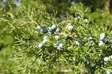
- Juniperus ashei
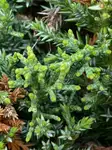
- Juniperus chinensis
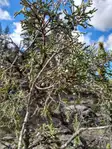
- Juniperus scopulorum
- When the lab disagrees with the lists
Plant records this page rests on

Questions
Are all junipers the same fire plant?
No. Species evidence never rolls upward into a genus verdict. Long and Behm 2006 ranked Ashe juniper (Juniperus ashei) moderate and Chinese juniper (Juniperus chinensis ‘Pfitzerana’) high in the same table of 34 southern shrubs. Those are two records.
Why does the genus page still say avoid?
The Juniperus spp. umbrella is its own record. Grants Pass names ornamental juniper among highly flammable plants, preferably not within 30 feet of the house. That row lives on the genus-rank page. It does not overwrite Juniperus ashei.
Is “junipers are bad” wrong?
It is roughly right and exactly wrong. Scher 2002 records high volatile oil in Rocky Mountain juniper, especially in the lower branches. Most species records on this site currently compute as avoid. Ashe juniper is still a candidate from a moderate whole-plant rank. The split is the interface.
Can I plant a moderate juniper in Zone 0?
No. Zone 0 is not a planting list. Long and Behm 2006 say moderate species could become highly flammable under drought and should not be planted near structures.
Does a genus-rank prohibited list ban every species?
It classifies the umbrella record. Species pages keep their own evidence. Open both. Do not treat the genus hub as a single permit or a single ban.