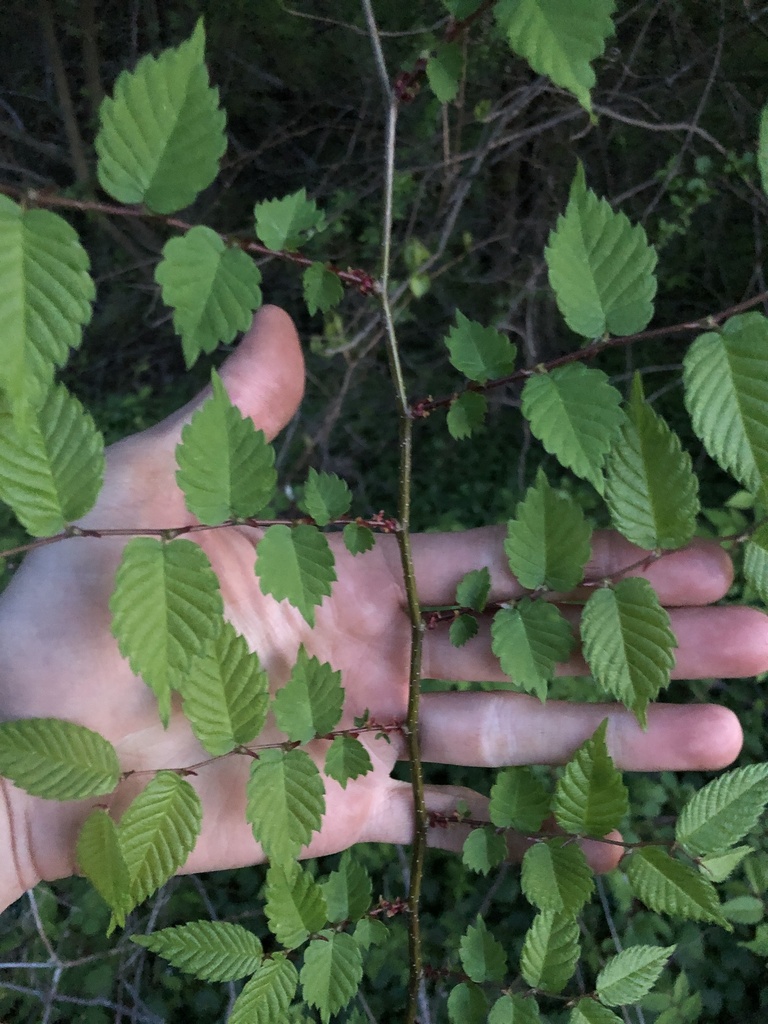
The pack is limited evidence in the evidence table. Its 2 hardiness assertions are collected in hardiness evidence, not folded into the laboratory row. This structure keeps the irrigated test, invasive report, hardiness material, and evidence limitation attached to serrata while preserving the distinct job of each accepted fact. The street-tree paper remains the named laboratory lineage used by this introduction.
Form
tree
Mature height
~50 ft
Light
Part sun
Water need
moderate
Rated in
Central Coast, New South Wales, Australia; Global; Japan; Maryland, New Jersey, and West Virginia +3
On this lot
1. Fire evidence and conditions
Fire evidence
Fire-resistant — location does not change the cited classification.
Maryland Forest Service says the list contains plants that can be grown in Maryland and identifies Maryland natives. FireApproved publishes 169 exact source owners from the 180 printed rows; an unrepresentable form and duplicate-owner rows are not broadened. The list calls itself non-comprehensive and does not establish suitability for every Maryland site.
NJ; partial normalized coverage
New Jersey DEP publishes a state edition saying the listed plants can be grown in New Jersey and are relatively resistant to fire. Its same 180 printed taxon occurrences map to the 169 conservative owners already normalized for the template family. The list is non-comprehensive and does not establish suitability for every New Jersey site or override the Pinelands Commission's separate placement and fuel-break rules.
WV; partial normalized coverage · 2026-08-26
West Virginia Division of Forestry publishes a state edition saying the listed plants can be grown in West Virginia and are relatively resistant to fire. Its same 180 printed taxon occurrences map to the 169 conservative owners already normalized for the template family. The list is non-comprehensive and provides no comparative or site-specific rating.
Ohio State University Extension Bulletin 921 is an Ohio publication that describes Ohio fire seasons and landscape conditions and labels nativity to Ohio. FireApproved publishes 352 exact source-owning plant records from its eight rated tables. This historical publication scope does not assert current extension endorsement or that a listed plant suits every Ohio site.
Virginia Cooperative Extension's publication opens with Virginia wildfire conditions, identifies its Virginia Firewise Landscaping Task Force, and labels plants native to Virginia. FireApproved publishes 306 exact source owners. Publication scope does not establish parcel suitability or current endorsement of this archived 2009 list.
2. Why this plant is relevant here
State distribution
Documented in DC, DE, GA, MD, NJ, NY, OH, PA, WV.
Native range
Introduced / established
2 sourced range or established records. This is not an invasive warning.
USDA hardiness
Documented minimum 3b; no upper limit is documented.
3. Legal, ecological, and broader status
Legal-list status
Seed-list status
Reported invasive here
Broader regional context
Federal context
How to read this page
The status above is computed from the cited rows below: independent recommendations can support a fire-resistant result, an avoid row can produce keep-away, and disagreement stays visible as conflict. Placement notes preserve each source’s own scheme rather than translating unlike rules into one scale. This is evidence about a plant, not permission to plant it in every part of the defensible space; Zone 0 remains noncombustible.
Native and introduced range evidence
These are exact U.S. botanical-area records from the cited range source. Native and
introduced describe biogeographic relationship, not fire performance or planting approval.
Doubtful and extinct rows stay visible but do not count as current presence.
The lossless worldwide derivative is retained once in the research corpus; object pages repeat only exact U.S. areas needed by the local lens. The JSON twin carries the same page assertions.
Plant hardiness evidence
These values describe the plant source. Your ZIP zone comes from the separate 2023 USDA
Plant Hardiness Zone Map. Whole-zone values stay whole-zone, and a single unresolved value
is not treated as a tolerance range. Different source boundaries stay separate: overlapping
statements are compared independently, while only ranges with no shared zone are called a conflict.
Source prints 5 · single-value meaning unresolved · whole zone precision · source stated
Source taxon: Zelkova serrata · exact match.
Source location: Cold Hardiness Zone field in the recovered selector record.
Not used for comparison: The recovered selector prints one Cold Hardiness Zone value but does not define it as a minimum threshold or a one-zone range.
Placement rules below use each source's own distances or named zones, tied to its rating.
They are not interchangeable with the directory's current Zone 0 guidance.
Eastern United States Fire Performance Plant Selector: Landscape Zone 3 — 10–30 ft from the structure; thin vegetation, remove debris, and minimize plant massing [Fire Performance Plant Selector landscape zone] (with its recommendation)
Tree fire-protection classification in Hito to Shinrin: ケヤキ — Table 10-2 [tadaki-kira-1982-fire-protection-power] (mid-scale rating)
Firewise Landscaping Plants: Deciduous Trees [Maryland Firewise plant-form tables] (with its recommendation)
The evidence
Grouped by what each source concluded. Primary evidence rated the plant itself
(a lab, field program, or original curation); corroboration compiled or
republished another source's rating and resolves to its root lineage.
Listed as Zelkova serrata (Japanese Zelkova). The source says listed species exhibit stronger resistance to ignition by wildfires. Source comments: Tolerant of drought & air pollution, pH adaptable
“Measured; four flammability-attribute rankings were not concordant”
· condition: irrigated
Shoot time-to-flame, flame duration, flaming events, and flame temperature were compared without an overall class.
Tree fire-protection classification in Hito to Shinrin (人と森林) — Kyoritsu Shuppan; table reproduced by Kagoshima Prefecture · Hito to Shinrin (1982), Table 10-2; Kagoshima web reproduction · original sourcePrimary evidenceExpert-curatedlineage: independent (root of Japanese municipal fire-protection tree lists)
Table 10-2 prints ケヤキ in the small fire-protection-power class. The Kagoshima reproduction says highly fire-protective trees can slow spread, promote upward dispersal of heat and smoke, and intercept flying embers.
Listed without a rating (24)Corroboration (24 rows from 1 source)
24 cited rows from this source; its identity, lineage and tier are stated once.
Primary study Chung2010: Chung, Y. J. (2010). Comparison of combustion properties of native wood species used for fire pots in Korea. Journal of Industrial and Engineering Chemistry, 16, 15-19.
Shared row context: plant part wood; fuel dead; predrying no; device calorimeter; site Chung2010-1; sampling ND.
Primary study Lee2013: Lee, J.-H., & Kim, D. (2013). Combustion properties for tree species of major structural components of traditional wooden buildings. Journal of the Korean Society of Hazard Mitigation, 13, 17-22.
Shared row context: plant part wood; fuel dead; predrying yes; device calorimeter; site Lee2013-1; sampling ND.
Primary study Harada2001: Harada, T. (2001). Time to ignition, heat release rate and fire endurance time of wood in cone calorimeter test. Fire Materials, 25, 1617.
Shared row context: plant part wood; fuel dead; predrying yes; device calorimeter; site Harada2001-1; sampling ND.
Primary study Chung2008: Chung, Y. J., & Spearpoint, M. (2008). Combustion properties of native Korean wood species. International Journal on Engineering Performance-Based Fire Codes, 9, 11825.
Shared row context: plant part wood; fuel dead; predrying yes; device calorimeter; site Chung2008-1; sampling ND.