Enter your ZIP to see whether this is legal to plant in your state, and whether it survives your winter.
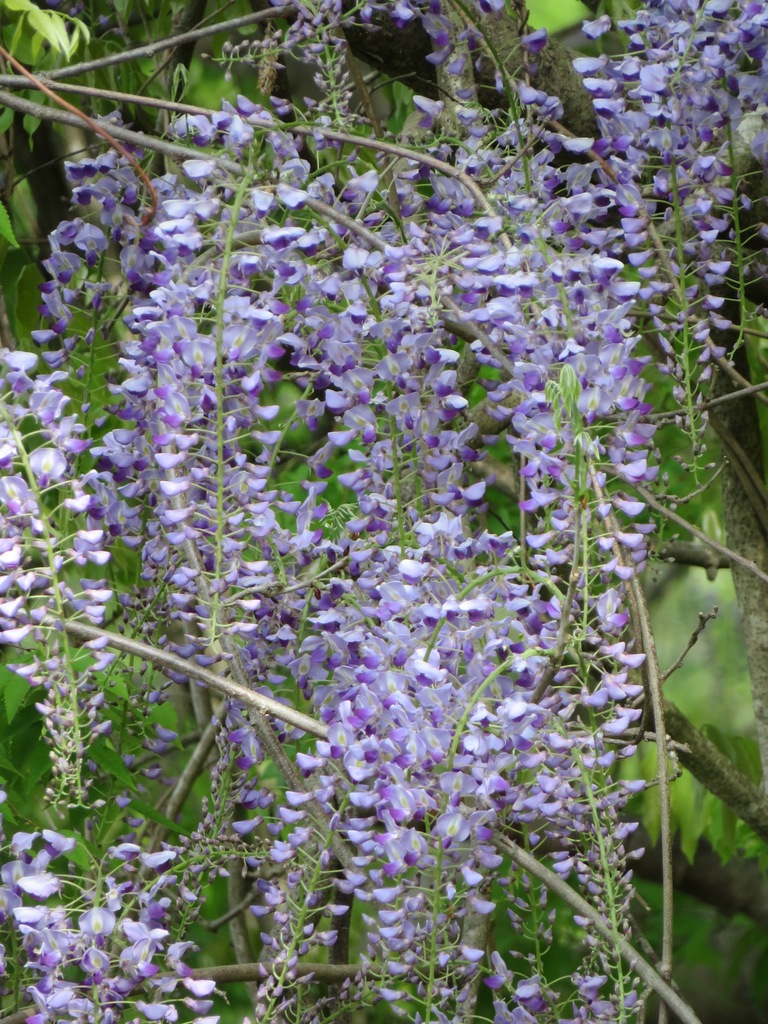
Japanese wisteria is a poor choice for a trellis beside a house under the Eastern US selector's fire guidance.
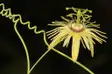
The Wisteria floribunda listing calls it NOT Firewise and marks both invasive behavior and ladder potential without pruning as Yes. Its description of a vigorous, large-trunked vine needing heavy support makes the planting question about more than flower color: where will the supported growth sit relative to the building and other vegetation?
Its assigned Landscape Zone 4 begins beyond 30 feet and can extend to 200 feet from a structure. On sites with high fire risk, the historical selector limits its plant recommendations to the first 30 feet, covering LZ1 through LZ3. It allows more flammable plants farther out in LZ4 with continued care. That distinction explains the distant zone assignment without turning it into an endorsement of wisteria against the house.
The source gives full sun, adaptable soil pH, low drought resistance and low tolerance of poorly drained soils. Its maintenance guidance also requires dead leaves and twigs to be removed, dead, diseased and low branches pruned, and horizontal and vertical spacing maintained. Watering and pruning must prevent deadwood accumulating on the vine or ground. The invasive flag is a historical source observation, not a legal determination; placement and upkeep remain separate practical concerns.
Documented in AL, AR, DC, DE, FL, GA, IL, KY, LA, MA, MD, ME, MS, NC, NH, NJ, NY, OH, PA, SC, TN, TX, VA, WV.
Native range
Introduced / established
5 sourced range or established records. This is not an invasive warning.
USDA hardiness
Only uncertain or inapplicable hardiness rows are cited; no primary zone is projected.
3. Legal, ecological, and broader status
Legal-list status
Seed-list status
Reported invasive here
1 ecological invasive report.
Broader regional context
Federal context
How to read this page
The status above is computed from the cited rows below: independent recommendations can support a fire-resistant result, an avoid row can produce keep-away, and disagreement stays visible as conflict. Placement notes preserve each source’s own scheme rather than translating unlike rules into one scale. This is evidence about a plant, not permission to plant it in every part of the defensible space; Zone 0 remains noncombustible.
Native and introduced range evidence
These are exact U.S. botanical-area records from the cited range source. Native and
introduced describe biogeographic relationship, not fire performance or planting approval.
Doubtful and extinct rows stay visible but do not count as current presence.
The lossless worldwide derivative is retained once in the research corpus; object pages repeat only exact U.S. areas needed by the local lens. The JSON twin carries the same page assertions.
Plant hardiness evidence
These values describe the plant source. Your ZIP zone comes from the separate 2023 USDA
Plant Hardiness Zone Map. Whole-zone values stay whole-zone, and a single unresolved value
is not treated as a tolerance range. Different source boundaries stay separate: overlapping
statements are compared independently, while only ranges with no shared zone are called a conflict.
Source prints 5 · single-value meaning unresolved · whole zone precision · source stated
Source taxon: Wisteria floribunda · exact match.
Source location: Cold Hardiness Zone field in the recovered selector record.
Not used for comparison: The recovered selector prints one Cold Hardiness Zone value but does not define it as a minimum threshold or a one-zone range.
Where its sources say to plant it
Placement rules below use each source's own distances or named zones, tied to its rating.
They are not interchangeable with the directory's current Zone 0 guidance.
Eastern United States Fire Performance Plant Selector: Landscape Zone 4 — beyond 30 ft; outside the selector's recommendation area [Fire Performance Plant Selector landscape zone] (with its avoid rating)
The evidence
Grouped by what each source concluded. Primary evidence rated the plant itself
(a lab, field program, or original curation); corroboration compiled or
republished another source's rating and resolves to its root lineage.