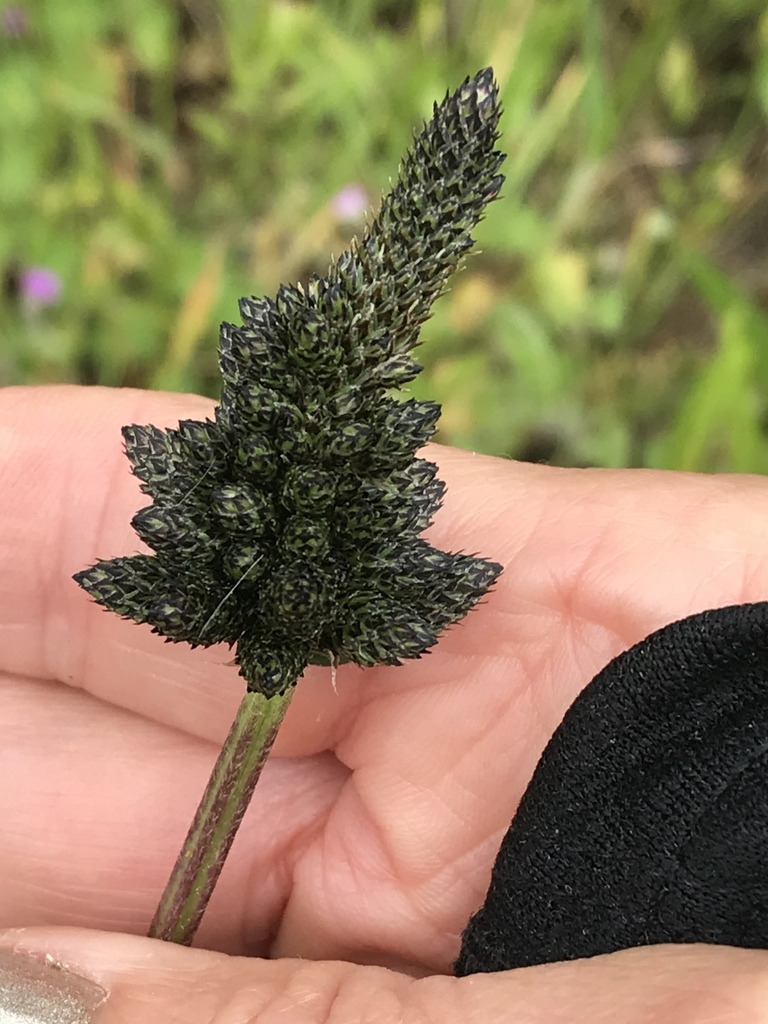
Enter your ZIP to see whether this is legal to plant in your state, and whether it survives your winter.
Plantago lanceolata splits limited evidence. On plantago lanceolata, seed list is the next plantago lanceolata fact. The citations do not collapse — Plantago lanceolata. limited evidence does not replace 26 seed list on plantago lanceolata.
On plantago lanceolata, Plantago lanceolata also carries 3 ecological invasive for plantago lanceolata.
Use evidence on plantago lanceolata for plantago lanceolata. Use seed-list on plantago lanceolata for plantago lanceolata. The citations remain on Plantago lanceolata for plantago lanceolata.
Form
perennial
Rated in
Global; New Zealand
Uses
pasture
On this lot
1. Fire evidence and conditions
Fire evidence
Fire-resistant — location does not change the cited classification.
Fire-performance conditions
Fire ecology context
Placement evidence
Evidence regions
Global; New Zealand
Maintenance
2. Why this plant is relevant here
State distribution
Documented in AK, AL, AR, AZ, CA, CO, CT, DC, DE, FL, GA, HI, IA, ID, IL, IN, KS, KY, LA, MA, MD, ME, MI, MN, MO, MS, MT, NC, ND, NE, NH, NJ, NM, NV, NY, OH, OK, OR, PA, PR, RI, SC, SD, TN, TX, UT, VA, VT, WA, WI, WV, WY.
Native range
Introduced / established
52 sourced range or established records. This is not an invasive warning.
USDA hardiness
3. Legal, ecological, and broader status
Legal-list status
Seed-list status
26 state noxious-weed seed records; the Place chip matches exact scope.
Reported invasive here
3 ecological invasive reports.
Broader regional context
Federal context
Plant-specific state seed-list reviews (1)
These source-bound receipts answer only the July 2026 state noxious-weed seed-list question.
This answers only whether the plant identity appears in the July 2026 state noxious-weed seed sheet. It does not establish non-seed plant legal status, ecological-invasive status, nursery-sale rules, or unrestricted use.
PA · Seed-list name scope unresolved. An exact source taxon is governed by “Restricted in agricultural seeds” or an applicable source note, so the qualified row is held instead of publishing an unconditional result. Held source row: usda-ams-state-noxious-weed-seed-2026:PA:029. Governing seed section: Restricted in agricultural seeds; normalized seed-kind scope: agricultural seed and named companions; applicable note rows usda-ams-state-noxious-weed-seed-2026:PA:035.Official USDA seed requirements.Normalized source record.
How to read this page
The status above is computed from the cited rows below: independent recommendations can support a fire-resistant result, an avoid row can produce keep-away, and disagreement stays visible as conflict. Placement notes preserve each source’s own scheme rather than translating unlike rules into one scale. This is evidence about a plant, not permission to plant it in every part of the defensible space; Zone 0 remains noncombustible.
Native and introduced range evidence
These are exact U.S. botanical-area records from the cited range source. Native and
introduced describe biogeographic relationship, not fire performance or planting approval.
Doubtful and extinct rows stay visible but do not count as current presence.
The lossless worldwide derivative is retained once in the research corpus; object pages repeat only exact U.S. areas needed by the local lens. The JSON twin carries the same page assertions.
The evidence
Grouped by what each source concluded. Primary evidence rated the plant itself
(a lab, field program, or original curation); corroboration compiled or
republished another source's rating and resolves to its root lineage.
Recommends (1)
Low Flammability Plants directory — Fire and Emergency New Zealand (plant flammability testing at Lincoln University) · 2026 · original sourcePrimary evidenceLab-testedlineage: lincoln-nz-tree
“Very low flammability”
Very low flammability classification.
Listed without a rating (13)Corroboration (13 rows from 1 source)
13 cited rows from this source; its identity, lineage and tier are stated once.
“time to flaming (s): 17.76”
FLAMITS record 9712; Ignitability measurement; plant part leaves; fuel live; predrying no; device muffle furnace; site Murray2013-1; sampling march to april. Primary study Murray2013: Murray, B. R., Hardstaff, L. K., & Phillips, M. L. (2013). Differences in leaf flammability, leaf traits and flammability-trait relationships between native and exotic plant species of dry sclerophyll forest. PLoS One, 8, e79205.
Primary study Wesolowski2003: Weso?owski, M., & Konieczynski, P. (2003). Thermal decomposition and elemental composition of medicinal plant materialsLeaves and flowers Principal component analysis of the results. Thermochimica Acta, 397, 171180.
Shared row context: plant part leaves; fuel live; predrying yes; device thermal analyzer; site Wesolowski2003-1; sampling ND.