Home / Plants / Grow / Fragrant osmanthus
Fragrant osmanthus
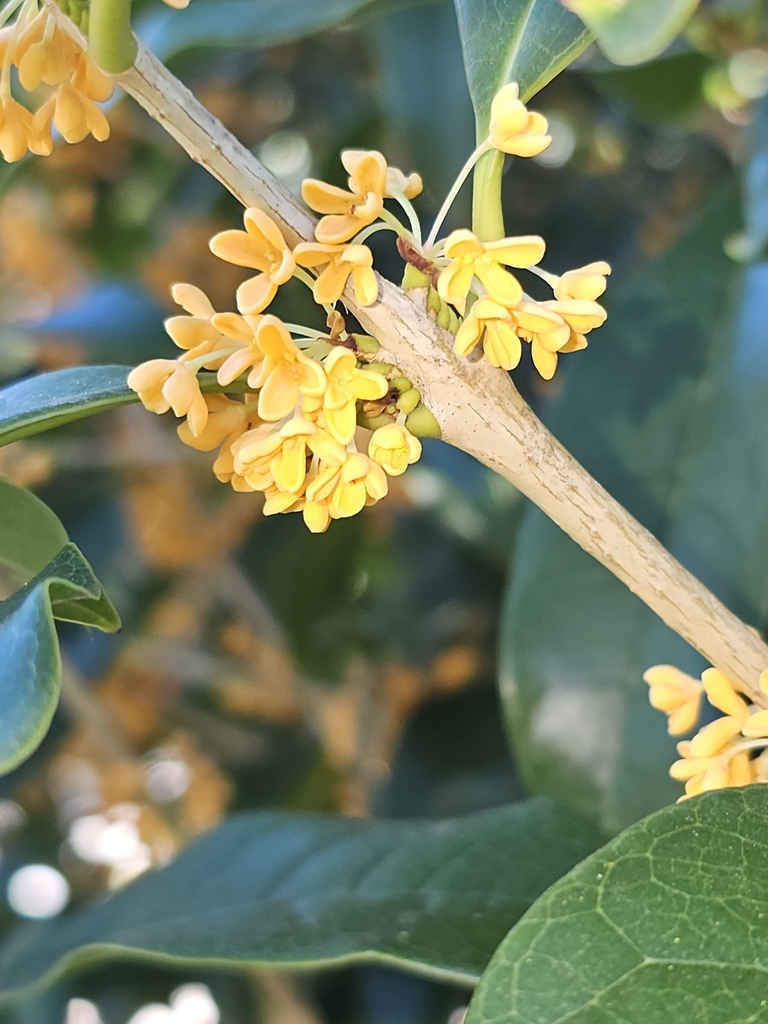
Osmanthus fragrans
Your local evidence lens
Separate evidence questions, never one approval badge
A genus split is not a placement verdict. Set a ZIP to read the local documented split.
1. Fire evidence and conditions
- Fire evidence
- Highly flammable — location does not change the cited classification.
- Fire-performance conditions
- No test or rating condition is normalized.
- Fire ecology context
- No section-reviewed fire-ecology context is normalized.
- Placement evidence
- 2 source placement records; source schemes remain separate.
- Evidence regions
- Australian Capital Territory, Australia; Global; eastern US
- Maintenance
- No sourced horticultural maintenance assertion is normalized; fire-test conditions do not supply maintenance advice.
2. Why this plant is relevant here
- State distribution
- Documented in DC, DE, MD, NJ, OH, PA, WV.
- Native range
- No current cited or legacy state native range is normalized.
- Introduced / established
- No introduced or established row is normalized; that does not prove native status.
- USDA hardiness
- Only uncertain or inapplicable hardiness rows are cited; no primary zone is projected.
3. Legal, ecological, and broader status
- Legal-list status
- Set a location for an exact legal-list result; source silence is not clearance.
- Seed-list status
- Set a location to compare the separate state noxious-weed seed layer.
- Reported invasive here
- No ecological invasive report is normalized; that does not prove noninvasiveness.
- Broader regional context
- Aggregate AK, HI, and L48 evidence is shown only as regional context, never as an exact-state finding.
- Federal context
- Federal designations remain separate from state legal-list results.
How to read this page
The status above is computed from the cited rows below: independent recommendations can support a fire-resistant result, an avoid row can produce keep-away, and disagreement stays visible as conflict. Placement notes preserve each source’s own scheme rather than translating unlike rules into one scale. This is evidence about a plant, not permission to plant it in every part of the defensible space; Zone 0 remains noncombustible.
- Form
- tree
- USDA hardiness
- Only uncertain or inapplicable source rows; no primary zone projected
- Mature height
- ~25 ft
- Light
- Full sun
- Grows in
- DC, DE, MD, NJ, OH, PA, WV
- Rated in
- Australian Capital Territory, Australia; Global; eastern US
- Family
- Oleaceae
- Evidence
- 19 cited sources
Plant hardiness evidence
-
Eastern United States Fire Performance Plant Selector
Source prints 7 · single-value meaning unresolved
Where its sources say to plant it
- Eastern United States Fire Performance Plant Selector: Landscape Zone 3 — 10–30 ft from the structure; thin vegetation, remove debris, and minimize plant massing
- Canberra Plant Selector: filtered result page 20
The evidence
Recommends (1)
-
Canberra Plant Selector — fire-retardant attribute
“Fire Retardant — Yes — Osmanthus fragrans”
The live Canberra Plant Selector marks “Osmanthus fragrans” as “Fire Retardant: Yes.”
Avoids (1)
-
Eastern United States Fire Performance Plant Selector
“NOT Firewise (4)”
Native entire margin leaf broadleaf evergreen. Many small fragrant cream flowers in late winter.
Listed without a rating (17)
-
FLAMITS: FLAMmability plant traiTS database
-
“time to flaming (s): 57.33”
FLAMITS record 7059; Ignitability measurement; plant part leaves; fuel live; predrying no; device calorimeter; site Liu2013-1; sampling ND. Primary study Liu2013: Liu, M., Yi, L., Yu, S., Zhou, G., Jiang, H., & Li, X. (2013). Combustibility of fresh leaves of 26 forest species in China. Journal of Tropical Forest Science, 25, 528-536.
-
“maximum energy flux (kW/m²): 68.14”
FLAMITS record 7085; Combustibility measurement; plant part leaves; fuel live; predrying no; device calorimeter; site Liu2013-1; sampling ND. Primary study Liu2013: Liu, M., Yi, L., Yu, S., Zhou, G., Jiang, H., & Li, X. (2013). Combustibility of fresh leaves of 26 forest species in China. Journal of Tropical Forest Science, 25, 528-536.
-
“mass loss rate (g/s): 0.68”
FLAMITS record 7111; Combustibility measurement; plant part leaves; fuel live; predrying no; device calorimeter; site Liu2013-1; sampling ND. Primary study Liu2013: Liu, M., Yi, L., Yu, S., Zhou, G., Jiang, H., & Li, X. (2013). Combustibility of fresh leaves of 26 forest species in China. Journal of Tropical Forest Science, 25, 528-536.
-
“calorific value (kcal/kg): 1633.71”
FLAMITS record 7137; Combustibility measurement; plant part leaves; fuel live; predrying no; device calorimeter; site Liu2013-1; sampling ND. Primary study Liu2013: Liu, M., Yi, L., Yu, S., Zhou, G., Jiang, H., & Li, X. (2013). Combustibility of fresh leaves of 26 forest species in China. Journal of Tropical Forest Science, 25, 528-536.
-
“total heat release (MJ/m²): 4.01”
FLAMITS record 7163; Combustibility measurement; plant part leaves; fuel live; predrying no; device calorimeter; site Liu2013-1; sampling ND. Primary study Liu2013: Liu, M., Yi, L., Yu, S., Zhou, G., Jiang, H., & Li, X. (2013). Combustibility of fresh leaves of 26 forest species in China. Journal of Tropical Forest Science, 25, 528-536.
-
“total smoke release (m²/m²): 74.02”
FLAMITS record 7189; Consumability measurement; plant part leaves; fuel live; predrying no; device calorimeter; site Liu2013-1; sampling ND. Primary study Liu2013: Liu, M., Yi, L., Yu, S., Zhou, G., Jiang, H., & Li, X. (2013). Combustibility of fresh leaves of 26 forest species in China. Journal of Tropical Forest Science, 25, 528-536.
-
“smoke release rate (m²/s): 0.32”
FLAMITS record 7215; Combustibility measurement; plant part leaves; fuel live; predrying no; device calorimeter; site Liu2013-1; sampling ND. Primary study Liu2013: Liu, M., Yi, L., Yu, S., Zhou, G., Jiang, H., & Li, X. (2013). Combustibility of fresh leaves of 26 forest species in China. Journal of Tropical Forest Science, 25, 528-536.
-
“smoke specific extinction area (m²/kg): 39.4”
FLAMITS record 7241; Combustibility measurement; plant part leaves; fuel live; predrying no; device calorimeter; site Liu2013-1; sampling ND. Primary study Liu2013: Liu, M., Yi, L., Yu, S., Zhou, G., Jiang, H., & Li, X. (2013). Combustibility of fresh leaves of 26 forest species in China. Journal of Tropical Forest Science, 25, 528-536.
-
“energy flux (kW/m²): 25.89”
FLAMITS record 7267; Combustibility measurement; plant part leaves; fuel live; predrying no; device calorimeter; site Liu2013-1; sampling ND. Primary study Liu2013: Liu, M., Yi, L., Yu, S., Zhou, G., Jiang, H., & Li, X. (2013). Combustibility of fresh leaves of 26 forest species in China. Journal of Tropical Forest Science, 25, 528-536.
-
“maximum energy flux (kW/m²): 80.5”
FLAMITS record 12997; Combustibility measurement; plant part leaves; fuel live; predrying no; device calorimeter; site Tao2020-1; sampling ND. Primary study Tao2020: Tao, J. J. (2020). Study on the transition mechanism for broadleaf foliage from smoldering to flaming combustion under external radiant heat flux. Biomass Conversion and Biorefinery, 10, 765-773.
-
“maximum energy flux (kW/m²): 105.2”
FLAMITS record 12998; Combustibility measurement; plant part leaves; fuel live; predrying no; device calorimeter; site Tao2020-1; sampling ND. Primary study Tao2020: Tao, J. J. (2020). Study on the transition mechanism for broadleaf foliage from smoldering to flaming combustion under external radiant heat flux. Biomass Conversion and Biorefinery, 10, 765-773.
-
“maximum energy flux (kW/m²): 228.8”
FLAMITS record 12999; Combustibility measurement; plant part leaves; fuel live; predrying no; device calorimeter; site Tao2020-1; sampling ND. Primary study Tao2020: Tao, J. J. (2020). Study on the transition mechanism for broadleaf foliage from smoldering to flaming combustion under external radiant heat flux. Biomass Conversion and Biorefinery, 10, 765-773.

-
“maximum energy flux (kW/m²): 240.6”
FLAMITS record 13000; Combustibility measurement; plant part leaves; fuel live; predrying no; device calorimeter; site Tao2020-1; sampling ND. Primary study Tao2020: Tao, J. J. (2020). Study on the transition mechanism for broadleaf foliage from smoldering to flaming combustion under external radiant heat flux. Biomass Conversion and Biorefinery, 10, 765-773.
-
“flaming duration (s): 17”
FLAMITS record 13005; Sustainability measurement; plant part leaves; fuel live; predrying no; device calorimeter; site Tao2020-1; sampling ND. Primary study Tao2020: Tao, J. J. (2020). Study on the transition mechanism for broadleaf foliage from smoldering to flaming combustion under external radiant heat flux. Biomass Conversion and Biorefinery, 10, 765-773.
-
“flaming duration (s): 36”
FLAMITS record 13006; Sustainability measurement; plant part leaves; fuel live; predrying no; device calorimeter; site Tao2020-1; sampling ND. Primary study Tao2020: Tao, J. J. (2020). Study on the transition mechanism for broadleaf foliage from smoldering to flaming combustion under external radiant heat flux. Biomass Conversion and Biorefinery, 10, 765-773.
-
“flaming duration (s): 42”
FLAMITS record 13007; Sustainability measurement; plant part leaves; fuel live; predrying no; device calorimeter; site Tao2020-1; sampling ND. Primary study Tao2020: Tao, J. J. (2020). Study on the transition mechanism for broadleaf foliage from smoldering to flaming combustion under external radiant heat flux. Biomass Conversion and Biorefinery, 10, 765-773.
-
“flaming duration (s): 43”
FLAMITS record 13008; Sustainability measurement; plant part leaves; fuel live; predrying no; device calorimeter; site Tao2020-1; sampling ND. Primary study Tao2020: Tao, J. J. (2020). Study on the transition mechanism for broadleaf foliage from smoldering to flaming combustion under external radiant heat flux. Biomass Conversion and Biorefinery, 10, 765-773.
-