Enter your ZIP to see whether this is legal to plant in your state, and whether it survives your winter.
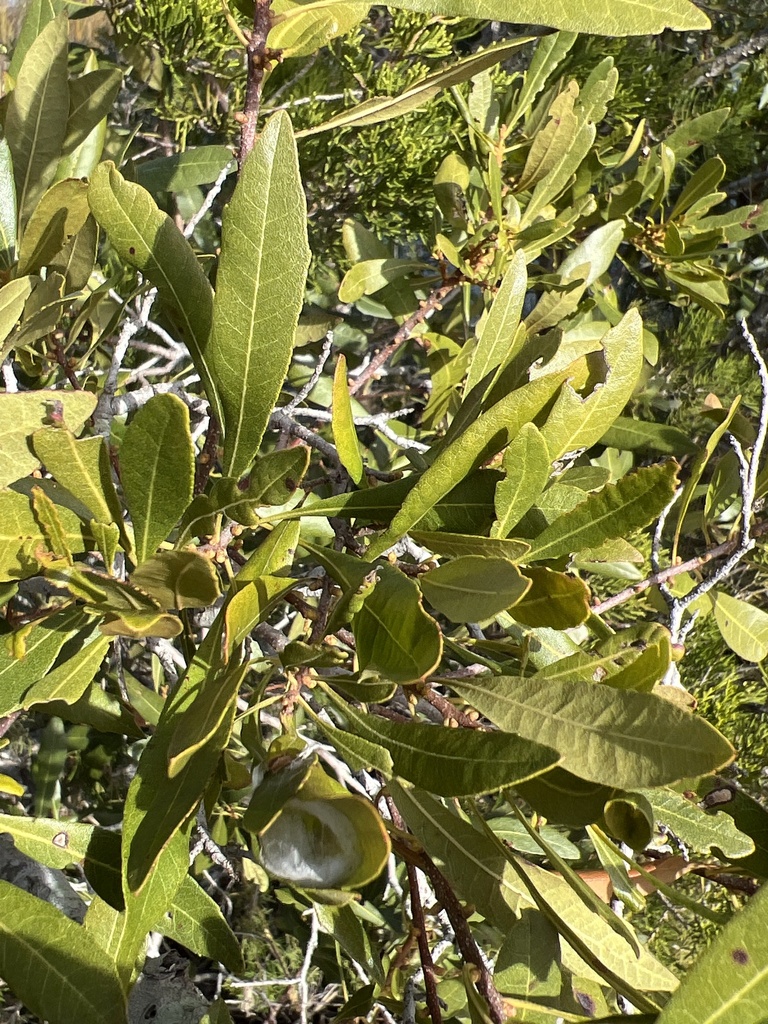
Morella cerifera holds keep away recommendation on morella cerifera. On morella cerifera, Flammability of native understory beside cerifera on Morella cerifera. The facts stay as separate jobs for morella cerifera — Morella cerifera. On morella cerifera, avoid does not replace Flammability of native for cerifera.
On morella cerifera, Morella cerifera also carries 1 ecological invasive reports for cerifera. On morella cerifera, Morella cerifera also carries same form alternatives for cerifera.
Use evidence on morella cerifera for cerifera. Use related plants on morella cerifera for cerifera. The sourced rows remain on morella cerifera.
The complete three-table AG-874 plant list is explicitly for North Carolina and contains 202 low-, medium-, or high-flammability rows. FireApproved accounts for all source rows under its strict taxonomy and lineage rules; source scope does not establish local suitability at a particular North Carolina site.
Sun City Texas, Georgetown (TX footprint); partial normalized coverage · 2015-01-14
The guide is authored for the Sun City Texas community in Georgetown. FireApproved publishes 142 exact owners only as community-level context. It is an archived HOA exhibit with unknown rating lineage, not a current statewide Texas source or an independent Tier 1 determination.
Travis County, Austin area (TX footprint); partial normalized coverage · 2024-01-16
Texas A&M AgriLife Extension publishes this page through its Travis County horticulture program. FireApproved publishes 56 exact owners and retains the source's zone and warning conditions. This is county/Austin regional context, not a second statewide Texas table or site clearance.
Virginia Cooperative Extension's publication opens with Virginia wildfire conditions, identifies its Virginia Firewise Landscaping Task Force, and labels plants native to Virginia. FireApproved publishes 306 exact source owners. Publication scope does not establish parcel suitability or current endorsement of this archived 2009 list.
2. Why this plant is relevant here
State distribution
Documented in AL, AR, DE, FL, GA, HI, LA, MD, MS, NC, NJ, OK, PR, SC, TX, VA, WV.
Native range
The legacy compatibility field lists NC in native range; its field-level source was not retained.
Introduced / established
USDA hardiness
Documented minimum 6b; no upper limit is documented.
3. Legal, ecological, and broader status
Legal-list status
Seed-list status
Reported invasive here
1 ecological invasive report.
Broader regional context
Federal context
How to read this page
The status above is computed from the cited rows below: independent recommendations can support a fire-resistant result, an avoid row can produce keep-away, and disagreement stays visible as conflict. Placement notes preserve each source’s own scheme rather than translating unlike rules into one scale. This is evidence about a plant, not permission to plant it in every part of the defensible space; Zone 0 remains noncombustible.
Plant hardiness evidence
These values describe the plant source. Your ZIP zone comes from the separate 2023 USDA
Plant Hardiness Zone Map. Whole-zone values stay whole-zone, and a single unresolved value
is not treated as a tolerance range. Different source boundaries stay separate: overlapping
statements are compared independently, while only ranges with no shared zone are called a conflict.
Source location: PlantCharacteristics record 70717, Temperature, Minimum (°F).
Where its sources say to plant it
Placement rules below use each source's own distances or named zones, tied to its rating.
They are not interchangeable with the directory's current Zone 0 guidance.
Eastern United States Fire Performance Plant Selector: Landscape Zone 2 — 5–10 ft from the structure; maintained lawn or fuel breaks, with easily ignited evergreens avoided [Fire Performance Plant Selector landscape zone] (mid-scale rating)
North Carolina Extension Gardener Plant Toolbox: myrica-cerifera [nc-toolbox-flammability-facet] (with its avoid rating)
Firewise Landscaping: Small trees/Large Shrubs [Travis County Firewise page sections] (with its avoid rating)
Firewise Plant Guide: Small Trees [Sun City plant-table sections] (with its recommendation)
The evidence
Grouped by what each source concluded. Primary evidence rated the plant itself
(a lab, field program, or original curation); corroboration compiled or
republished another source's rating and resolves to its root lineage.
The table rates Wax Myrtle — Morella cerifera low for flammability hazard, defined as the ease a plant can burn at high temperatures for a prolonged time.
“Plants to Avoid for Zone 1 (within 30′ of Structure)”
Listed as Wax Myrtle — Morella cerifera. The page says Zone 1 entries should be restricted to zones 2 or 3; all-zone entries are highly flammable due to volatile oils or growth habit.