Enter your ZIP to see whether this is legal to plant in your state, and whether it survives your winter.
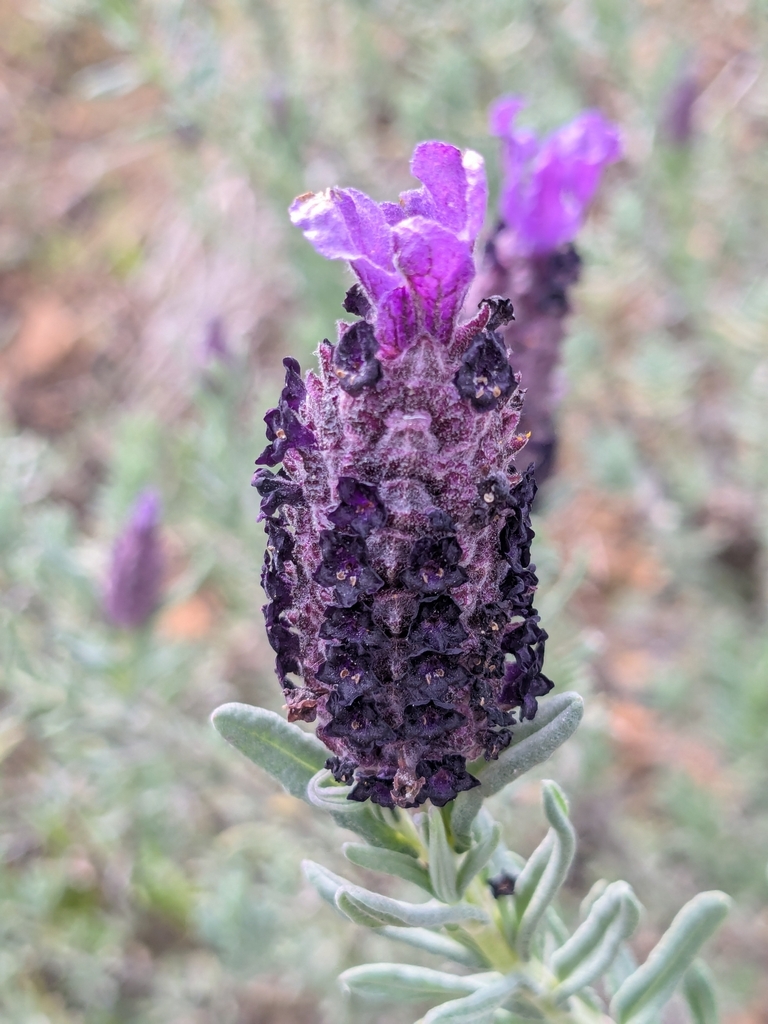
Lavandula holds 1 maintenance rows. Then irrigated test condition on Lavandula. The facts stay as separate jobs — Lavandula. On lavandula, 1 maintenance assertions does not replace irrigated. Lavandula is the taxon those two facts attach to.
Use evidence on Lavandula. The sourced rows remain on Lavandula. On lavandula, 1 maintenance assertions sits with irrigated beside Lavandula. The table for lavandula still names Lavandula.
Form
shrub
Rated in
Ashland, Oregon; British Columbia; Catalonia, Spain; Greece +10
On this lot
1. Fire evidence and conditions
Fire evidence
Fire-resistant — location does not change the cited classification.
City of Ashland (OR footprint); partial normalized coverage · 2026-08-26
This is a City of Ashland adoption fact, not statewide Oregon guidance or an experimental flammability result. FireApproved publishes 24 taxonomy-safe owners as city-level regulatory context. It applies to new planting and propagation within 30 feet of structures, including structures on adjacent lots; it is not projected as a blanket removal order for every established listed plant.
Marin County (CA footprint); partial normalized coverage · 2019-01-01
The publication is explicitly limited to plants common to Marin County. FireApproved publishes 104 exact owners as Marin regional context while retaining its placement, spacing, irrigation, and maintenance boundary. It is not statewide California guidance or parcel suitability.
Maryland Forest Service says the list contains plants that can be grown in Maryland and identifies Maryland natives. FireApproved publishes 169 exact source owners from the 180 printed rows; an unrepresentable form and duplicate-owner rows are not broadened. The list calls itself non-comprehensive and does not establish suitability for every Maryland site.
NJ; partial normalized coverage
New Jersey DEP publishes a state edition saying the listed plants can be grown in New Jersey and are relatively resistant to fire. Its same 180 printed taxon occurrences map to the 169 conservative owners already normalized for the template family. The list is non-comprehensive and does not establish suitability for every New Jersey site or override the Pinelands Commission's separate placement and fuel-break rules.
WV; partial normalized coverage · 2026-08-26
West Virginia Division of Forestry publishes a state edition saying the listed plants can be grown in West Virginia and are relatively resistant to fire. Its same 180 printed taxon occurrences map to the 169 conservative owners already normalized for the template family. The list is non-comprehensive and provides no comparative or site-specific rating.
The April 2022 MontGuide explicitly presents fire-resistant species adapted to Montana. FireApproved publishes 92 exact plant records from the source while retaining excluded genus, family, and unresolved rows; the guide itself says not every listed species grows in every part of the state.
Willamette Valley (OR footprint); partial normalized coverage · 2015-02-01
OSU Extension says EM 9103 highlights fire-resistant plants that thrive under Willamette Valley growing conditions. FireApproved publishes 172 exact owners only as valley context. The guide shares the PNW 590 lineage and is not a second independent vote or statewide site clearance.
The October 2023 joint Pacific Northwest Extension publication explicitly names Oregon, Washington, and Idaho and publishes more than 150 plant profiles. FireApproved has normalized 155 exact plant records from the source; publication scope does not assert that every listed plant suits every site within the three states.
University of Nevada Cooperative Extension compiled plants suited to Nevada climate zones and reported favorably by at least two upstream firewise lists. FireApproved publishes 126 exact source owners at Nevada publication scope. The source explicitly makes no independent flammability determination, so these rows remain corroborative.
Utah State University Extension states that this fact sheet selects examples for Utah landscapes and that they require proper placement and maintenance. FireApproved publishes 83 exact source owners at Utah publication scope. The table is not a site-specific planting clearance.
Yavapai County (AZ footprint); partial normalized coverage · 2025-03-14
University of Arizona Cooperative Extension authors Bulletin 34 for Yavapai County. FireApproved publishes 198 exact source owners from its resistant and prone tables and keeps the county boundary visible. County publication scope is regional Arizona context, never statewide scope.
2. Why this plant is relevant here
State distribution
Documented in ID, OR, WA.
Native range
Introduced / established
USDA hardiness
Documented range 4–8.
3. Legal, ecological, and broader status
Legal-list status
Seed-list status
Reported invasive here
Broader regional context
Federal context
How to read this page
The status above is computed from the cited rows below: independent recommendations can support a fire-resistant result, an avoid row can produce keep-away, and disagreement stays visible as conflict. Placement notes preserve each source’s own scheme rather than translating unlike rules into one scale. This is evidence about a plant, not permission to plant it in every part of the defensible space; Zone 0 remains noncombustible.
Plant hardiness evidence
These values describe the plant source. Your ZIP zone comes from the separate 2023 USDA
Plant Hardiness Zone Map. Whole-zone values stay whole-zone, and a single unresolved value
is not treated as a tolerance range. Different source boundaries stay separate: overlapping
statements are compared independently, while only ranges with no shared zone are called a conflict.
Placement rules below use each source's own distances or named zones, tied to its rating.
They are not interchangeable with the directory's current Zone 0 guidance.
Prohibited Flammable Plants: new planting or propagation restricted within 30 ft of any structure [Ashland Municipal Code setback] (with its avoid rating)
Selective Shrub Management to Preserve Mediterranean Fore…: selectively control in fuel-management bands in mainland Portugal [portugal-selective-fuel-band-control] (with its avoid rating)
Guía de pirojardinería: suitable inside or outside the 25-metre maximum-risk zone [girona-2020-iuf-25m-suitability] (with its recommendation)
Fire-resistant Landscape Plants for the Willamette Valley: Lavender, many spp. profile (PDF page 61) [osu-em-9103-profile] (with its recommendation)
Firewise Landscaping Plants: Herbaceous Annuals and Perennials [Maryland Firewise plant-form tables] (with its recommendation)
Κανονισμός Πυροπροστασίας Ακινήτων εντός ή πλησίον δασικώ…: section 5.4.2, paragraph following Table 2δi [greece-2023-fire-resistant-examples] (with its recommendation)
The evidence
Grouped by what each source concluded. Primary evidence rated the plant itself
(a lab, field program, or original curation); corroboration compiled or
republished another source's rating and resolves to its root lineage.
Lavandula spp. is rated “MUY RECOMENDADA” by the guide's qualitative IUF garden-suitability method. The method assumes species-specific care and integrates fire evidence with fuel structure, maintenance, origin, invasiveness, and expert fire-service experience.
Listed as Lavender — Lavandula sp.. The bulletin says fire-resistant plants tend to resist ignition when irrigated and maintained, while fire-prone plants may ignite readily and burn intensely.
Listed as Lavandula spp. (Lavender). The source says listed species exhibit stronger resistance to ignition by wildfires. Source comments: Prefers full sun
The City of Ashland restricts new planting or propagation within 30 ft of any structure, including structures on adjacent lots (AMC 9.04). Dwarf or prostrate varieties require Fire and Rescue approval, placement beyond 5 ft, and ordinance-compliant tree or shrub spacing.
Table 2 places this genus in the Control column. The authors describe the control group as heliophilous vegetation associated with fine fuels and traits linked to faster combustibility or greater flammability; this is a selective fuel-band management decision, not a global prohibition.