United States / Grow / Lavenders
Lavenders
Lavender's fire rating depends on which species is behind the tag, since more than one plant answers to the same common name.
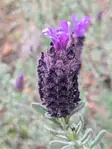
Of five Lavandula species with published assessments, one is rated keep away, one is rated fire resistant, one is genuinely contested, and two have been assessed without the sources taking a side. The most-studied member of the genus, French lavender (Lavandula stoechas), is the one rated keep away.
One assessment of that plant describes it as somewhat too tall, with sparse, upstanding branches and relatively fine foliage. Fine foliage is one of the themes that recurs across these species' own assessments, appearing in two of them.
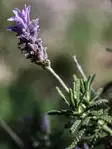
A second species shares the same common name. French lavender (Lavandula dentata) is genuinely contested, on a handful of assessments; one of them calls the plant low risk even during drought. For anyone checking a plant label, French lavender is the name to slow down on. It covers both the keep-away species and the contested one, so the plant to watch near a house is Lavandula stoechas specifically, not just the tag.
lavender (Lavandula) carries the opposite verdict, rated fire resistant on a substantial body of assessment. One assessment of it says the plant can be firewise when properly used and maintained. Lavenders are shrubs in the mint family, Lamiaceae, and the common name by itself will not settle which one is which: French lavender alone points to two different verdicts, and lavender plain and simple points to a third.
 Rated as a group: lavender Lavandula Fire-resistant Majority — dissent on page 14 sources rate the genus as a
whole. Species evidence never rolls upward into a genus verdict, and genus claims never
override a species record.
›
Rated as a group: lavender Lavandula Fire-resistant Majority — dissent on page 14 sources rate the genus as a
whole. Species evidence never rolls upward into a genus verdict, and genus claims never
override a species record.
› Keep away: 1 species
Documented conflict: 1 species
Awaiting evidence: 2 species
- broadleaved lavender Awaiting evidence Lavandula latifolia
- Green lavender Awaiting evidence Lavandula viridis
About lavenders
Directory notes
More about Lavandula: Wikipedia — external references; not evidence sources.
