Enter your ZIP to see whether this is legal to plant in your state, and whether it survives your winter.
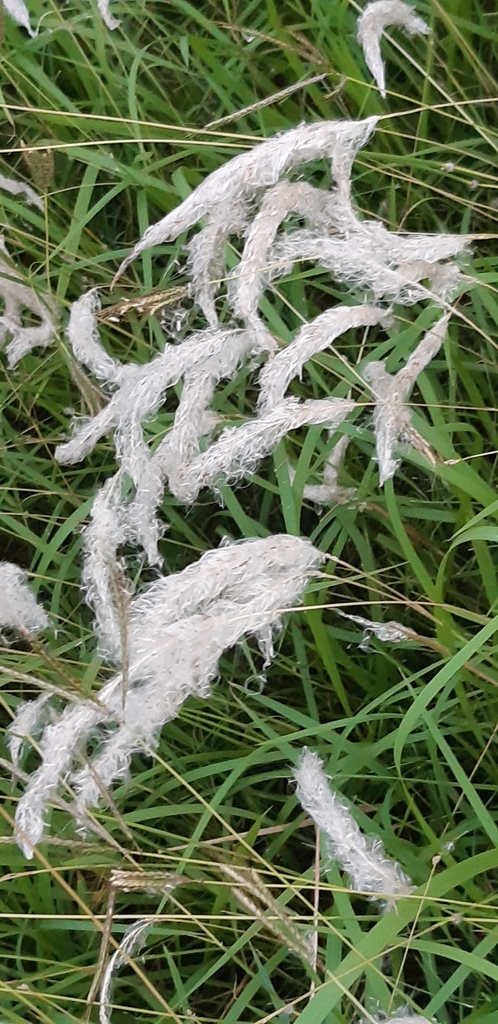
Imperata cylindrica pairs keep away recommendation. Then limited evidence on Imperata cylindrica. The rows do not erase each other — Imperata cylindrica. On imperata cylindrica, avoid does not replace limited evidence. Imperata cylindrica is the taxon those two facts attach to.
Use evidence on Imperata cylindrica. The citations remain on Imperata cylindrica. On imperata cylindrica, avoid sits with limited evidence beside Imperata cylindrica.
South Florida (FL footprint); partial normalized coverage · 2013-04-09
Florida Forest Service labels this publication the South Florida Edition. FireApproved publishes eight exact owners from its explicit narrative hazard callouts as South Florida context. It is not a statewide ranked list and its source-wide guidance is not projected onto unnamed plants.
Ohio State University Extension Bulletin 921 is an Ohio publication that describes Ohio fire seasons and landscape conditions and labels nativity to Ohio. FireApproved publishes 352 exact source-owning plant records from its eight rated tables. This historical publication scope does not assert current extension endorsement or that a listed plant suits every Ohio site.
9 sourced range or established records. This is not an invasive warning.
USDA hardiness
Documented range 5a–9b.
3. Legal, ecological, and broader status
Legal-list status
4 legal-list records; the Place chip matches exact scope.
Seed-list status
3 state noxious-weed seed records; the Place chip matches exact scope.
Reported invasive here
1 ecological invasive report.
Broader regional context
Federal context
Plant-specific legal-list reviews (1)
These source-bound review receipts are separate from ecological invasive reports. A source or plant identity change invalidates a receipt.
VA · Noxious-listed here. Designated noxious listed in the reviewed Virginia 2VAC5-317 Tier 1, Tier 2, and Tier 3 Noxious Weeds as of 2026-08-26. Authority: Virginia Board of Agriculture and Consumer Services; scope: state; as of 2026-08-26.Official reference.Normalized source record.
How to read this page
The status above is computed from the cited rows below: independent recommendations can support a fire-resistant result, an avoid row can produce keep-away, and disagreement stays visible as conflict. Placement notes preserve each source’s own scheme rather than translating unlike rules into one scale. This is evidence about a plant, not permission to plant it in every part of the defensible space; Zone 0 remains noncombustible.
Native and introduced range evidence
These are exact U.S. botanical-area records from the cited range source. Native and
introduced describe biogeographic relationship, not fire performance or planting approval.
Doubtful and extinct rows stay visible but do not count as current presence.
The lossless worldwide derivative is retained once in the research corpus; object pages repeat only exact U.S. areas needed by the local lens. The JSON twin carries the same page assertions.
Plant hardiness evidence
These values describe the plant source. Your ZIP zone comes from the separate 2023 USDA
Plant Hardiness Zone Map. Whole-zone values stay whole-zone, and a single unresolved value
is not treated as a tolerance range. Different source boundaries stay separate: overlapping
statements are compared independently, while only ranges with no shared zone are called a conflict.
5a–9b explicit range · half zone precision · source stated
Source taxon: Imperata cylindrica · exact match.
Source location: Imperata cylindrica profile, USDA Plant Hardiness Zone field.
Where its sources say to plant it
Placement rules below use each source's own distances or named zones, tied to its rating.
They are not interchangeable with the directory's current Zone 0 guidance.
Firewise Landscaping: plant in Zone 2-3 or beyond [OSU B921 source-category siting] (with its avoid rating)
North Carolina Extension Gardener Plant Toolbox: imperata-cylindrica [nc-toolbox-flammability-facet] (with its avoid rating)
Landscaping to Reduce Wildfire Risk: South Florida Edition: cogon grass [South Florida guide narrative callouts] (with its avoid rating)
The evidence
Grouped by what each source concluded. Primary evidence rated the plant itself
(a lab, field program, or original curation); corroboration compiled or
republished another source's rating and resolves to its root lineage.
4 cited rows from this source; its identity, lineage and tier are stated once.
Primary study Cardoso2018: Cardoso, A. W., Oliveras, I., Abernethy, K. A., Jeffery, K. J., Lehmann, D., Ndong, J. E., ... Malhi, Y.S. (2018). Grass Species Flammability, Not Biomass, Drives Changes in Fire Behavior at Tropical Forest-Savanna Transitions. Frontiers in Forests and Global Change, 1, 6.
Shared row context: plant part leaves; fuel all; predrying yes; device calorimeter; site Cardoso2018-1; sampling ND.