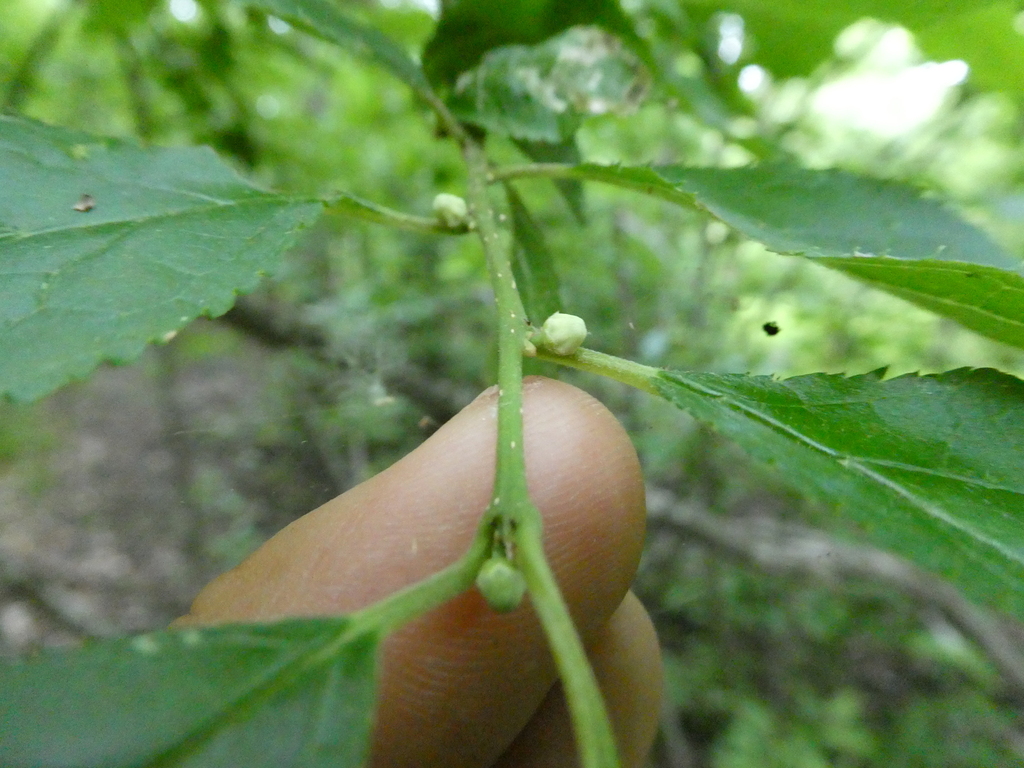
Current native
33
exact source areas
Home / Plants / Grow / Winterberry holly
Ilex verticillata
Your local evidence lens
A genus split is not a placement verdict. Set a ZIP to read the local documented split.
The status above is computed from the cited rows below: independent recommendations can support a fire-resistant result, an avoid row can produce keep-away, and disagreement stays visible as conflict. Placement notes preserve each source’s own scheme rather than translating unlike rules into one scale. This is evidence about a plant, not permission to plant it in every part of the defensible space; Zone 0 remains noncombustible.
These are exact U.S. botanical-area records from the cited range source. Native and introduced describe biogeographic relationship, not fire performance or planting approval. Doubtful and extinct rows stay visible but do not count as current presence.
Current native
exact source areas
Current introduced
exact source areas
Qualified
doubtful or extinct source rows
Eastern United States Fire Performance Plant Selector
Source prints 4 · single-value meaning unresolved
Wildfire-resistant Landscape Plants for Michigan (Extension Bulletin E2948)
3–9 explicit range
Fire-resistant Landscape Plants for the Willamette Valley (EM 9103)
3–9 explicit range
USDA PLANTS Database — Plant Characteristics
Minimum 4a · no upper limit documented
Eastern United States Fire Performance Plant Selector
“Firewise (1)”
Red, yellow and orange fruit forms available;attracts birds-showy in winter.
Quantifying and ranking the flammability of ornamental shrubs in the southern United States
“Low flammability (whole-plant burns, NIST BFRL)”
Firewise Landscaping in North Carolina (E05-44596)
“Low flammability rating”
Firewise Landscaping (OSU Extension Bulletin 921)
“L flammability”
Tolerates wet soils; acid soil preferred.
Virginia Firescapes — Firewise Landscaping for Woodland Homes (430-300)
“L flammability”
Tolerates wet soils.
Fire-Resistant Landscaping in North Carolina (AG-874)
“low flammability”
Landscaping Guidelines to Protect Your Home from Wildfire (SP685)
“listed Firewise plant”
Wildfire-resistant Landscape Plants for Michigan (Extension Bulletin E2948)
“considered wildfire-resistant and are recommended for Michigan’s climate”
Table 1 row: Ilex verticillata (Michigan holly).
Fire-resistant Landscape Plants for the Willamette Valley (EM 9103)
“fire-resistant plants that thrive in Willamette Valley growing conditions”
The shrubs & woody vines profile lists Ilex verticillata as Winterberry. The profile prints USDA Hardiness Zone: 3–9 Bloom: April–July.
North Carolina Extension Gardener Plant Toolbox — plant profiles and flammability ratings
“low flammability”
NC Toolbox facet capture lists "Ilex verticillata", "Ilex verticillata 'Southern Gentleman'", "Ilex verticillata 'Winter Gold'", "Ilex verticillata 'Winter Red'" under the low flammability tag.
Firewise Landscaping Plants (Maryland, New Jersey, and West Virginia editions)
“relatively resistant to fire”
Listed as Ilex verticillata (Winterberry Holly). The source says listed species exhibit stronger resistance to ignition by wildfires. Source comments: Tolerates wet soils
Maine fire-resistant plant list
“listed as fire-resistant for landscaping 30-100 feet from a structure”
Maine Forest Service includes Winterberry/Black alder (Ilex verticillata) on its partial fire-resistant plant list for landscaping 30-100 feet from a structure. The printed scientific name is a unique current-name match to this record.