United States / Grow / Hydrangea
Hydrangea
Hydrangeas have mixed fire-resistance evidence: several named kinds rate favorably, but climbing hydrangea receives opposing ratings.
Four of six directory records are rated fire resistant, one is contested, and in one the sources do not take a side. The six records include named taxa and a generic Hydrangea sp. entry; they are neither a census of six species nor six independent studies.
In controlled whole-plant burns, the USDA Forest Service Southern Research Station and NIST placed the ‘Nikko’ cultivar of French hydrangea in a low-flammability cluster. That finding applies to ‘Nikko’, not every cultivar. Oakleaf hydrangea also ranked low in those burns. Ohio State University Extension separately rated oakleaf hydrangea L on its five-band scale, while tying retained fire resistance to removing dead material, pruning, and managing plant spacing and density. Wild hydrangea received the favorable Firewise 1 rating from the eastern US selector for placement 10–30 feet from a structure, with debris removal, thinning, limited massing, and attention to mature height.
Climbing hydrangea is the exception that prevents a simple yes. Ohio State rated it H, its avoid level, and warned that vines covering walls or roofs create ladder fuels. Virginia Cooperative Extension rated it L, its favorable category, but did not treat that rating as permission for vegetation to bridge onto a structure. The sources do not establish why those ratings differ, so climbing hydrangea should be judged separately from the favorably rated shrub species.
 Rated as a group: Hydrangeas Hydrangea sp. Awaiting evidence Limited evidence 2 sources rate the genus as a
whole. Species evidence never rolls upward into a genus verdict, and genus claims never
override a species record.
›
Rated as a group: Hydrangeas Hydrangea sp. Awaiting evidence Limited evidence 2 sources rate the genus as a
whole. Species evidence never rolls upward into a genus verdict, and genus claims never
override a species record.
› Fire-resistant: 4 species
-
 French hydrangea Fire-resistant Hydrangea macrophylla
 -
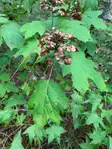 oakleaf hydrangea Fire-resistant Hydrangea quercifolia
 -
 wild hydrangea Fire-resistant Hydrangea arborescens
 -
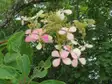 panicled hydrangea Fire-resistant Hydrangea paniculata
Documented conflict: 1 species
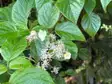
About Hydrangea
Directory notes
More about Hydrangea: Wikipedia — external references; not evidence sources.