United States / Grow / Cedars
Cedars
Cedars in Chamaecyparis are not reliably fire resistant: three of five are rated keep away, and the other two are contested.
Port Orford cedar and Atlantic white cedar are rated keep away on a handful of assessments, while cedar identified only as Chamaecyparis species receives the same verdict on two listings. The cautions differ by species. Atlantic white cedar adapts to wet, boggy sites but is heat intolerant. Sawara-cypress, one of the contested members, tends to retain brown dead needles in both its juvenile and adult foliage forms. Hinoki false cypress is also contested despite a substantial body of assessment, so neither contested species offers a clear exception.
Port Orford cedar shows why “fire resistant” needs context. A 2023 Forest Service review says large trees are likely to survive most surface fires and describes them as fire resistant. In the same review, seedlings and small trees are likely to be injured or killed, while pole-sized trees are only moderately fire resistant. Those size-specific findings do not apply to the whole genus, and they do not erase Port Orford cedar’s keep-away rating.
Chamaecyparis includes trees and shrubs in the cypress family, but the practical conclusion does not depend on form. With every assessed member either discouraged or disputed, these cedars should not be chosen on the assumption that the genus is fire resistant.
 Rated as a group: cedar Chamaecyparis sp. Keep away Limited evidence 2 sources rate the genus as a
whole. Species evidence never rolls upward into a genus verdict, and genus claims never
override a species record.
›
Rated as a group: cedar Chamaecyparis sp. Keep away Limited evidence 2 sources rate the genus as a
whole. Species evidence never rolls upward into a genus verdict, and genus claims never
override a species record.
› Keep away: 2 species
-
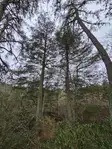 Atlantic white cedar Keep away Chamaecyparis thyoides
 -
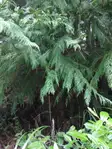 Port Orford cedar Keep away Chamaecyparis lawsoniana
Documented conflict: 2 species
-
 hinoki false cypress Documented conflict Chamaecyparis obtusa
 -
 sawara-cypress Documented conflict Chamaecyparis pisifera
About cedars
Directory notes
More about Chamaecyparis: Wikipedia — external references; not evidence sources.
