United States / Grow / Hackberries
Hackberries
Hackberries generally lean fire resistant, but that conclusion applies to assessed species rather than every Celtis tree.
Five of eight assessed species are rated fire resistant, while sources assessing the other three did not take a side. Common hackberry has the strongest support and is the most-studied member of the genus. European hackberry and sugarberry also receive resistant ratings, each from a handful of assessments, while dwarf hackberry appears under a low-flammability tag.
The reasons are not identical across species. European hackberry’s rating comes from a qualitative garden-suitability method that assumes species-specific care and considers fire evidence alongside fuel structure and maintenance. Maintenance and irrigation also recur in the assessments of two members, showing that some judgments depend partly on how the particular tree is managed. Sugarberry’s assessment notes its tolerance of many soil types and conditions, but that trait alone does not explain the genus-wide result.
Celtis belongs to the Cannabaceae family, and its members are trees. The four measured members mature at roughly 10 to 50 feet, while the four zoned members span USDA zones 2a through 6b. The practical distinction is species-level: common, European, sugarberry, and dwarf hackberries have favorable findings, but a shared genus name does not automatically give every hackberry the same rating.
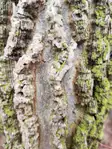 Rated as a group: hackberry Celtis sp. Fire-resistant Limited evidence 3 sources rate the genus as a
whole. Species evidence never rolls upward into a genus verdict, and genus claims never
override a species record.
›
Rated as a group: hackberry Celtis sp. Fire-resistant Limited evidence 3 sources rate the genus as a
whole. Species evidence never rolls upward into a genus verdict, and genus claims never
override a species record.
› Fire-resistant: 4 species
-
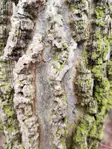 common hackberry Fire-resistant Celtis occidentalis
 -
 European hackberry Fire-resistant Celtis australis
 -
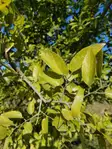 sugarberry Fire-resistant Celtis laevigata
 -
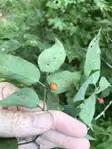 dwarf hackberry Fire-resistant Celtis tenuifolia
Awaiting evidence: 3 species
- spiny hackberry Awaiting evidence Celtis ehrenbergiana
-
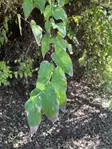 netleaf hackberry Awaiting evidence Celtis reticulata
 - White stinkwood Awaiting evidence Celtis africana
About hackberries
Directory notes
More about Celtis: Wikipedia — external references; not evidence sources.