United States / Grow / Barberries
Barberries
Barberries differ in fire resistance: creeping barberry has a favorable listing, while Berberis oiwakensis is graded high flammability.
FireSmart BC includes creeping barberry among its fire-resistant plants but flags it as needing more research. That qualification belongs with the favorable listing. Fire and Emergency New Zealand places Berberis oiwakensis in its high-flammability category. The split crosses both species and assessment programs; the shared barberry name cannot resolve it.
Japanese barberry illustrates a different question. In its 2008 review, the US Forest Service found no published accounts describing the plant’s immediate response to fire. Drawing on one field study, the review inferred that fire probably kills the aboveground growth while causing little damage below ground. That is an inference about survival after burning, not a finding that Japanese barberry resists ignition.
These distinctions keep the evidence attached to the right plant and question. A favorable creeping-barberry listing, a high grade for Berberis oiwakensis, and an inference about Japanese barberry’s survival cannot be substituted for one another.
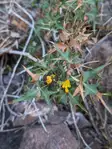 Rated as a group: barberry Berberis Fire-resistant Consensus 9 sources rate the genus as a
whole. Species evidence never rolls upward into a genus verdict, and genus claims never
override a species record.
›
Rated as a group: barberry Berberis Fire-resistant Consensus 9 sources rate the genus as a
whole. Species evidence never rolls upward into a genus verdict, and genus claims never
override a species record.
› Fire-resistant: 5 species
-
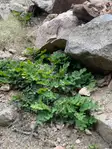 creeping barberry Fire-resistant Berberis repens
 -
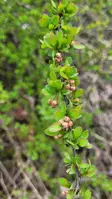 Japanese barberry Fire-resistant Berberis thunbergi
 -
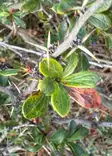 Magellan barberry Fire-resistant Berberis buxifolia
 -
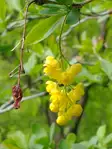 common barberry Fire-resistant Berberis vulgaris
 - Mentor barberry Fire-resistant Berberis xmentorensis
Keep away: 1 species
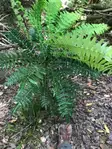
Documented conflict: 1 species
Awaiting evidence: 3 species
- Darwin's berberis Awaiting evidence Berberis darwinii
- Berberis serratodentata Awaiting evidence Berberis serratodentata
-
 Fremont's mahonia Awaiting evidence Berberis fremontii
About barberries
Directory notes
More about Berberis: Wikipedia — external references; not evidence sources.