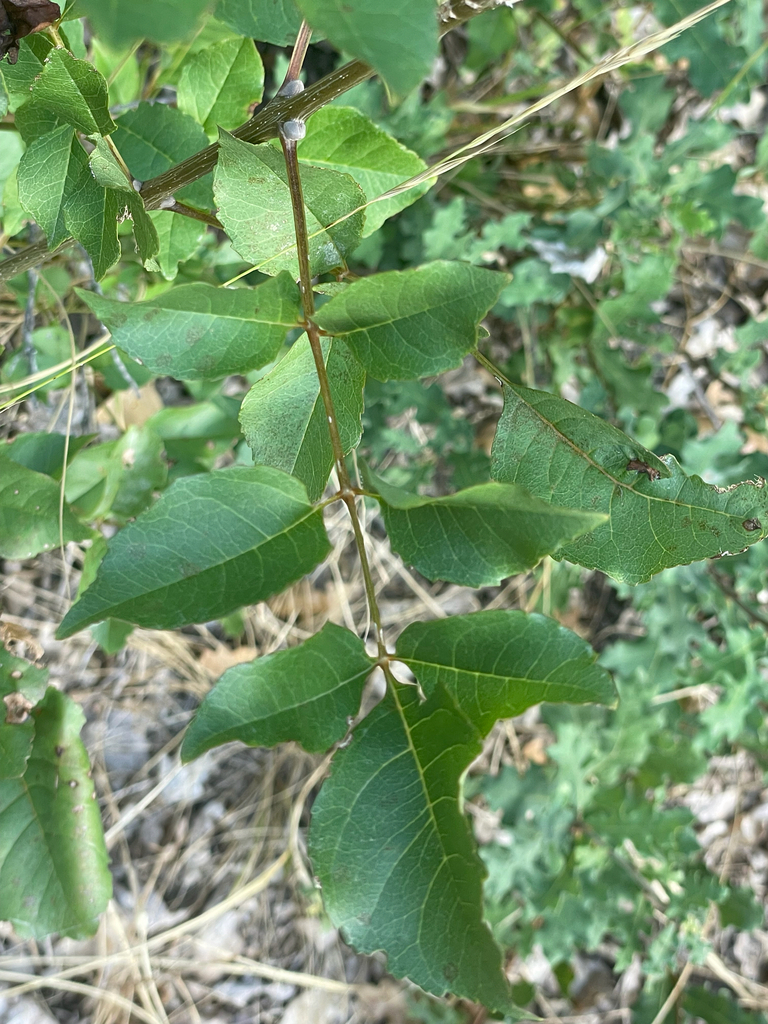
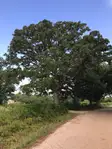
The record's disagreement and the green test condition must therefore be read together. The source row does not cancel the disagreement, and the full table preserves their provenance. Then use related plants to compare cited same-form alternatives if the conflict prevents this Fraxinus record from fitting the reader's planting job.
Only uncertain or inapplicable hardiness rows are cited; no primary zone is projected.
3. Legal, ecological, and broader status
Legal-list status
Seed-list status
Reported invasive here
Broader regional context
Federal context
How to read this page
The status above is computed from the cited rows below: independent recommendations can support a fire-resistant result, an avoid row can produce keep-away, and disagreement stays visible as conflict. Placement notes preserve each source’s own scheme rather than translating unlike rules into one scale. This is evidence about a plant, not permission to plant it in every part of the defensible space; Zone 0 remains noncombustible.
Plant hardiness evidence
These values describe the plant source. Your ZIP zone comes from the separate 2023 USDA
Plant Hardiness Zone Map. Whole-zone values stay whole-zone, and a single unresolved value
is not treated as a tolerance range. Different source boundaries stay separate: overlapping
statements are compared independently, while only ranges with no shared zone are called a conflict.
Source location: Cold Hardiness Zone field in the recovered selector record.
Not used for comparison: The recovered selector prints one Cold Hardiness Zone value but does not define it as a minimum threshold or a one-zone range.
Conditions in the fire evidence
These describe tested or rated plant material. They are not horticultural maintenance instructions.
Placement rules below use each source's own distances or named zones, tied to its rating.
They are not interchangeable with the directory's current Zone 0 guidance.
Eastern United States Fire Performance Plant Selector: Landscape Zone 3 — 10–30 ft from the structure; thin vegetation, remove debris, and minimize plant massing [Fire Performance Plant Selector landscape zone] (with its recommendation)
The evidence
Grouped by what each source concluded. Primary evidence rated the plant itself
(a lab, field program, or original curation); corroboration compiled or
republished another source's rating and resolves to its root lineage.
12 cited rows from this source; its identity, lineage and tier are stated once.
Primary study Molina2017: Molina, J. R., Martín, T., Rodríguez Y Silva, F., & Herrera, M. Á. (2017). The ignition index based on flammability of vegetation improves planning in the wildland-urban interface: A case study in Southern Spain. Landscape and Urban Planning, 158, 129-138.
Shared row context: plant part leaves; fuel live; predrying no; device epiradiator; site Molina2017-1; sampling summer.
Primary study Petriccione2006: Petriccione, M. (2006). Infiammabilità della lettiera di diverse specie vegetali di ambiente mediterráneo. Tesi Di Dottorato. Università Degli Studi Di Napoli Federico II.
Shared row context: plant part leaves; fuel live; predrying no; device epiradiator; site Petriccione2006-1; sampling may to june.
Primary study Rasooli2021: Rasooli, S. B., Rashidi, S., & Shabanian, N. (2021). Fire sensitivity of broadleaf tree species in plantations of Kurdistan, Iran. Journal of Forestry Research, 32, 1167-1176.