Enter your ZIP to see whether this is legal to plant in your state, and whether it survives your winter.
Weeping lovegrass has uncertain fire resistance, while Yavapai County's plant guide lists it as fire-prone.
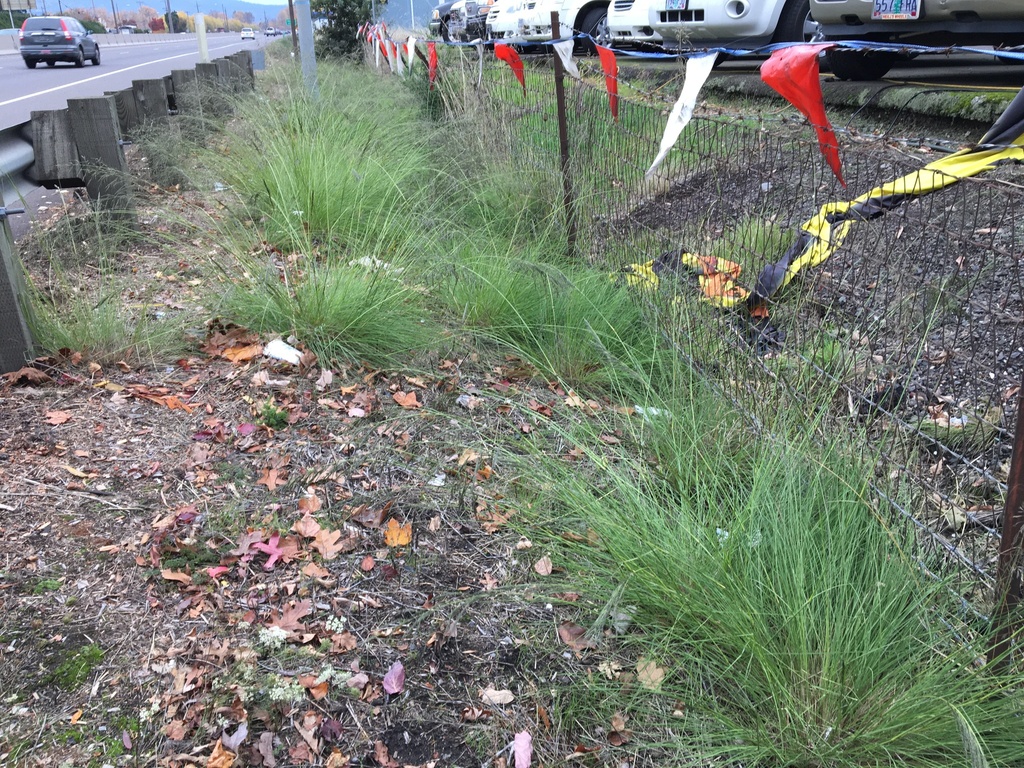
The University of Arizona Cooperative Extension includes weeping lovegrass among its fire-prone plants. The bulletin says that category may ignite readily and burn intensely. For plants near a home, road or driveway, it calls for removal or aggressive maintenance. That is a practical warning about where the grass is already growing.
A different kind of evidence comes from FLAMITS, which compiles experiments on leaves of Eragrostis curvula. An ignition-time observation concerns live leaves tested without being dried beforehand under an epiradiator, a controlled heating device. Timing the start of flaming under those conditions does not establish how a whole planted grass will perform around a house.
The landscape warning therefore remains useful even though the experimental measurements do not supply a general fire-resistance rating. Choosing weeping lovegrass as a fire-resistant planting would go beyond what either source establishes.
Form
grass
Mature height
~3 ft
Water need
moderate
Rated in
Global; Yavapai County, Arizona
On this lot
1. Fire evidence and conditions
Fire evidence
Mixed evidence — location does not change the cited classification.
Fire-performance conditions
Fire ecology context
Placement evidence
Evidence regions
Global; Yavapai County, Arizona
Maintenance
Typed publication scope: 1 scope across 1 cited fire source
Yavapai County (AZ footprint); partial normalized coverage · 2025-03-14
University of Arizona Cooperative Extension authors Bulletin 34 for Yavapai County. FireApproved publishes 198 exact source owners from its resistant and prone tables and keeps the county boundary visible. County publication scope is regional Arizona context, never statewide scope.
2. Why this plant is relevant here
State distribution
Documented in AL, AR, AZ, CA, CO, DE, FL, GA, HI, IL, KS, KY, LA, MA, MD, MO, MS, NC, NJ, NM, NY, OH, OK, OR, PA, PR, SC, TN, TX, UT, VA, WA, WV.
Native range
Introduced / established
33 sourced range or established records. This is not an invasive warning.
USDA hardiness
Documented minimum 6b; no upper limit is documented.
3. Legal, ecological, and broader status
Legal-list status
1 legal-list record; the Place chip matches exact scope.
Seed-list status
Reported invasive here
2 ecological invasive reports.
Broader regional context
Federal context
How to read this page
The status above is computed from the cited rows below: independent recommendations can support a fire-resistant result, an avoid row can produce keep-away, and disagreement stays visible as conflict. Placement notes preserve each source’s own scheme rather than translating unlike rules into one scale. This is evidence about a plant, not permission to plant it in every part of the defensible space; Zone 0 remains noncombustible.
Native and introduced range evidence
These are exact U.S. botanical-area records from the cited range source. Native and
introduced describe biogeographic relationship, not fire performance or planting approval.
Doubtful and extinct rows stay visible but do not count as current presence.
The lossless worldwide derivative is retained once in the research corpus; object pages repeat only exact U.S. areas needed by the local lens. The JSON twin carries the same page assertions.
Plant hardiness evidence
These values describe the plant source. Your ZIP zone comes from the separate 2023 USDA
Plant Hardiness Zone Map. Whole-zone values stay whole-zone, and a single unresolved value
is not treated as a tolerance range. Different source boundaries stay separate: overlapping
statements are compared independently, while only ranges with no shared zone are called a conflict.
Source location: PlantCharacteristics record 22749, Temperature, Minimum (°F).
The evidence
Grouped by what each source concluded. Primary evidence rated the plant itself
(a lab, field program, or original curation); corroboration compiled or
republished another source's rating and resolves to its root lineage.
Listed as Weeping love grass — Eragrostis curvula. The bulletin says fire-resistant plants tend to resist ignition when irrigated and maintained, while fire-prone plants may ignite readily and burn intensely.
Listed without a rating (18)Corroboration (18 rows from 1 source)
18 cited rows from this source; its identity, lineage and tier are stated once.
Primary study Simpson2016: Simpson, K. J., Ripley, B. S., Christin, P. A., Belcher, C. M., Lehmann, C. E., Thomas, G. H., & Osborne, C P. (2016). Determinants of flammability in savanna grass species. Journal of Ecology, 104, 138-148.
Shared row context: plant part leaves; fuel live; device epiradiator; site Simpson2016-1; sampling july.
“time to flaming (s): 1.39”
FLAMITS record 12780; Ignitability measurement; predrying no.
“time to flaming (s): 1.78”
FLAMITS record 12781; Ignitability measurement; predrying yes.
“mass loss rate (g/s): 0.03”
FLAMITS record 12834; Combustibility measurement; predrying no.
“mass loss rate (g/s): 0.03”
FLAMITS record 12835; Combustibility measurement; predrying yes.
“flaming duration (s): 6.17”
FLAMITS record 12882; Sustainability measurement; predrying no.
“flaming duration (s): 5.94”
FLAMITS record 12883; Sustainability measurement; predrying yes.
Primary study Gao2022: Gao, X., & Schwilk, D. W. (2022). Burn hot or tolerate trees: flammability decreases with shade tolerance in grasses. Oikos, 4, e08930.
Shared row context: plant part whole plant; fuel live; predrying no; device burning bench; site Gao2022-1; sampling spring 2019.