Enter your ZIP to see whether this is legal to plant in your state, and whether it survives your winter.
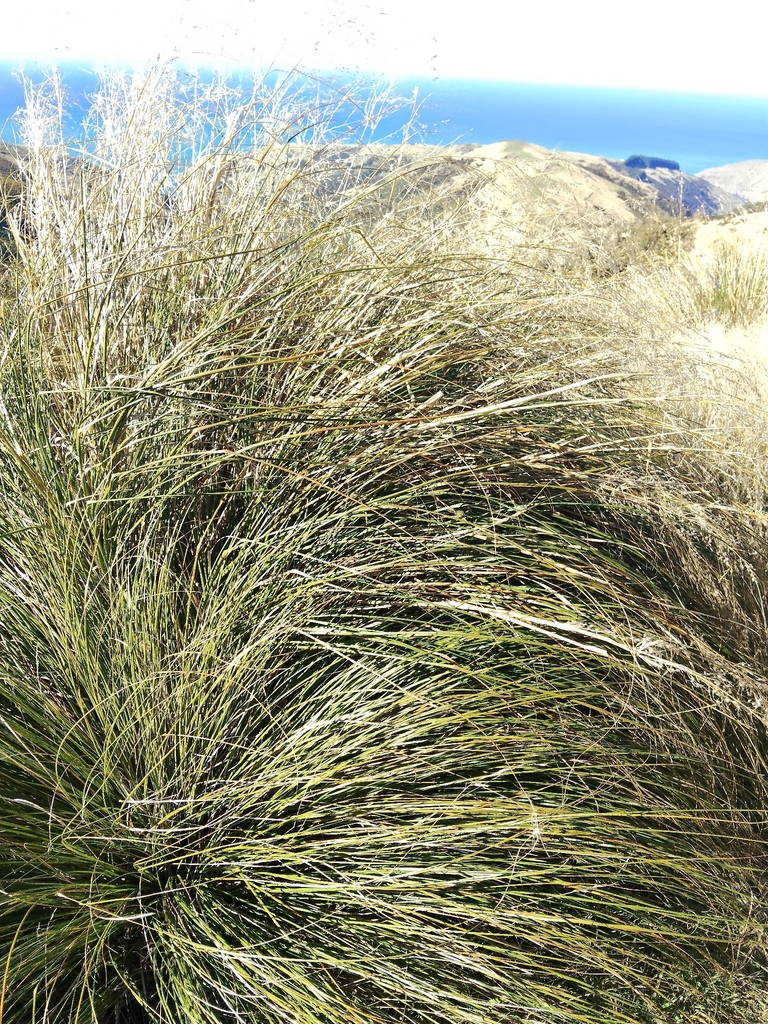
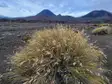
Chionochloa rigida has an avoid recommendation. The evidence table retains a limited evidence pack, keeping the direction and source depth visible as separate parts of the narrow-leaved snow tussock record.
Same-form alternatives are collected under related plants. The genus index broadens the browsing path, but the accepted basis remains specific to C. rigida. This division permits form comparison without importing another tussock's rows, changing the limited classification, or weakening the avoid direction computed for this species. The narrow-leaved snow tussock entry remains the boundary for that direction, depth, and comparison.
Highly flammable — location does not change the cited classification.
Fire-performance conditions
Fire ecology context
Placement evidence
Evidence regions
Global; New Zealand
Maintenance
2. Why this plant is relevant here
State distribution
Native range
Introduced / established
USDA hardiness
3. Legal, ecological, and broader status
Legal-list status
Seed-list status
Reported invasive here
Broader regional context
Federal context
How to read this page
The status above is computed from the cited rows below: independent recommendations can support a fire-resistant result, an avoid row can produce keep-away, and disagreement stays visible as conflict. Placement notes preserve each source’s own scheme rather than translating unlike rules into one scale. This is evidence about a plant, not permission to plant it in every part of the defensible space; Zone 0 remains noncombustible.
The evidence
Grouped by what each source concluded. Primary evidence rated the plant itself
(a lab, field program, or original curation); corroboration compiled or
republished another source's rating and resolves to its root lineage.
Avoids (1)
Low Flammability Plants directory — Fire and Emergency New Zealand (plant flammability testing at Lincoln University) · 2026 · original sourcePrimary evidenceLab-testedlineage: lincoln-nz-tree
“Very high flammability”
Very high flammability classification.
Listed without a rating (8)Corroboration (8 rows from 1 source)
8 cited rows from this source; its identity, lineage and tier are stated once.
Primary study Cui2020a: Cui, X., Paterson, A. M., Wyse, S. V., Alam, M. A., Maurin, K. J. L., Pieper, R., ... Curran, T. J. (2020a). Shoot flammability of vascular plants is phylogenetically conserved and related to habitat fire-proneness and growth form. Nature Plants, 6, 355-359.
Shared row context: plant part whole plant; fuel all; predrying yes; device grill; site Cui2020a-1; sampling ND.
“ignition frequency (%): 100”
FLAMITS record 1356; Ignitability measurement.
“maximum sample temperature (°C): 729.1”
FLAMITS record 1550; Combustibility measurement.
“burning duration (s): 239.9”
FLAMITS record 1744; Sustainability measurement.
“estimated burnt biomass (%): 93.5”
FLAMITS record 1938; Consumability measurement.
Primary study Padulles2018: Padullés-Cubino, J., Buckley, H. L., Day, N. J., Pieper, R., & Curran, T. J. (2018). Community-level flammability declines over 25 years of plant invasion in grasslands. Journal of Ecology, 106, 1582-1594.
Shared row context: plant part whole plant; fuel all; predrying yes; device grill; site Padulles2018-1; sampling 1982 to 2007.