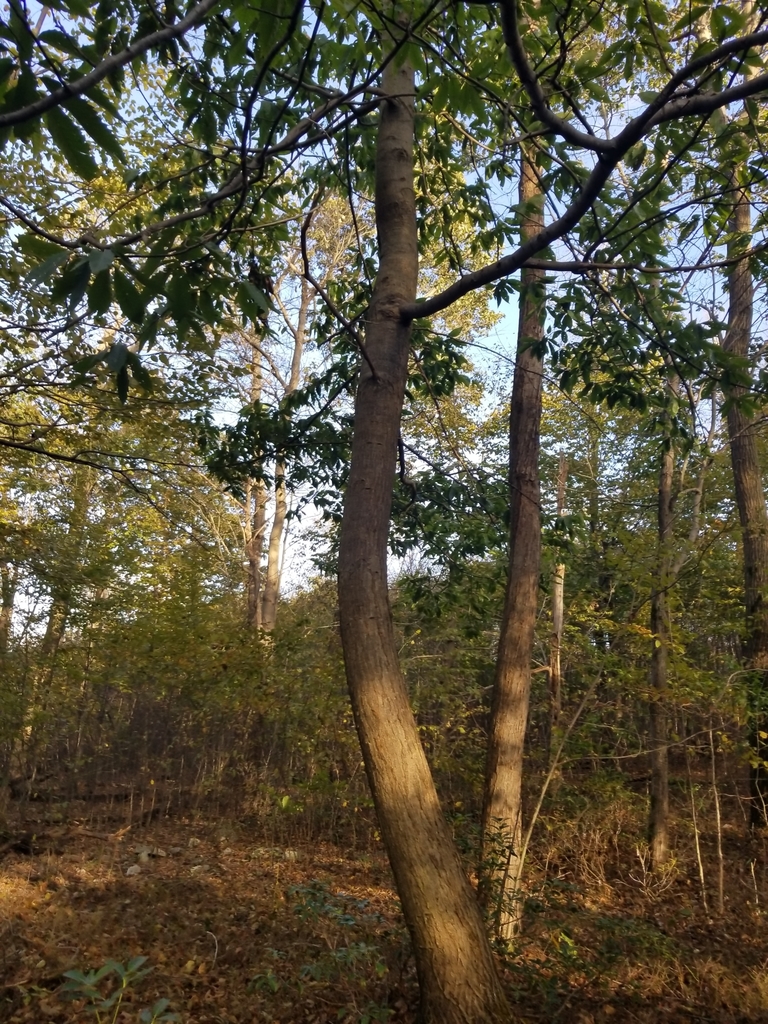
American chestnut
Castanea dentata
A genus split is not a placement verdict.
Is this one for your yard?
Enter your ZIP to see whether this is legal to plant in your state, and whether it survives your winter.
American chestnut is rated fire resistant, but an “At Risk” assessment and limited primary evidence make that conclusion qualified.
Ohio State University Extension gives the tree an L on its five-band flammability scale, where L supports recommendation. It separately describes American chestnut as rare, disease sensitive, and short-lived. Virginia Cooperative Extension and Virginia Tech also assign an L, the favorable end of their three-point scale, and explain that few trees are found because of blight. These regional judgments from the Midwest and Mid-Atlantic put the flammability question on the resistant side.
The USDA Forest Service and state Firewise programs supply the main caution. They rate American chestnut “At Risk,” or 3 on a four-point Firewise scale. They also describe it as generally surviving through suckers from old stumps, which die as they begin producing nuts because only the roots resist chestnut blight. This rating addresses Firewise suitability rather than using either extension service’s flammability scale, so the three assessments cannot be translated directly into one common score.
A primary study measured predried American chestnut litter on a burning bench and recorded a flame height of 98.9 centimeters. That figure describes one aspect of burning under those test conditions. FLAMITS sets no threshold that turns it into a resistant or hazardous verdict.
- Form
- tree
- Mature height
- ~40 ft
- Light
- Full sun
- Water need
- moderate
- Rated in
- Global; Ohio / Midwest; Virginia / Mid-Atlantic; eastern US