Enter your ZIP to see whether this is legal to plant in your state, and whether it survives your winter.
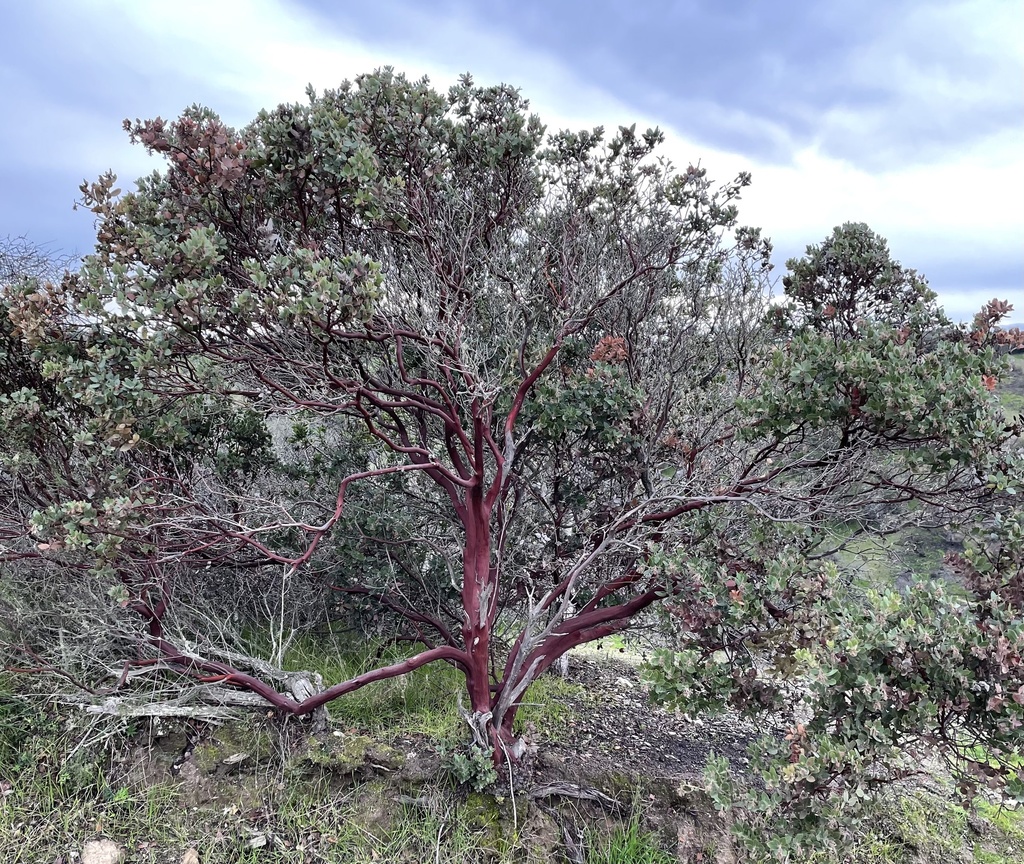
Arctostaphylos is a genus-rank umbrella record. It remains limited evidence on the evidence table, where the computed result is avoid. The umbrella rank matters because the source position belongs here rather than flowing to every Arctostaphylos species gathered on the genus page.
Cited same-form alternatives are collected under related plants when the avoid result changes the planting choice. Their rows stay on their own records instead of borrowing this umbrella's evidence. Revisiting the evidence table preserves both the limited support and the avoid direction while the comparison path remains genuinely separate.
City of Ashland (OR footprint); partial normalized coverage · 2026-08-26
This is a City of Ashland adoption fact, not statewide Oregon guidance or an experimental flammability result. FireApproved publishes 24 taxonomy-safe owners as city-level regulatory context. It applies to new planting and propagation within 30 feet of structures, including structures on adjacent lots; it is not projected as a blanket removal order for every established listed plant.
Marin County (CA footprint); partial normalized coverage · 2019-01-01
The publication is explicitly limited to plants common to Marin County. FireApproved publishes 104 exact owners as Marin regional context while retaining its placement, spacing, irrigation, and maintenance boundary. It is not statewide California guidance or parcel suitability.
Yavapai County (AZ footprint); partial normalized coverage · 2025-03-14
University of Arizona Cooperative Extension authors Bulletin 34 for Yavapai County. FireApproved publishes 198 exact source owners from its resistant and prone tables and keeps the county boundary visible. County publication scope is regional Arizona context, never statewide scope.
2. Why this plant is relevant here
State distribution
Documented in AZ.
Native range
Introduced / established
USDA hardiness
3. Legal, ecological, and broader status
Legal-list status
Seed-list status
Reported invasive here
Broader regional context
Federal context
How to read this page
The status above is computed from the cited rows below: independent recommendations can support a fire-resistant result, an avoid row can produce keep-away, and disagreement stays visible as conflict. Placement notes preserve each source’s own scheme rather than translating unlike rules into one scale. This is evidence about a plant, not permission to plant it in every part of the defensible space; Zone 0 remains noncombustible.
Where its sources say to plant it
Placement rules below use each source's own distances or named zones, tied to its rating.
They are not interchangeable with the directory's current Zone 0 guidance.
Prohibited Flammable Plants: new planting or propagation restricted within 30 ft of any structure [Ashland Municipal Code setback] (with its avoid rating)
The evidence
Grouped by what each source concluded. Primary evidence rated the plant itself
(a lab, field program, or original curation); corroboration compiled or
republished another source's rating and resolves to its root lineage.
The City of Ashland restricts new planting or propagation within 30 ft of any structure, including structures on adjacent lots (AMC 9.04). Dwarf or prostrate varieties require Fire and Rescue approval, placement beyond 5 ft, and ordinance-compliant tree or shrub spacing.
Listed as Manzanita — Arctostaphylos sp.. The bulletin says fire-resistant plants tend to resist ignition when irrigated and maintained, while fire-prone plants may ignite readily and burn intensely.
Listed without a rating (1)Corroboration (1 rows from 1 source)
FLAMITS record 17478; Ignitability measurement; plant part leaves; fuel live; predrying no; device burning bench; site McAllister2014-2; sampling ND. Primary study McAllister2014: McAllister S., & Finney, M. (2014). Convection Ignition of Live Forest Fuels. Fire Safety Science - Proceedings of the eleventh International Symposium 11th conference. Christchurch, New Zealand.