Enter your ZIP to see whether this is legal to plant in your state, and whether it survives your winter.
Barbas de indio cannot be called fire resistant from the reported temperature measurement alone.
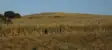
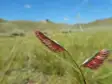
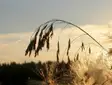
This grass, Andropogon bicornis, belongs to the Poaceae family. The FLAMITS database, published through Dryad / Global Ecology and Biogeography, reports a maximum sample temperature of 199°C for a predried whole-plant sample tested on a grill. The measurement comes from V. Zanzarini’s 2019 master’s dissertation at Universidade Estadual Paulista, which studied the flammability of cerrado herbaceous species.
The distinction is between a temperature and a resistance rating. Maximum sample temperature describes how hot the sample became during the test. It is not the temperature required to ignite the plant, nor is it a measure of whether the plant survives fire. The use of a grill is part of the experimental conditions, so the result needs to travel with that detail.
FLAMITS brings together measurements of different aspects of flammability and preserves their experimental context. It does not impose a common threshold that turns unlike measurements into a fire-resistant or flammable verdict. For a homeowner choosing barbas de indio, the temperature therefore offers a specific observation about its behavior under test conditions, without establishing that it is a suitable grass for reducing fire risk near a home.
Form
grass
Rated in
Global
On this lot
1. Fire evidence and conditions
Fire evidence
Mixed evidence — location does not change the cited classification.
Fire-performance conditions
Fire ecology context
Placement evidence
Evidence regions
Global
Maintenance
2. Why this plant is relevant here
State distribution
Documented in FL, PR, VI.
Native range
Introduced / established
2 sourced range or established records. This is not an invasive warning.
USDA hardiness
3. Legal, ecological, and broader status
Legal-list status
Seed-list status
1 state noxious-weed seed record; the Place chip matches exact scope.
Reported invasive here
Broader regional context
Federal context
How to read this page
The status above is computed from the cited rows below: independent recommendations can support a fire-resistant result, an avoid row can produce keep-away, and disagreement stays visible as conflict. Placement notes preserve each source’s own scheme rather than translating unlike rules into one scale. This is evidence about a plant, not permission to plant it in every part of the defensible space; Zone 0 remains noncombustible.
The evidence
Grouped by what each source concluded. Primary evidence rated the plant itself
(a lab, field program, or original curation); corroboration compiled or
republished another source's rating and resolves to its root lineage.
Listed without a rating (3)Corroboration (3 rows from 1 source)
3 cited rows from this source; its identity, lineage and tier are stated once.
Primary study Zanzarini2019: Zanzarini, V. (2019). Inflamabilidade de espécies do estrato herbáceo do cerrado. Master dissertation. Universidade Estadual Paulista (Unesp).
Shared row context: plant part whole plant; fuel all; predrying yes; device grill; site Zanzarini2019-2; sampling ND.