Home / Guides / How to read a record / Why West Virginia's plant list still names Maryland's state flower
Why West Virginia's plant list still names Maryland's state flower
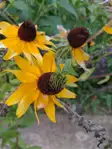
West Virginia’s official list says the plants can be grown in West Virginia, are commercially available, and are relatively resistant to fire. It also says there is no such thing as a fireproof plant and calls the list not comprehensive. Then its Rudbeckia hirta row says “State flower of Maryland.”
That leftover is not a reason to throw away the list. It is a reason to model provenance honestly. The official Maryland, New Jersey, and West Virginia editions preserve the same 180 printed taxon occurrences. FireApproved normalizes them to 169 conservative owners once, gives that source family one evidence vote, and projects its reviewed scope into each state that officially published an edition.
Why it matters
Without lineage, the same table can look like three governments independently reached the same 169 plant judgments. They did not. Without geographic scope, the opposite mistake happens: West Virginia users lose a list their own Division of Forestry publishes because Maryland was used as the normalized master.
The clean answer keeps both facts:
- One evidence lineage: the duplicated tables do not manufacture consensus.
- Three exact-state scopes: users in Maryland, New Jersey, and West Virginia can find the edition meant for their state.
That distinction is especially important on plant pages, where a user may also see USDA occurrence, native range, hardiness, invasive or regulatory status, and evidence from laboratory or expert sources. Those fields answer different questions.
How the West Virginia layer works
What the official PDF says:
- Plants on the list can be grown in West Virginia, are commercially available, and are relatively fire resistant.
- No plant is fireproof; the listed species exhibit stronger resistance to ignition by wildfires.
- The list is not comprehensive.
- Its screening criteria include high leaf moisture; low oil or resin; little litter or debris; few dead branches, leaves, or twigs; drought resistance; climate and soil fit; and an open, loose branching habit.
- It says exotic-invasive species were removed and marks West Virginia natives with N.
- Separate columns address deer damage, landscaping use, and comments. Those columns are not additional independent flammability scores.
What the directory stores:
- 180 printed source occurrences are preserved in the family extraction ledger.
- 169 conservative plant owners receive the single source-family evidence row.
- One botanical-form row is held because broadening a named form to its whole species would invent scope.
- West Virginia plant evidence currently has 793 occurrence records: 437 on-list, 133 avoid, 42 conflict, and 181 candidate. The 169 exact-state list owners are a scoped subset, not a replacement for those derived statuses.
The five questions on one plant page
| User question | Data layer | What a yes does not mean |
|---|---|---|
| Has this taxon been documented in West Virginia? | USDA occurrence | Native, recommended, or legal everywhere |
| Is it native here? | Exact native-range evidence | Fire-resistant or appropriate near a wall |
| Does an official West Virginia edition list it? | 169-owner Firewise scope | Independent corroboration from three states |
| What does all fire evidence compute to? | Derived status from source rows | Parcel-specific approval |
| Is it regulated or ecologically concerning here? | Legal and ecological status sources | The same thing as flammability |
For example, Acer rubrum, Quercus alba, and Ilex opaca can each carry different combinations of those layers. The interface should show the differences, not compress them into a green check.
The copied sentence as a provenance test
The West Virginia table prints:
- Rudbeckia spp. — “Many native and cultivated species.”
- Rudbeckia hirta — “State flower of Maryland.”
The second comment is a strong shared-lineage marker because it names another state inside West Virginia’s edition. It confirms what a row-by-row comparison shows: the three tables are editions of one template family. This is why FireApproved stores the family under one source record with three reviewed coverage scopes instead of cloning 169 evidence rows twice.
What people mix up
- Published for West Virginia with authored independently in West Virginia.
- Three official editions with three evidence votes.
- Can be grown with will thrive on this parcel.
- The PDF’s N column with FireApproved’s separately sourced native-range field.
- The edition’s statement that invasives were removed with a permanent guarantee about current law or ecology.
- A plant-list row with permission to plant in the first five feet. The PDF is not a Zone 0 standard.
How to check
- Open the West Virginia Division of Forestry PDF.
- Read the opening scope: West Virginia, relatively resistant, no fireproof plant, not comprehensive.
- Search the table for Rudbeckia hirta and read the Maryland comment.
- Open Rudbeckia hirta and inspect each evidence source separately.
- Open West Virginia plant evidence and keep occurrence, state-list scope, computed status, nativity, and legal context distinct.
Limits
This page uses the current official West Virginia PDF retrieved on 2026-08-26 (257,033 bytes, SHA-256 3276f4e241b886783bd81211f40d1f5f54d69b728f2d8f99c3466ec6998c0fb4). The exact 180-row reconciliation was checked against the already normalized Maryland family ledger. The common table establishes shared lineage; it does not prove identical agency review processes or publication dates. The list does not rate plant placement, maintenance, moisture state, or every site condition. Its statement about removed exotic-invasive species belongs to the edition and should not substitute for a current legal or ecological-status source.
Related records
Plant records this page rests on
Questions
What does West Virginia's Firewise plant list actually establish?
The Division of Forestry says the listed landscape plants can be grown in West Virginia, are commercially available, and are relatively resistant to fire. It also says there is no fireproof plant and calls the list non-comprehensive. The 180 printed taxon occurrences reconcile to 169 conservative plant owners in this directory. That is exact-state list context, not a promise about a parcel, cultivar, condition, maintenance level, or placement next to a structure.
Why does a West Virginia list call black-eyed Susan Maryland's state flower?
The Rudbeckia hirta row prints 'State flower of Maryland.' The same table appears in official Maryland and New Jersey editions. That state-specific remnant is unusually clear provenance evidence: FireApproved treats the editions as one Maryland/New Jersey/West Virginia template lineage, so an owner receives one evidence vote even when the same normalized row is visible in all three state contexts.
Does being on the list mean a plant is native to West Virginia?
No. The PDF has a separate Native column, says native species are marked N, and also includes nonnative landscape plants. FireApproved keeps native range, occurrence, and fire-list evidence as separate fields. A plant can occur in West Virginia, appear on this Firewise list, and still require a separate nativity and legal-status check.
Is this a West Virginia doorway page?
No. The object is a visible source-lineage problem with a direct user consequence: 169 exact-state plant-list owners should be discoverable in West Virginia without being multiplied into three corroborating votes. The page also shows how occurrence, nativity, legal status, fire evidence, and placement remain distinct questions.