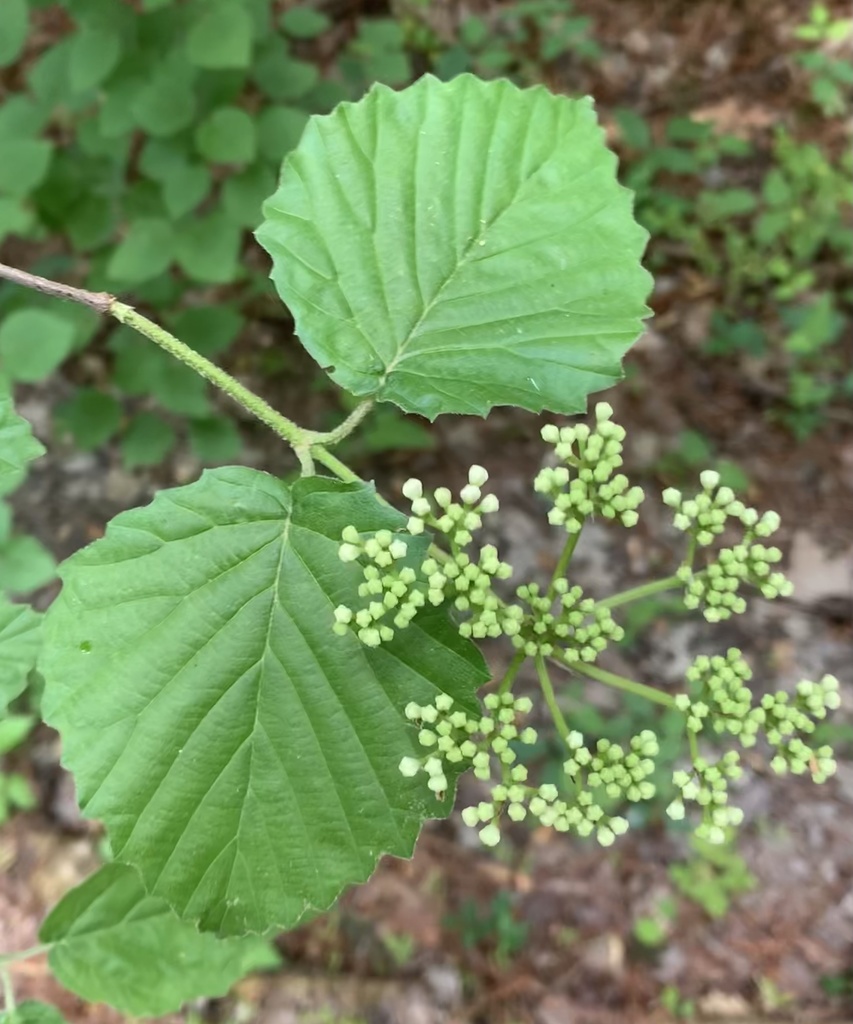
Global; Maine; Maryland, New Jersey, and West Virginia; Michigan / Great Lakes; NC; North Carolina; Ohio / Midwest; Tennessee; Virginia / Mid-Atlantic; eastern US; north-eastern and mid-Atlantic United States; southeastern US
Maintenance
No sourced horticultural maintenance assertion is normalized; fire-test conditions do not supply maintenance advice.
Typed publication scope: 10 scopes across 8 cited fire sources
Northeastern and mid-Atlantic study sites (ME, MD, MA, NY, VA footprint); partial normalized coverage · 2007-08-20
The authors collected foliage and twigs across study sites in Maine, Maryland, Massachusetts, New York, and Virginia, then conditioned and tested the samples in a cone calorimeter. FireApproved publishes 37 exact source owners only as multi-state laboratory context. The source does not establish that every taxon was sampled in every named state, whole-plant behavior, landscape suitability, or state planting guidance.
Maryland Forest Service says the list contains plants that can be grown in Maryland and identifies Maryland natives. FireApproved publishes 169 exact source owners from the 180 printed rows; an unrepresentable form and duplicate-owner rows are not broadened. The list calls itself non-comprehensive and does not establish suitability for every Maryland site.
NJ; partial normalized coverage
New Jersey DEP publishes a state edition saying the listed plants can be grown in New Jersey and are relatively resistant to fire. Its same 180 printed taxon occurrences map to the 169 conservative owners already normalized for the template family. The list is non-comprehensive and does not establish suitability for every New Jersey site or override the Pinelands Commission's separate placement and fuel-break rules.
WV; partial normalized coverage · 2026-08-26
West Virginia Division of Forestry publishes a state edition saying the listed plants can be grown in West Virginia and are relatively resistant to fire. Its same 180 printed taxon occurrences map to the 169 conservative owners already normalized for the template family. The list is non-comprehensive and provides no comparative or site-specific rating.
Maine Forest Service presents a partial list for landscaping 30-100 feet from a structure. FireApproved publishes only 39 unique exact current/accepted matches plus Rhus typhina from the source's explicit parenthetical; unresolved, abbreviated, misspelled, absent, and duplicate-owner rows remain held.
Michigan State University Extension Bulletin E2948 is explicitly a list of wildfire-resistant landscape plants for Michigan and includes a Michigan-native field. FireApproved publishes 221 exact GBIF owners from 226 represented source rows and holds 15 complex or non-exact rows. This dated publication scope is not a current site-suitability determination.
The complete three-table AG-874 plant list is explicitly for North Carolina and contains 202 low-, medium-, or high-flammability rows. FireApproved accounts for all source rows under its strict taxonomy and lineage rules; source scope does not establish local suitability at a particular North Carolina site.
Ohio State University Extension Bulletin 921 is an Ohio publication that describes Ohio fire seasons and landscape conditions and labels nativity to Ohio. FireApproved publishes 352 exact source-owning plant records from its eight rated tables. This historical publication scope does not assert current extension endorsement or that a listed plant suits every Ohio site.
University of Tennessee Extension SP685 is Tennessee landscape guidance and publishes 78 represented plant owners. Most table rows are a carrier of Virginia Firescapes rather than an independent rating; Tennessee source scope does not change that lineage or establish site suitability.
Virginia Cooperative Extension's publication opens with Virginia wildfire conditions, identifies its Virginia Firewise Landscaping Task Force, and labels plants native to Virginia. FireApproved publishes 306 exact source owners. Publication scope does not establish parcel suitability or current endorsement of this archived 2009 list.
2. Why this plant is relevant here
State distribution
Documented in AL, AR, CT, DC, DE, FL, GA, IA, IL, IN, KY, LA, MA, MD, ME, MO, MS, NC, NJ, NY, OH, PA, RI, SC, TN, TX, VA, WV.
Native range
Current cited native range in DC, DE, GA, IA, IL, IN, KY, MD, ME, MO, NC, NJ, OH, PA, SC, TN, VA, WV.
Introduced / established
No introduced or established row is normalized; that does not prove native status.
USDA hardiness
Documented range 2–8.
3. Legal, ecological, and broader status
Legal-list status
Set a location for an exact legal-list result; source silence is not clearance.
Seed-list status
Set a location to compare the separate state noxious-weed seed layer.
Reported invasive here
No ecological invasive report is normalized; that does not prove noninvasiveness.
Broader regional context
Aggregate AK, HI, and L48 evidence is shown only as regional context, never as an exact-state finding.
Federal context
Federal designations remain separate from state legal-list results.
How to read this page
The status above is computed from the cited rows below: independent recommendations can support a fire-resistant result, an avoid row can produce keep-away, and disagreement stays visible as conflict. Placement notes preserve each source’s own scheme rather than translating unlike rules into one scale. This is evidence about a plant, not permission to plant it in every part of the defensible space; Zone 0 remains noncombustible.
DC, DE, GA, IA, IL, IN, KY, MD, ME, MO, NC, NJ, OH, PA, SC, TN, VA, WV
Grows in
AL, AR, CT, DC, DE, FL, GA, IA +20
Rated in
Global; Maine; Maryland, New Jersey, and West Virginia; Michigan / Great Lakes +8
Family
Viburnaceae
Evidence
12 cited sources
Native and introduced range evidence
These are exact U.S. botanical-area records from the cited range source. Native and
introduced describe biogeographic relationship, not fire performance or planting approval.
Doubtful and extinct rows stay visible but do not count as current presence.
The lossless worldwide derivative is retained once in the research corpus; object pages repeat only exact U.S. areas needed by the local lens. The JSON twin carries the same page assertions.
Plant hardiness evidence
These values describe the plant source. Your ZIP zone comes from the separate 2023 USDA
Plant Hardiness Zone Map. Whole-zone values stay whole-zone, and a single unresolved value
is not treated as a tolerance range. Different source boundaries stay separate: overlapping
statements are compared independently, while only ranges with no shared zone are called a conflict.
Source prints 5 · single-value meaning unresolved · whole zone precision · source stated
Source taxon: Viburnum dentatum · exact match.
Source location: Cold Hardiness Zone field in the recovered selector record.
Not used for comparison: The recovered selector prints one Cold Hardiness Zone value but does not define it as a minimum threshold or a one-zone range.
Placement rules below use each source's own distances or named zones, tied to its rating.
They are not interchangeable with the directory's current Zone 0 guidance.
Eastern United States Fire Performance Plant Selector: Landscape Zone 2 — 5–10 ft from the structure; maintained lawn or fuel breaks, with easily ignited evergreens avoided [Fire Performance Plant Selector landscape zone] (mid-scale rating)
Maine fire-resistant plant list: Shrubs, page 2: Arrowhead vibernum - Viburnum dentatum [Maine Forest Service list section and page] (with its recommendation)
The evidence
Grouped by what each source concluded. Primary evidence rated the plant itself
(a lab, field program, or original curation); corroboration compiled or
republished another source's rating and resolves to its root lineage.
Listed as Viburnum dentatum (Arrowwood Viburnum). The source says listed species exhibit stronger resistance to ignition by wildfires. Source comments: Tolerates high pH, heavy soils, and cold temperatures
Maine fire-resistant plant list — Maine Forest Service, Forest Protection Division · MFS-list-updated-2013-10-23 · original sourceCorroborationCompilationlineage: me-mfs-fire-resistant-plants
“listed as fire-resistant for landscaping 30-100 feet from a structure”
· original source
Maine Forest Service includes Arrowhead vibernum (Viburnum dentatum) on its partial fire-resistant plant list for landscaping 30-100 feet from a structure. The printed scientific name is a unique current-name match to this record.
“calorific value (kcal/kg): 2985.57”
· score 2985.57 (FLAMITS — calorific value (kcal/kg))
FLAMITS record 2896; Combustibility measurement; plant part leaves; fuel live; predrying yes; device calorimeter; site Dibble2007-1; sampling ND. Primary study Dibble2007: Dibble, A. C., White, R. H., & Lebow, P. K. (2007). Combustion characteristics of north-eastern USA vegetation tested in the cone calorimeter: invasive versus non-invasive plants. International journal of wildland fire, 16, 426-443.