Enter your ZIP to see whether this is legal to plant in your state, and whether it survives your winter.
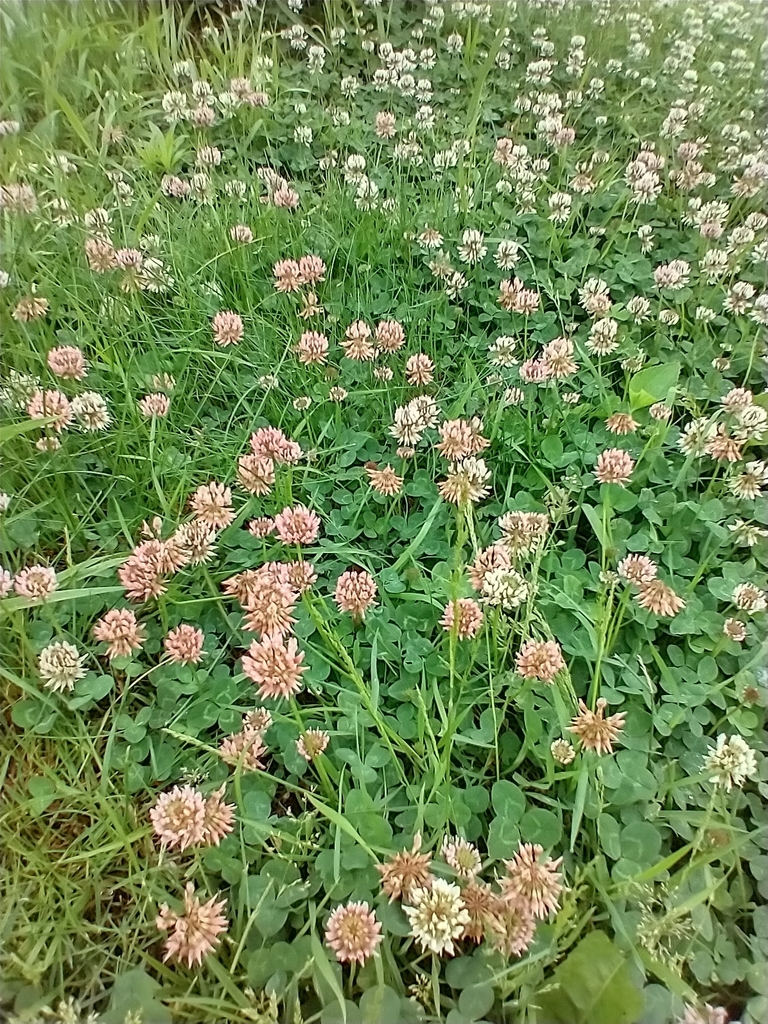
White clover is rated fire resistant, with very low flammability and a strong garden recommendation from two institutions.
Fire and Emergency New Zealand places white clover in the “very low” category of its seven-level flammability scale, which is grounded in shoot-flammability testing. The Diputació de Girona and Bombers de la Generalitat de Catalunya rate it “muy recomendada.” The guide's recommendation assumes care suited to white clover. Its suitability judgment draws on fire research and fire-service experience, as well as fuel structure, maintenance, origin, and invasiveness.
FLAMITS reports a 12.5% ignition frequency for predried branch material tested with a grill. That figure describes ignition under that experimental setup. The database preserves measurements made with different variables, devices, and plant parts without imposing a common threshold, so the result should remain 12.5% rather than being converted into another flammability category. It also makes the practical distinction clear: fire resistance does not mean that the plant cannot ignite.
White clover is a perennial in the Fabaceae family, reaches about half a foot at maturity, and needs moderate water. It has been introduced in all 50 states and is hardy to USDA zone 3a, but it is also flagged as invasive in three jurisdictions. Its fire findings support the resistant verdict, while the invasive flags are a separate reason to check local guidance before choosing it.
Form
perennial
Mature height
~0.5 ft
Water need
moderate
Rated in
Catalonia, Spain; Global; New Zealand
Uses
pasture
On this lot
1. Fire evidence and conditions
Fire evidence
Fire-resistant — location does not change the cited classification.
Documented in AK, AL, AR, AZ, CA, CO, CT, DC, DE, FL, GA, HI, IA, ID, IL, IN, KS, KY, LA, MA, MD, ME, MI, MN, MO, MS, MT, NC, ND, NE, NH, NJ, NM, NV, NY, OH, OK, OR, PA, RI, SC, SD, TN, TX, UT, VA, VT, WA, WI, WV, WY.
Native range
Introduced / established
52 sourced range or established records. This is not an invasive warning.
USDA hardiness
Documented minimum 3a; no upper limit is documented.
3. Legal, ecological, and broader status
Legal-list status
Seed-list status
Reported invasive here
3 ecological invasive reports.
Broader regional context
Federal context
How to read this page
The status above is computed from the cited rows below: independent recommendations can support a fire-resistant result, an avoid row can produce keep-away, and disagreement stays visible as conflict. Placement notes preserve each source’s own scheme rather than translating unlike rules into one scale. This is evidence about a plant, not permission to plant it in every part of the defensible space; Zone 0 remains noncombustible.
Native and introduced range evidence
These are exact U.S. botanical-area records from the cited range source. Native and
introduced describe biogeographic relationship, not fire performance or planting approval.
Doubtful and extinct rows stay visible but do not count as current presence.
The lossless worldwide derivative is retained once in the research corpus; object pages repeat only exact U.S. areas needed by the local lens. The JSON twin carries the same page assertions.
Plant hardiness evidence
These values describe the plant source. Your ZIP zone comes from the separate 2023 USDA
Plant Hardiness Zone Map. Whole-zone values stay whole-zone, and a single unresolved value
is not treated as a tolerance range. Different source boundaries stay separate: overlapping
statements are compared independently, while only ranges with no shared zone are called a conflict.
Source location: PlantCharacteristics record 83132, Temperature, Minimum (°F).
Where its sources say to plant it
Placement rules below use each source's own distances or named zones, tied to its rating.
They are not interchangeable with the directory's current Zone 0 guidance.
Guía de pirojardinería: suitable inside or outside the 25-metre maximum-risk zone [girona-2020-iuf-25m-suitability] (with its recommendation)
The evidence
Grouped by what each source concluded. Primary evidence rated the plant itself
(a lab, field program, or original curation); corroboration compiled or
republished another source's rating and resolves to its root lineage.
Recommends (2)
Low Flammability Plants directory — Fire and Emergency New Zealand (plant flammability testing at Lincoln University) · 2026 · original sourcePrimary evidenceLab-testedlineage: lincoln-nz-tree
Trifolium repens is rated “MUY RECOMENDADA” by the guide's qualitative IUF garden-suitability method. The method assumes species-specific care and integrates fire evidence with fuel structure, maintenance, origin, invasiveness, and expert fire-service experience.
Listed without a rating (9)Corroboration (9 rows from 1 source)
9 cited rows from this source; its identity, lineage and tier are stated once.
Primary study Cui2020a: Cui, X., Paterson, A. M., Wyse, S. V., Alam, M. A., Maurin, K. J. L., Pieper, R., ... Curran, T. J. (2020a). Shoot flammability of vascular plants is phylogenetically conserved and related to habitat fire-proneness and growth form. Nature Plants, 6, 355-359.
Shared row context: plant part branches; fuel all; predrying yes; device grill; site Cui2020a-1; sampling ND.
“ignition frequency (%): 12.5”
FLAMITS record 1508; Ignitability measurement.
“maximum sample temperature (°C): 187”
FLAMITS record 1702; Combustibility measurement.
“burning duration (s): 0.5”
FLAMITS record 1896; Sustainability measurement.
“estimated burnt biomass (%): 12.5”
FLAMITS record 2090; Consumability measurement.
“calorific value (kcal/kg): 4348.66”
FLAMITS record 5002; Combustibility measurement; plant part stems; fuel live; predrying yes; device calorimeter; site Hogenbirk1995-1; sampling june. Primary study Hogenbirk1995: Hogenbirk, J.C., & Sarrazin-Delay, C.L. (1995). Using fuel characteristics to estimate plant ignitability for fire hazard reduction. Water Air Soil Pollut, 82, 161170.
Primary study Padulles2018: Padullés-Cubino, J., Buckley, H. L., Day, N. J., Pieper, R., & Curran, T. J. (2018). Community-level flammability declines over 25 years of plant invasion in grasslands. Journal of Ecology, 106, 1582-1594.
Shared row context: plant part branches; fuel all; predrying yes; device grill; site Padulles2018-1; sampling 1982 to 2007.