Enter your ZIP to see whether this is legal to plant in your state, and whether it survives your winter.
Hillwort is rated fire resistant, with five assessments supporting that conclusion.
Colorado State University Extension and the Colorado State Forest Service score the ‘Minus’ form of hillwort 8 out of 10 for ignitability. Under that source’s rules, scores of 8, 9, or 10 belong in defensible-space zones 1 and 2. That numerical finding gives homeowners more than a simple appearance on a plant list, although it applies specifically to the ‘Minus’ form.
The other sources reach the same practical conclusion through expert or compiled lists. OSU, WSU, and University of Idaho Extension list hillwort as fire resistant. Anaheim Fire & Rescue includes it on its acceptable fire-resistive plant list. University of Nevada Cooperative Extension reports that at least two of its cited western sources listed the plant favorably, while the Australian Capital Territory government marks Thymus serpyllum “Fire Retardant: Yes.” Together, these sources support the fire-resistant rating.
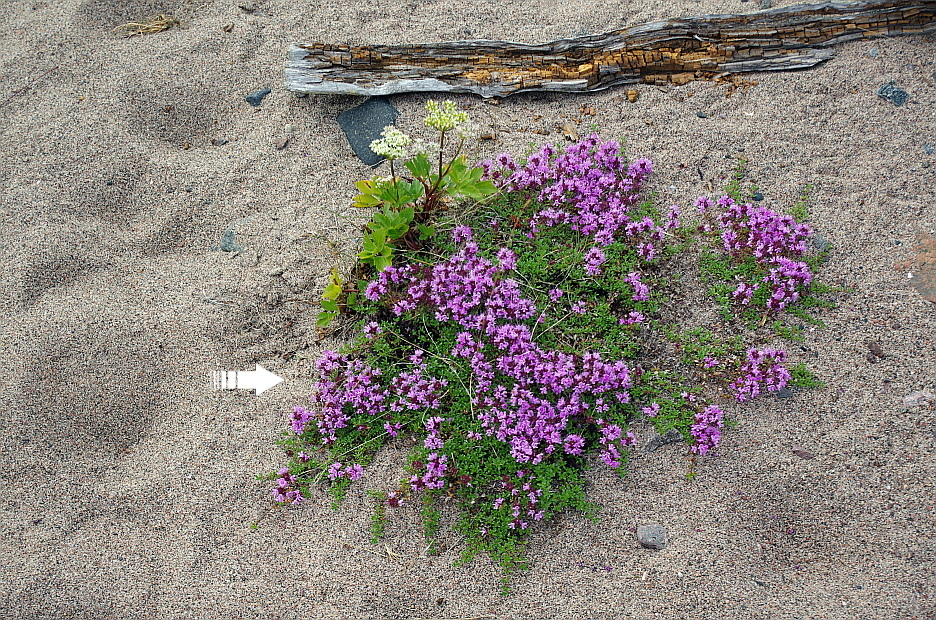
Hillwort is a groundcover in the Lamiaceae family. The sources use different approaches, from a scored assessment to binary plant lists, but none points against its use as a fire-resistant plant. For a homeowner considering hillwort, the consistent favorable findings make the conclusion straightforward.
Form
groundcover
Rated in
Australian Capital Territory, Australia; Colorado / Rocky Mountain Front Range; Nevada / Great Basin; OR/WA/ID +1
On this lot
1. Fire evidence and conditions
Fire evidence
Fire-resistant — location does not change the cited classification.
Colorado State University Extension and the Colorado State Forest Service publish Fact Sheet 6.305 for Colorado's WUI and varied ecosystems. FireApproved exposes all 114 exact source owners at Colorado publication scope while retaining score, elevation, water, and Idaho-carrier lineage. Publication scope is not suitability for every Colorado site or zone.
The October 2023 joint Pacific Northwest Extension publication explicitly names Oregon, Washington, and Idaho and publishes more than 150 plant profiles. FireApproved has normalized 155 exact plant records from the source; publication scope does not assert that every listed plant suits every site within the three states.
University of Nevada Cooperative Extension compiled plants suited to Nevada climate zones and reported favorably by at least two upstream firewise lists. FireApproved publishes 126 exact source owners at Nevada publication scope. The source explicitly makes no independent flammability determination, so these rows remain corroborative.
2. Why this plant is relevant here
State distribution
Documented in ID, OR, WA.
Native range
Introduced / established
USDA hardiness
3. Legal, ecological, and broader status
Legal-list status
Seed-list status
Reported invasive here
Broader regional context
Federal context
How to read this page
The status above is computed from the cited rows below: independent recommendations can support a fire-resistant result, an avoid row can produce keep-away, and disagreement stays visible as conflict. Placement notes preserve each source’s own scheme rather than translating unlike rules into one scale. This is evidence about a plant, not permission to plant it in every part of the defensible space; Zone 0 remains noncombustible.
Where its sources say to plant it
Placement rules below use each source's own distances or named zones, tied to its rating.
They are not interchangeable with the directory's current Zone 0 guidance.
Ignition-Resistant Landscape Plants: suitable for defensible-space zones 1-2 (score 8+) [CSU defensible-space zone] (with its recommendation)
Canberra Plant Selector: filtered result page 22 [canberra-selector] (with its recommendation)
The evidence
Grouped by what each source concluded. Primary evidence rated the plant itself
(a lab, field program, or original curation); corroboration compiled or
republished another source's rating and resolves to its root lineage.