Indiangrass
Sorghastrum nutans
A genus split is not a placement verdict.
Is this one for your yard?
Enter your ZIP to see whether this is legal to plant in your state, and whether it survives your winter.
No, Indiangrass is not fire resistant; North Carolina extension sources classify it as highly flammable.
In 2005, NC State University, NC Cooperative Extension, and the USFWS gave Indiangrass an extreme flammability rating. Extreme was the highest category on their four-level scale, and both high and extreme meant the plant should be avoided. NC State Extension revised the system in 2025, dropping the extreme category and rating Indiangrass high instead. The wording changed, but the practical guidance did not.
NC State Extension’s live Plant Toolbox also tags Sorghastrum nutans as having high flammability. The Toolbox does not document who assigned its ratings, so that tag is best treated as corroboration. It still points the same way as the two expert-curated assessments: Indiangrass belongs away from structures.
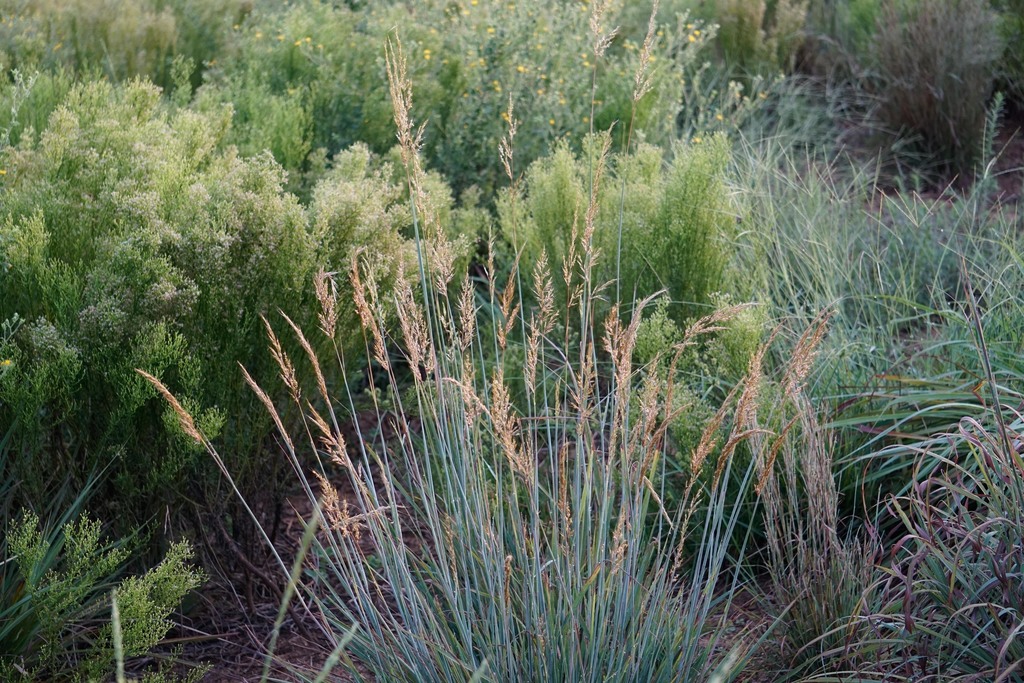
Indiangrass is a grass in the Poaceae family with moderate water needs. At maturity, it reaches about four feet. It is native in the southeastern, southwestern, northwestern, and northeastern United States and is hardy to USDA zone 4b. None of those facts changes the repeated fire warning. For landscaping near a house or other structure, choose another plant.
- Form
- grass
- Mature height
- ~4 ft
- Water need
- moderate
- Rated in
- NC; North Carolina; North Carolina / southeastern US