Enter your ZIP to see whether this is legal to plant in your state, and whether it survives your winter.
Umbrella-pine has conflicting fire-resistance ratings, so neither a clear yes nor a clear no fits the published findings.
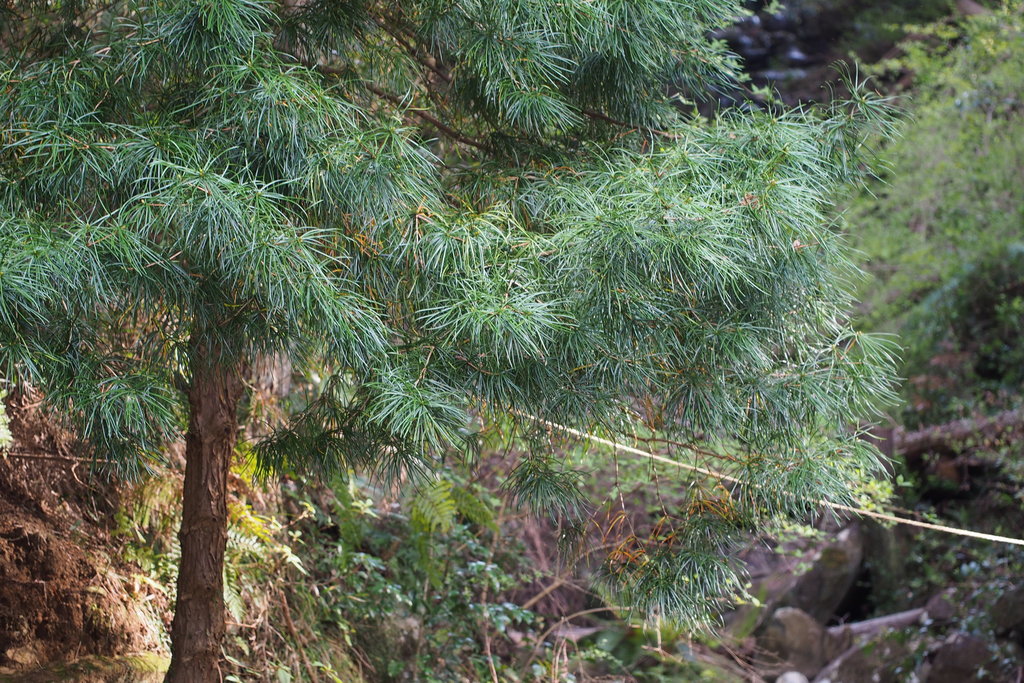
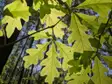
The USDA Forest Service and state Firewise programs rate it “Not Firewise,” the least favorable category on their four-point scale. Their description cites plastic-like flat needles in whorls at the ends of the branches. Kyoritsu Shuppan’s Japanese classification, reproduced by Kagoshima Prefecture, places the same species in the large fire-protection-power class. Kagoshima describes ember interception as one protective function of highly fire-protective trees. Such trees can also slow fire spread and promote the upward dispersal of heat and smoke.
A measured flame temperature does not reconcile them. Umbrella-pine leaves dried before testing reached a maximum flame temperature of 677.868°C on a burning bench. This is the peak flame temperature observed for those leaves under those test conditions. The database sets no common threshold that converts such measurements into a resistant or nonresistant verdict.
Umbrella-pine is a tree in the Sciadopityaceae family, reaching about 50 feet at maturity. Its species identity alone does not settle its expected performance around fire: one classification gives the strongest warning, another assigns substantial fire-protection power, and the bench result measures temperature rather than choosing between them.
Only uncertain or inapplicable hardiness rows are cited; no primary zone is projected.
3. Legal, ecological, and broader status
Legal-list status
Seed-list status
Reported invasive here
Broader regional context
Federal context
How to read this page
The status above is computed from the cited rows below: independent recommendations can support a fire-resistant result, an avoid row can produce keep-away, and disagreement stays visible as conflict. Placement notes preserve each source’s own scheme rather than translating unlike rules into one scale. This is evidence about a plant, not permission to plant it in every part of the defensible space; Zone 0 remains noncombustible.
Plant hardiness evidence
These values describe the plant source. Your ZIP zone comes from the separate 2023 USDA
Plant Hardiness Zone Map. Whole-zone values stay whole-zone, and a single unresolved value
is not treated as a tolerance range. Different source boundaries stay separate: overlapping
statements are compared independently, while only ranges with no shared zone are called a conflict.
Source location: Cold Hardiness Zone field in the recovered selector record.
Not used for comparison: The recovered selector prints one Cold Hardiness Zone value but does not define it as a minimum threshold or a one-zone range.
Where its sources say to plant it
Placement rules below use each source's own distances or named zones, tied to its rating.
They are not interchangeable with the directory's current Zone 0 guidance.
Eastern United States Fire Performance Plant Selector: Landscape Zone 3 — 10–30 ft from the structure; thin vegetation, remove debris, and minimize plant massing [Fire Performance Plant Selector landscape zone] (with its avoid rating)
Tree fire-protection classification in Hito to Shinrin: コウヤマキ — Table 10-2 [tadaki-kira-1982-fire-protection-power] (with its recommendation)
The evidence
Grouped by what each source concluded. Primary evidence rated the plant itself
(a lab, field program, or original curation); corroboration compiled or
republished another source's rating and resolves to its root lineage.
Recommends (1)
Tree fire-protection classification in Hito to Shinrin (人と森林) — Kyoritsu Shuppan; table reproduced by Kagoshima Prefecture · Hito to Shinrin (1982), Table 10-2; Kagoshima web reproduction · original sourcePrimary evidenceExpert-curatedlineage: independent (root of Japanese municipal fire-protection tree lists)
Table 10-2 prints コウヤマキ in the large fire-protection-power class. The Kagoshima reproduction says highly fire-protective trees can slow spread, promote upward dispersal of heat and smoke, and intercept flying embers.
2 cited rows from this source; its identity, lineage and tier are stated once.
Primary study Zhang2022: Zhang, S., Cornwell, W. K., Zhao, W., van Logtestijn, R. S., Krab, E. J., Aerts, R., & Cornelissen, J. H. (2022). Experimental evidence that leaf litter decomposability and flammability are decoupled across gymnosperm species. Journal of Ecology, 111, 761-772.
Shared row context: plant part leaves; fuel all; predrying yes; device burning bench; site Zhang2022-1; sampling january and march 2011.