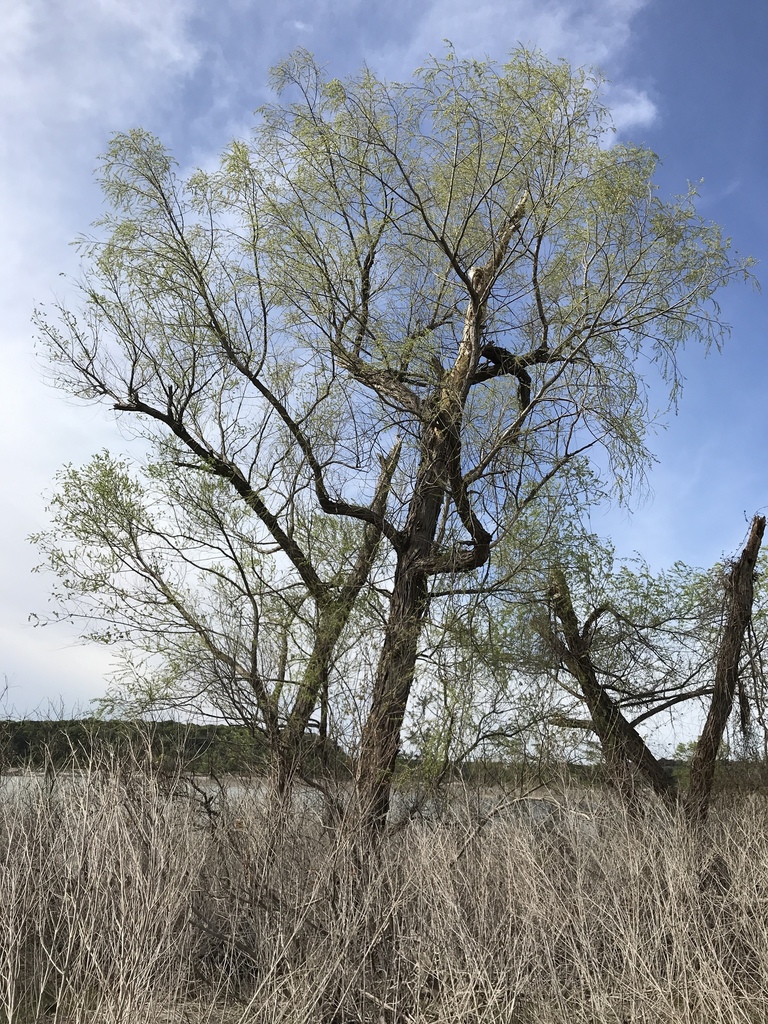
black willow
Salix nigra
A genus split is not a placement verdict.
Is this one for your yard?
Enter your ZIP to see whether this is legal to plant in your state, and whether it survives your winter.
Black willow is fire resistant, with all six cited findings placing it on the favorable side of their respective scales.
The USDA Forest Service and state Firewise programs give it Firewise 1, the most favorable category on their four-level scale. North Carolina’s extension sources consistently assign low flammability, while Ohio State University Extension and Virginia Cooperative Extension rate it L. Each scale favors black willow.
The agreement covers guidance prepared for the eastern United States, North Carolina, Ohio and the Midwest, and Virginia and the Mid-Atlantic. That geographic spread suits a tree native in the Southeastern, Northeastern, North-Central, and South-Central United States. The Forest Service program describes black willow as very common along eastern waterways, and the Ohio and Virginia sources say it grows in wet soils.
Black willow matures at about 100 feet and is listed for full sun and high water, so its size and growing requirements still need to suit the property. Those practical considerations do not change the consistent flammability judgment. The sources use different rating systems, but every one reaches the same practical conclusion: black willow belongs among the fire-resistant landscape choices.
- Form
- tree
- Mature height
- ~100 ft
- Light
- Full sun
- Water need
- high
- Rated in
- Maine; Maryland, New Jersey, and West Virginia; NC; North Carolina +4