Enter your ZIP to see whether this is legal to plant in your state, and whether it survives your winter.
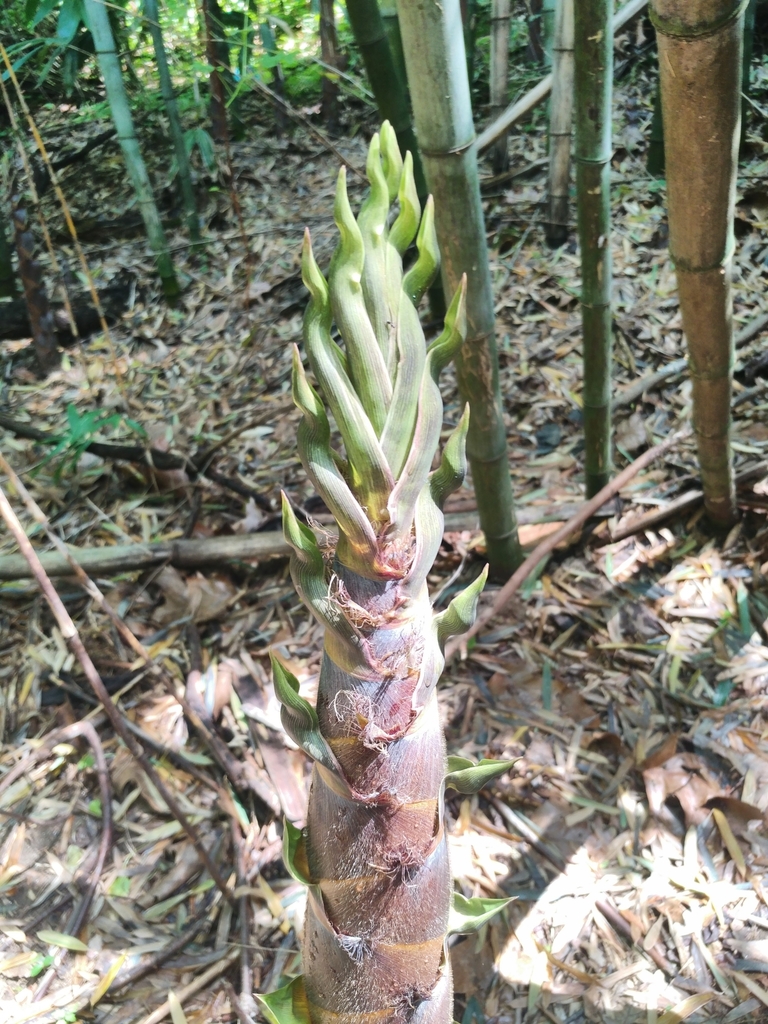
Phyllostachys bamboo is not a fire-resistant choice beside a home under the Eastern US Fire Performance Plant Selector’s guidance.
The selector assigns this genus-level entry “Not Firewise” and warns that some species form invasive thickets that supply abundant fuel. Its historical LZ4 classification belongs beyond 30 feet from a structure and can extend to 200 feet. The program’s planting recommendations for sites with high fire risk cover only the first 30 feet; farther out, it allows more flammable plants while keeping care, pruning and maintenance relevant. That is a placement distinction, not permission to let bamboo become an unmanaged thicket.
NSW Rural Fire Service also warns that running bamboo and its other named exotic vegetation groups can intensify bushfires under adverse weather.
A separate French study burned oven-dried litter collected beneath Phyllostachys hedges, including small amounts of material from neighboring species, using glowing firebrands and fan-driven wind. It classified that sampled litter as flammable. This concerns prepared surface fuel, not the behavior of every living bamboo species.
Only uncertain or inapplicable hardiness rows are cited; no primary zone is projected.
3. Legal, ecological, and broader status
Legal-list status
Seed-list status
Reported invasive here
Broader regional context
Federal context
How to read this page
The status above is computed from the cited rows below: independent recommendations can support a fire-resistant result, an avoid row can produce keep-away, and disagreement stays visible as conflict. Placement notes preserve each source’s own scheme rather than translating unlike rules into one scale. This is evidence about a plant, not permission to plant it in every part of the defensible space; Zone 0 remains noncombustible.
Plant hardiness evidence
These values describe the plant source. Your ZIP zone comes from the separate 2023 USDA
Plant Hardiness Zone Map. Whole-zone values stay whole-zone, and a single unresolved value
is not treated as a tolerance range. Different source boundaries stay separate: overlapping
statements are compared independently, while only ranges with no shared zone are called a conflict.
Source prints 5 · single-value meaning unresolved · whole zone precision · source stated
Source taxon: Phyllostachys spp. · exact match.
Source location: Cold Hardiness Zone field in the recovered selector record.
Not used for comparison: The recovered selector prints one Cold Hardiness Zone value but does not define it as a minimum threshold or a one-zone range.
Where its sources say to plant it
Placement rules below use each source's own distances or named zones, tied to its rating.
They are not interchangeable with the directory's current Zone 0 guidance.
Eastern United States Fire Performance Plant Selector: Landscape Zone 4 — beyond 30 ft; outside the selector's recommendation area [Fire Performance Plant Selector landscape zone] (with its avoid rating)
Planning for Bush Fire Protection 2019: Appendix A1.9 — Exotic vegetation [nswrfs-pbp-a1.9] (with its avoid rating)
The evidence
Grouped by what each source concluded. Primary evidence rated the plant itself
(a lab, field program, or original curation); corroboration compiled or
republished another source's rating and resolves to its root lineage.
“Under adverse fire weather conditions these plants can contribute to the intensity of bush fires.”
Appendix A1.9 identifies Phyllostachys spp within its main exotic vegetation groups, reports intense surface-fire behaviour for these groups, and assigns them regulatory vegetation fuel-class conversions.
Listed without a rating (13)Corroboration (13 rows from 1 source)
13 cited rows from this source; its identity, lineage and tier are stated once.
Primary study Ganteaume2012: Ganteaume, A., Jappiot, M., & Lampin, C. (2012). Assessing the flammability of surface fuels beneath ornamental vegetation in wildlandurban interfaces in Provence (south-eastern France). International Journal of Wildland Fire, 22, 333.
Shared row context: plant part litter; fuel all; predrying yes; device burning bench; site Ganteaume2012-1; sampling summer.
Primary study Ganteaume2013: Ganteaume, A., Jappiot, M., Lampin, C., Guijarro, M., & Hernando, C. (2013). Flammability of some ornamental species in wildland-urban interfaces in southeastern France: laboratory assessment at particle level. Environmental Management, 52, 467-80.
Shared row context: plant part leaves; fuel live; predrying no; device epiradiator; site Ganteaume2013-1; sampling summer.
Primary study Ganteaume2018: Ganteaume, A. (2018). Does plant flammability differ between leaf and litter bed scale? Role of fuel characteristics and consequences for flammability assessment. International Journal of Wildland Fire, 27, 342-352.
Shared row context: plant part leaves; device epiradiator; site Ganteaume2018-1; sampling summer.