Enter your ZIP to see whether this is legal to plant in your state, and whether it survives your winter.
Creeping liriope is rated fire resistant, with six sources supporting its use in fire-conscious landscapes.
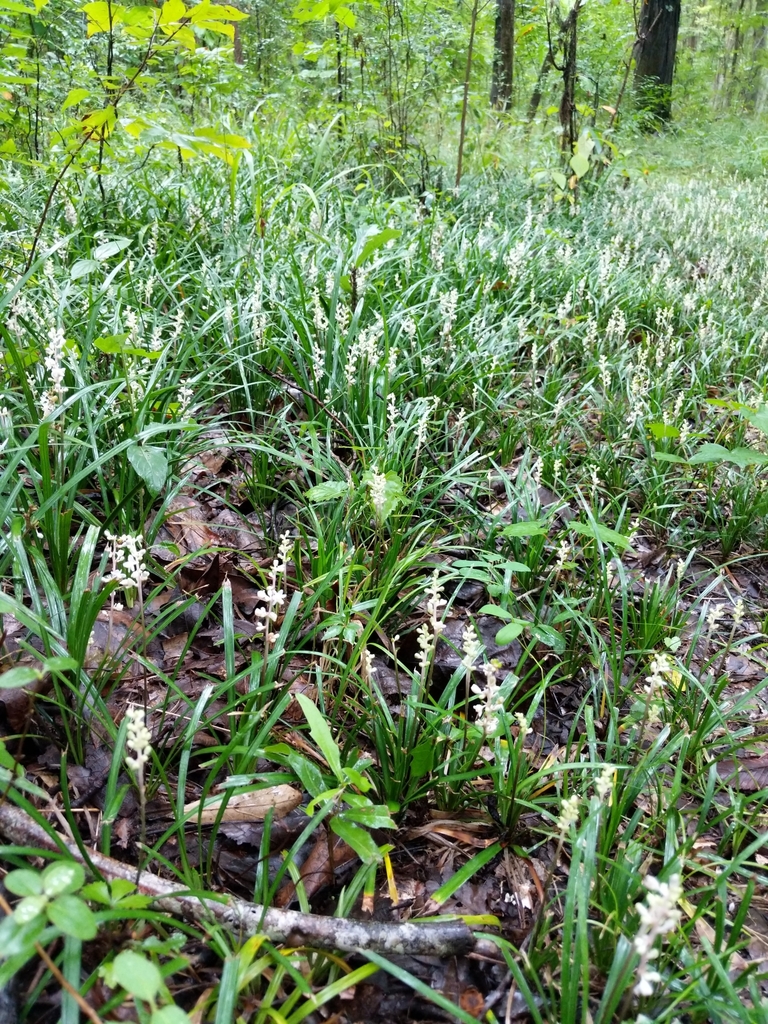
Ohio State University Extension and Virginia Cooperative Extension both give this groundcover a low flammability rating. Their scales differ, but low is the recommended category in each. FireSmart BC approves it as fire resistant. Creeping liriope appears in the University of Tennessee Extension’s Firewise plant tables and among the Alabama Forestry Commission’s suggested groundcovers. Proper use and maintenance are conditions of Utah State University Extension’s firewise recommendation.
The agreement is broad, but it is guidance for choosing and managing vegetation, not a promise that the plant cannot burn. Utah’s maintenance condition matters because firewise performance depends partly on how a plant is used. Creeping liriope also suckers freely, according to Ohio State, and it has been flagged as invasive in one jurisdiction. That concern does not change its fire-resistance rating, but it may affect whether it is a suitable choice locally.
For a homeowner focused on wildfire landscaping, creeping liriope belongs among the supported fire-resistant options. Local invasive-plant guidance and continued maintenance should remain part of the planting decision.
Form
groundcover
Rated in
Alabama; British Columbia; Ohio / Midwest; Tennessee +2
Uses
ground-cover
On this lot
1. Fire evidence and conditions
Fire evidence
Fire-resistant — location does not change the cited classification.
The Alabama Forestry Commission's five-page AFC-FP-04 booklet is an Alabama publication and contains 31 printed suggested or fire-prone plant occurrences. FireApproved publishes 27 exact species or genus owners and holds one infraspecific form plus two named cultivars; this historical source scope does not establish current site suitability for a particular Alabama property.
Ohio State University Extension Bulletin 921 is an Ohio publication that describes Ohio fire seasons and landscape conditions and labels nativity to Ohio. FireApproved publishes 352 exact source-owning plant records from its eight rated tables. This historical publication scope does not assert current extension endorsement or that a listed plant suits every Ohio site.
Utah State University Extension states that this fact sheet selects examples for Utah landscapes and that they require proper placement and maintenance. FireApproved publishes 83 exact source owners at Utah publication scope. The table is not a site-specific planting clearance.
University of Tennessee Extension SP685 is Tennessee landscape guidance and publishes 78 represented plant owners. Most table rows are a carrier of Virginia Firescapes rather than an independent rating; Tennessee source scope does not change that lineage or establish site suitability.
Virginia Cooperative Extension's publication opens with Virginia wildfire conditions, identifies its Virginia Firewise Landscaping Task Force, and labels plants native to Virginia. FireApproved publishes 306 exact source owners. Publication scope does not establish parcel suitability or current endorsement of this archived 2009 list.
2. Why this plant is relevant here
State distribution
Documented in AL, DC, FL, IL, MD, MS, OH, VA.
Native range
Introduced / established
4 sourced range or established records. This is not an invasive warning.
USDA hardiness
3. Legal, ecological, and broader status
Legal-list status
Seed-list status
Reported invasive here
1 ecological invasive report.
Broader regional context
Federal context
How to read this page
The status above is computed from the cited rows below: independent recommendations can support a fire-resistant result, an avoid row can produce keep-away, and disagreement stays visible as conflict. Placement notes preserve each source’s own scheme rather than translating unlike rules into one scale. This is evidence about a plant, not permission to plant it in every part of the defensible space; Zone 0 remains noncombustible.
Native and introduced range evidence
These are exact U.S. botanical-area records from the cited range source. Native and
introduced describe biogeographic relationship, not fire performance or planting approval.
Doubtful and extinct rows stay visible but do not count as current presence.
The lossless worldwide derivative is retained once in the research corpus; object pages repeat only exact U.S. areas needed by the local lens. The JSON twin carries the same page assertions.
Where its sources say to plant it
Placement rules below use each source's own distances or named zones, tied to its rating.
They are not interchangeable with the directory's current Zone 0 guidance.
FireSmart BC Plant Program: suitable for HIZ intermediate zone (10-30 m) [FireSmart BC Home Ignition Zone] (with its recommendation)
Firewise Landscaping for Woodland Homes: Suggested ground covers [Alabama Forestry Commission booklet section] (with its recommendation)
The evidence
Grouped by what each source concluded. Primary evidence rated the plant itself
(a lab, field program, or original curation); corroboration compiled or
republished another source's rating and resolves to its root lineage.