United States / Grow / Nightshades
Nightshades
Some nightshades have favorable fire findings, but those findings do not remove other hazards or apply to every Solanum.
Fire and Emergency New Zealand gives Solanum laciniatum a very-low-flammability classification and also flags it as poisonous. The two findings describe different concerns. The favorable fire grade does not answer the separate toxicity question.
Australian Plants Society Victoria lists both Solanum laciniatum and Solanum aviculare as fire retardant. Its definition concerns resistance to the first wave of a bushfire; the plants may burn after drying. The society also warns that these plants will not protect a property in an extreme bushfire. Those conditions belong with its favorable listing.
The sources differ in their scope: the New Zealand grade and poison flag name Solanum laciniatum, while the Victorian list includes two distinct nightshades. Their shared common-name associations do not merge them into one plant. Check the botanical identity and keep the fire finding separate from the other suitability questions.
Fire-resistant: 6 species
-
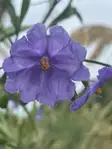 New Zealand nightshade Fire-resistant Solanum laciniatum
 -
 jasmine nightshade Fire-resistant Solanum jasminoides
 -
 eggplant Fire-resistant Solanum melongera
 -
 New Zealand nightshade Fire-resistant Solanum aviculare
 -
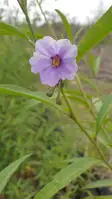 oondoroo Fire-resistant Solanum simile
 -
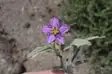 wild tomato Fire-resistant Solanum esuriale
Awaiting evidence: 4 species
- earleaf nightshade Awaiting evidence Solanum mauritianum
- garden tomato Awaiting evidence Solanum lycopersicum
- bluewitch nightshade Awaiting evidence Solanum xanti
-
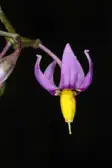 climbing nightshade Awaiting evidence Solanum dulcamara
About nightshades
Directory notes
More about Solanum: Wikipedia — external references; not evidence sources.