United States / Grow / Tickseeds
Tickseeds
Tickseeds lean fire resistant, but only half of the assessed members have earned that rating.
The genus’s assessments divide evenly: 5 of 10 members are rated fire resistant, while the sources assessed the other five without taking a side. That silence is not a negative verdict, but it is not reassurance either. The strongest support belongs to tickseed, the most-studied member, which is described as sun tolerant and drought tolerant. Disease sensitivity in mass plantings is also noted.
Two named species add useful detail. Lobed tickseed is rated fire resistant on a handful of assessments, including a finding that it can be firewise when properly used and maintained. Golden tickseed is rated fire resistant on two listings, one preserving an ignitability score for plains coreopsis. Maintenance and irrigation recur in the assessments of two members, suggesting that care can matter for particular tickseeds, but those conditions do not apply automatically to the whole genus.
Tickseeds are perennial members of the aster family, native across much of the eastern and central United States. The two measured members reach about two to three feet at maturity, while the three zoned members span USDA zones 3a to 12a. The practical answer is encouraging but limited: several tickseeds have direct support, while an unrated species should not inherit that judgment merely from its genus name.
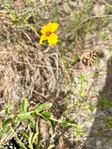 Rated as a group: tickseed Coreopsis Fire-resistant Consensus 16 sources rate the genus as a
whole. Species evidence never rolls upward into a genus verdict, and genus claims never
override a species record.
›
Rated as a group: tickseed Coreopsis Fire-resistant Consensus 16 sources rate the genus as a
whole. Species evidence never rolls upward into a genus verdict, and genus claims never
override a species record.
› Fire-resistant: 4 species
-
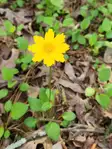 lobed tickseed Fire-resistant Coreopsis auriculata
 -
 golden tickseed Fire-resistant Coreopsis tinctoria
 -
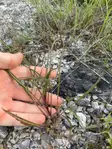 largeflower tickseed Fire-resistant Coreopsis grandiflora
 -
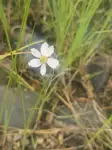 pink tickseed Fire-resistant Coreopsis rosea
Awaiting evidence: 5 species
-
 lanceleaf tickseed Awaiting evidence Coreopsis lanceolata
 -
 greater tickseed Awaiting evidence Coreopsis major
 -
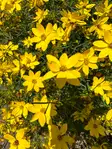 whorled tickseed Awaiting evidence Coreopsis verticillata
 -
 coastal plain tickseed Awaiting evidence Coreopsis falcata
 - coastal plain tickseed Awaiting evidence Coreopsis angustifolia
About tickseeds
Directory notes
More about Coreopsis: Wikipedia — external references; not evidence sources.