United States / Grow / Flowering Quinces
Flowering Quinces
Flowering quinces lean fire resistant, but the answer is established for only half the assessed species.
Two of four Chaenomeles species are rated fire resistant; the other two have been assessed without the sources taking a side. This is a cautious yes, not a verdict for every member of the genus.
The clearest case is flowering quince, Chaenomeles speciosa, whose fire-resistant rating rests on a substantial body of assessment. Virginia Cooperative Extension notes its adaptability, spines and susceptibility to leaf diseases. Maule’s quince, Chaenomeles japonica, is also rated fire resistant, though only a handful of assessments support that finding.
Chaenomeles belongs to the rose family, and all its members are shrubs. The two members measured mature at about 6 to 10 feet. For a homeowner choosing among flowering quinces, the species name matters: C. speciosa has the deeper support, C. japonica has a smaller supporting base, and the findings for the other assessed species remain unresolved.
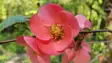 Rated as a group: flowering quince Chaenomeles sp. Awaiting evidence Mid-scale score 3 sources rate the genus as a
whole. Species evidence never rolls upward into a genus verdict, and genus claims never
override a species record.
›
Rated as a group: flowering quince Chaenomeles sp. Awaiting evidence Mid-scale score 3 sources rate the genus as a
whole. Species evidence never rolls upward into a genus verdict, and genus claims never
override a species record.
› Fire-resistant: 2 species
-
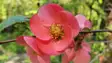 flowering quince Fire-resistant Chaenomeles speciosa
 -
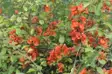 Maule's quince Fire-resistant Chaenomeles japonica
Awaiting evidence: 1 species
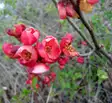
About flowering quinces
Directory notes
More about Chaenomeles: Wikipedia — external references; not evidence sources.