United States / Grow / Buckeyes
Buckeyes
Most assessed buckeyes are considered fire resistant, while two of nine assessed species received no verdict either way.
The strongest example is horse chestnut, the genus’s most-studied member, with a substantial body of assessment supporting its fire-resistant rating. Red buckeye and yellow buckeye also earn that rating on a handful of assessments, and bottlebrush buckeye is rated resistant as well. Deciduous foliage recurs as a favorable theme, though it appears in assessments of only two members and should not be treated as proof for the entire genus.
Fire resistance does not eliminate maintenance concerns. One horse chestnut assessment warns that low branching may create ladder potential and may require pruning. The comments on other resistant members focus on landscape traits rather than explaining their fire behavior: red buckeye tolerates salt, yellow buckeye produces many nuts in fall, and bottlebrush buckeye handles stress and shade.
Buckeyes include trees and shrubs, ranging from about 8 to 65 feet at maturity among seven measured members. Hardiness spans USDA zones 4a to 7b among five zoned members. The practical answer is favorable but not universal: several named buckeyes have resistant ratings, while the two species without a verdict remain unsettled rather than disproved.
 Rated as a group: buckeye Aesculus spp. Awaiting evidence Limited evidence 1 source rate the genus as a
whole. Species evidence never rolls upward into a genus verdict, and genus claims never
override a species record.
›
Rated as a group: buckeye Aesculus spp. Awaiting evidence Limited evidence 1 source rate the genus as a
whole. Species evidence never rolls upward into a genus verdict, and genus claims never
override a species record.
› Fire-resistant: 7 species
-
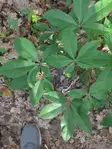 red buckeye Fire-resistant Aesculus pavia
 -
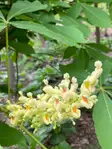 yellow buckeye Fire-resistant Aesculus flava
 -
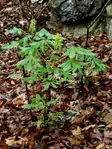 painted buckeye Fire-resistant Aesculus sylvatica
 -
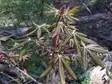 Red Horse-chestnut Fire-resistant Aesculus x carnea
 -
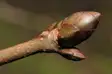 horse chestnut Fire-resistant Aesculus hippocastanum
 -
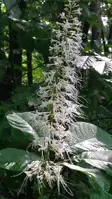 bottlebrush buckeye Fire-resistant Aesculus parviflora
 -
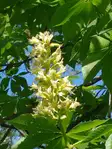 Ohio buckeye Fire-resistant Aesculus glabra
Awaiting evidence: 1 species
About buckeyes
Directory notes
More about Aesculus: Wikipedia — external references; not evidence sources.