Enter your ZIP to see whether this is legal to plant in your state, and whether it survives your winter.
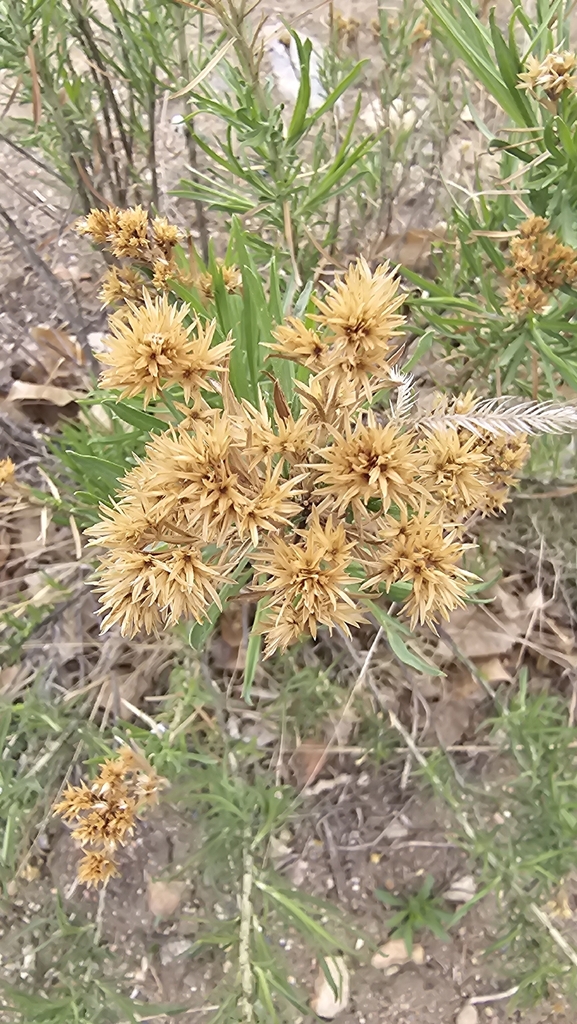
Rubber rabbitbrush should be treated as highly flammable near a home, despite one program calling it fire resistant.
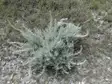
Three of four sources advise against it. Idaho Firewise gave rubber rabbitbrush a fire-resistance score of 3 out of 10 in field trials. Idaho Firewise links lower scores to greater planting distances. Nevada forestry officials and extension specialists rated its fire hazard high, although their guide describes such ratings as rough estimates rather than results from scientific trials. Listed as Ericameria nauseosa by Arizona’s extension service, rubber rabbitbrush falls in the fire-prone category: plants that may ignite readily and burn intensely.
FireSmart BC reaches the opposite conclusion, approving the shrub as a fire-resistant plant. Its finding comes from a compiled, binary chart designed around suitability within broad Home Ignition Zone distances. That differs from Idaho’s numerical field-trial scale, Nevada’s regional hazard estimates, and Arizona’s expert-curated lists.
Rubber rabbitbrush is a shrub in the aster family. The Idaho score and the Nevada and Arizona warnings support keeping rubber rabbitbrush away from structures.
Southern Idaho (ID footprint); partial normalized coverage · 2013-11-08
The official database labels itself "For Southern Idaho" and describes Idaho residents at the urban-rangeland interface. FireApproved publishes 419 existing plant owners that cite its scored rows. This bounded Southern Idaho scope is regional context, not statewide coverage or a conclusion that the score transfers unchanged to every Idaho site.
Nevada Division of Forestry and University of Nevada Cooperative Extension publish Bulletin 06-01 for the Lake Tahoe Basin and vicinity. FireApproved publishes 83 exact rated owners as basin context across Nevada and California. Rough estimates are not statewide or site ratings.
Yavapai County (AZ footprint); partial normalized coverage · 2025-03-14
University of Arizona Cooperative Extension authors Bulletin 34 for Yavapai County. FireApproved publishes 198 exact source owners from its resistant and prone tables and keeps the county boundary visible. County publication scope is regional Arizona context, never statewide scope.
2. Why this plant is relevant here
State distribution
Documented in AZ, CA, CO, ID, KS, MT, ND, NE, NM, NV, NY, OK, OR, SD, TX, UT, WA, WY.
Native range
Introduced / established
USDA hardiness
3. Legal, ecological, and broader status
Legal-list status
Seed-list status
Reported invasive here
Broader regional context
Federal context
How to read this page
The status above is computed from the cited rows below: independent recommendations can support a fire-resistant result, an avoid row can produce keep-away, and disagreement stays visible as conflict. Placement notes preserve each source’s own scheme rather than translating unlike rules into one scale. This is evidence about a plant, not permission to plant it in every part of the defensible space; Zone 0 remains noncombustible.
Where its sources say to plant it
Placement rules below use each source's own distances or named zones, tied to its rating.
They are not interchangeable with the directory's current Zone 0 guidance.
Fire Resistance of Plants Master Database: plantable at 80' from home [Idaho minimum planting distance] (with its avoid rating)
FireSmart BC Plant Program: suitable for HIZ extended zone and beyond [FireSmart BC Home Ignition Zone] (with its recommendation)
Home Landscaping Guide for Lake Tahoe and Vicinity: Fire Hazard column: high [tahoe-guide-2006] (with its avoid rating)
The evidence
Grouped by what each source concluded. Primary evidence rated the plant itself
(a lab, field program, or original curation); corroboration compiled or
republished another source's rating and resolves to its root lineage.
Table 1's Fire Hazard column prints “high” for this taxon. The guide calls the rating a rough estimate of potential flammability, not a result of scientific trials. Its footnote says plants that turn brown often become high fire hazards and tells readers to mow grasses and forbs when they begin to turn brown.
Listed as Rubber rabbitbrush — Ericameria nauseosa. The bulletin says fire-resistant plants tend to resist ignition when irrigated and maintained, while fire-prone plants may ignite readily and burn intensely.