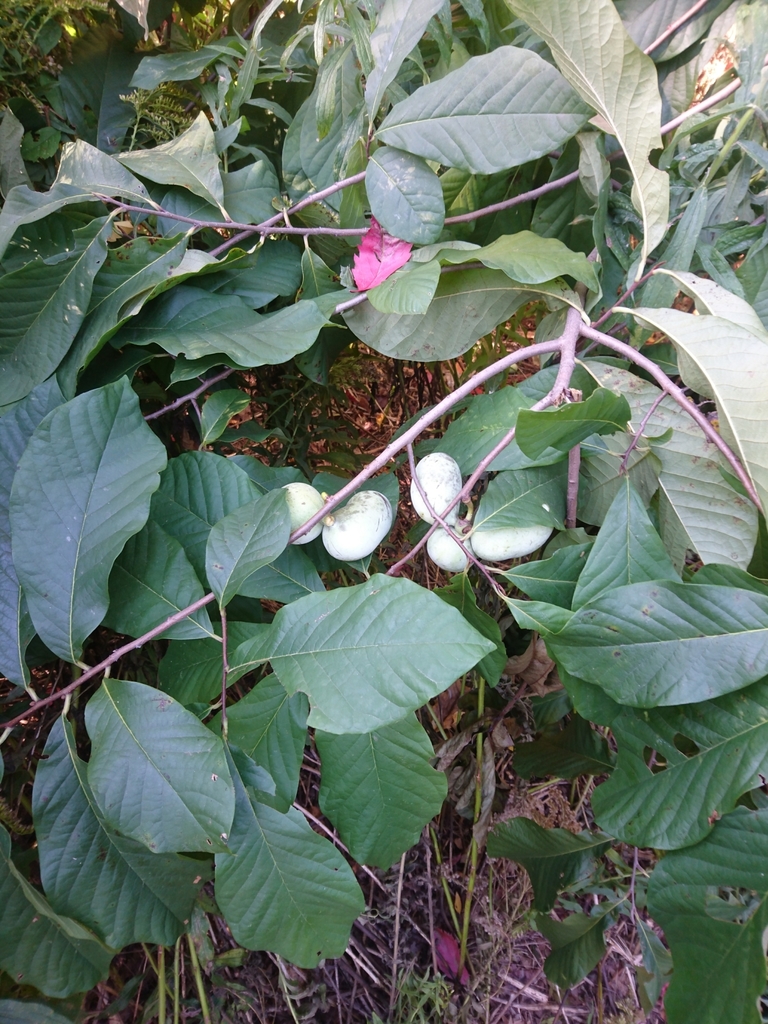
pawpaw
Asimina triloba
A genus split is not a placement verdict.
Is this one for your yard?
Enter your ZIP to see whether this is legal to plant in your state, and whether it survives your winter.
Yes, pawpaw is rated fire resistant, with six extension sources reaching the same practical conclusion.
NC State University and the US Fish and Wildlife Service gave pawpaw a low rating on a four-level flammability scale in 2005. NC State’s 2025 assessment also calls it low flammability, using a later three-class system. Ohio State University Extension and Virginia Cooperative Extension each rated it L, the recommended band on their respective scales; both also describe pawpaw as tolerant of wet soils. The University of Tennessee Extension lists it as a Firewise plant, and Oregon State University Extension profiles it among fire-resistant plants suited to Willamette Valley growing conditions.
These approaches are not identical. Four sources assign relative flammability levels, while Tennessee and Oregon use plant lists or profiles. Even so, all six place pawpaw on the fire-resistant side, from North Carolina and Virginia to Ohio, Tennessee, and Oregon’s Willamette Valley.
Pawpaw is a tree in the Annonaceae family, native in the Southeastern, North-Central, Northeastern, and South-Central United States. It reaches about 15 feet at maturity and is described for part sun and moderate water. The ratings concern relative flammability or suitability for fire-conscious landscaping, not an assurance that the tree cannot burn.
- Form
- tree
- Mature height
- ~15 ft
- Light
- Part sun
- Water need
- moderate
- Rated in
- NC; North Carolina; North Carolina / southeastern US; Ohio / Midwest +4