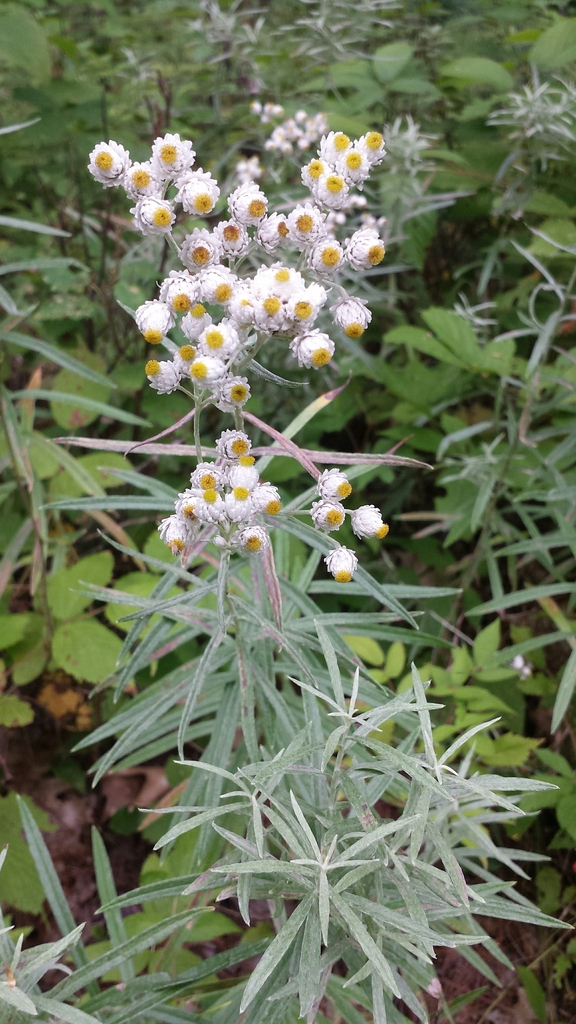
western pearly everlasting
Anaphalis margaritacea
A genus split is not a placement verdict.
Is this one for your yard?
Enter your ZIP to see whether this is legal to plant in your state, and whether it survives your winter.
Western pearly everlasting is rated fire resistant, though the supporting primary evidence is limited.
Three organizations recommend it. FireSmart BC calls it an approved fire-resistant plant but also flags it as needing more research. Oregon State University Extension includes it among fire-resistant plants suited to Willamette Valley growing conditions, while Fremont County Firewise places it among its Firewise ground covers. The Wyoming list describes its selections generally as low-growing, low-debris, and relatively moist, but those qualities are not findings specific to western pearly everlasting.
A laboratory measurement adds context without proving the landscape verdict. Predried dead stems produced a calorific value of 4,569.36 kilocalories per kilogram in a calorimeter. That figure describes the energy the material can release once burned. It does not establish how readily a living plant ignites, how flames move through it, or how it behaves beside a building.
Western pearly everlasting is a perennial in the aster family, reaches about three feet at maturity, and needs moderate water. It is native across broad parts of North America and hardy to USDA zone 2b. The practical reading is favorable but qualified: several regional programs treat it as a fire-resistant landscaping choice, while FireSmart BC’s research flag and the narrow stem test leave room for further study.
- Form
- perennial
- Mature height
- ~3 ft
- Water need
- moderate
- Rated in
- British Columbia; Fremont County, Wyoming; Global; Oregon (Willamette Valley)