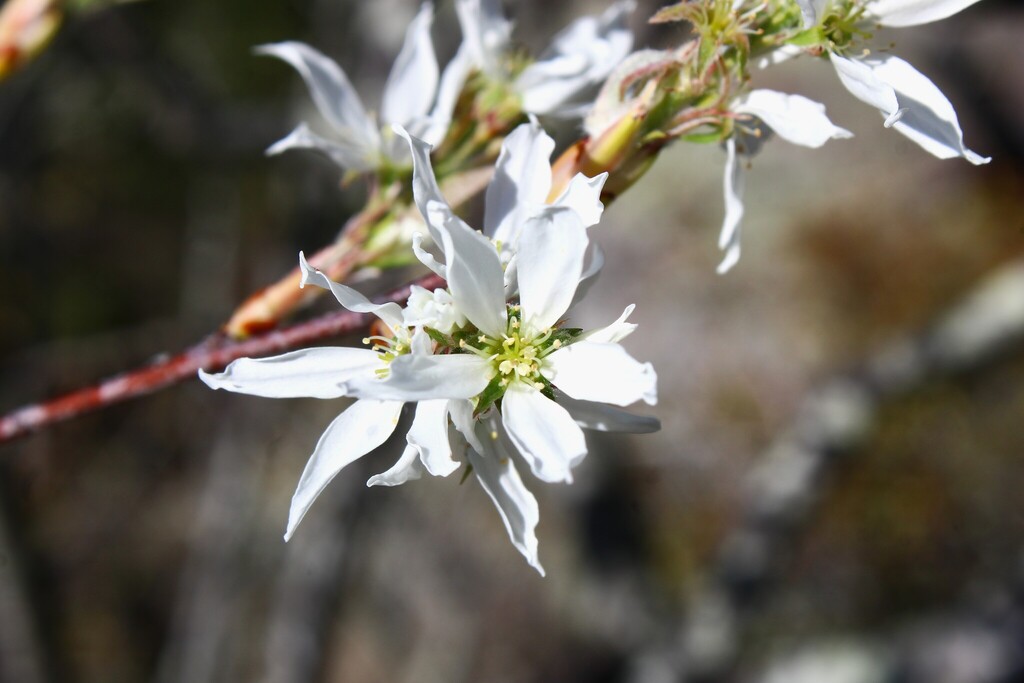
common serviceberry
Amelanchier arborea
A genus split is not a placement verdict.
Is this one for your yard?
Enter your ZIP to see whether this is legal to plant in your state, and whether it survives your winter.
Yes, common serviceberry is consistently rated fire resistant by extension and Firewise sources across the eastern United States.
Six sources agree despite using different systems. The USDA Forest Service and state Firewise programs give it Firewise 1, the safest of four ratings. North Carolina’s extension service rated it low in both 2005 and 2025, while Ohio State and Virginia Tech each placed it in their low-flammability category. The University of Tennessee also lists it as a Firewise plant. This is more persuasive than a single favorable label because the same conclusion appears across several regional programs and rating scales.
Common serviceberry is a tree in the rose family, reaching about 25 feet at maturity. It grows in part sun with moderate water and is native across broad parts of the eastern and central United States. The sources do not supply a physical explanation for its favorable performance, so the sound conclusion rests on their repeated expert assessments rather than a claim about its leaves, bark, or growth that they did not make. Fire resistant does not mean unable to burn, but among plants evaluated for fire-conscious landscaping, common serviceberry falls consistently on the recommended side.
- Form
- tree
- Mature height
- ~25 ft
- Light
- Part sun
- Water need
- moderate
- Rated in
- NC; North Carolina; North Carolina / southeastern US; Ohio / Midwest +4