Enter your ZIP to see whether this is legal to plant in your state, and whether it survives your winter.
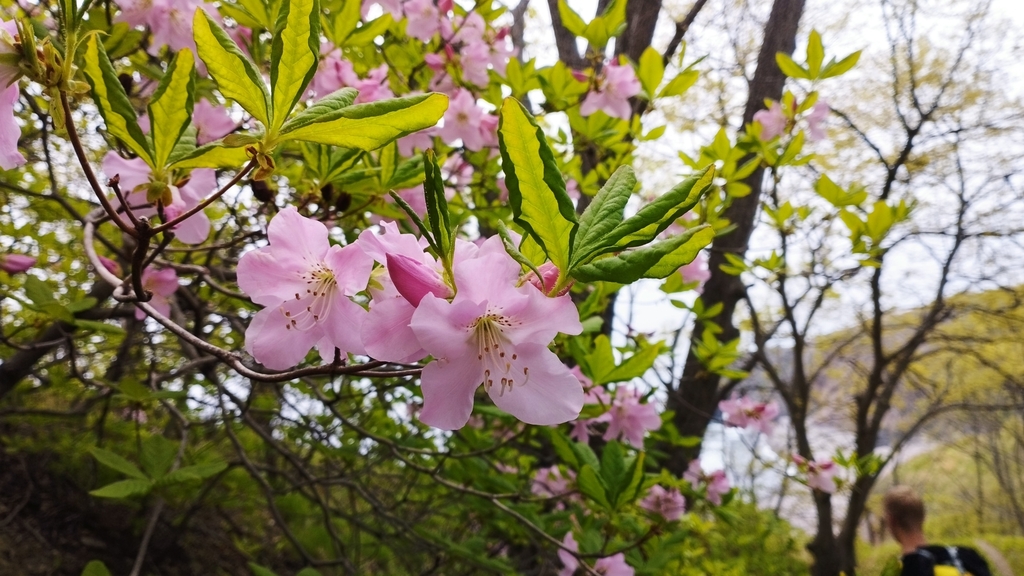
Azaleas are generally rated fire resistant, but two eastern extension services give them high flammability ratings.
Four of six sources favor azaleas. Azaleas are hardy in USDA zones 6a to 9b, according to Oregon State, Washington State, and University of Idaho Extension, which lists them as fire resistant. Fire Safe Marin and King County also place Rhododendron among fire-resistant landscape plants, while Florida’s extension service names wild azalea among less-flammable plants. Together, that published guidance supports the overall fire-resistant rating.
The conflict is substantial. On Ohio State’s five-band scale, H puts azaleas just below VH, the highest flammability rating. Virginia Tech also assigns H, the high category on its three-point scale. These sources use different scales and address the Midwest and Mid-Atlantic, while the favorable guidance comes from the Northwest, California, and Florida.
The practical reading is that “fire resistant” means comparatively preferable, not fireproof. Fire Safe Marin’s fire-resistant recommendations still require irrigation and removal of dead material, as well as attention to placement and spacing. Azaleas can therefore be treated as a fire-resistant shrub where the favorable regional guidance applies, but the high ratings from Ohio and Virginia are a sound reason to check the guidance most relevant to the planting site.
Form
shrub
Rated in
Florida; Japan; Marin County, California; Nevada / Great Basin +8
On this lot
1. Fire evidence and conditions
Fire evidence
Fire-resistant — location does not change the cited classification.
Florida; Japan; Marin County, California; Nevada / Great Basin; OR/WA/ID; Ohio / Midwest; South Carolina; Tasmania, Australia; Virginia / Mid-Atlantic; Yavapai County, Arizona; southeastern US; western WA
Maintenance
Typed publication scope: 8 scopes across 8 cited fire sources
Marin County (CA footprint); partial normalized coverage · 2019-01-01
The publication is explicitly limited to plants common to Marin County. FireApproved publishes 104 exact owners as Marin regional context while retaining its placement, spacing, irrigation, and maintenance boundary. It is not statewide California guidance or parcel suitability.
King County's current wildfire page links this list for the Puget Sound Basin. FireApproved publishes 82 exact source owners as basin context, not statewide Washington guidance or a site-specific recommendation.
Ohio State University Extension Bulletin 921 is an Ohio publication that describes Ohio fire seasons and landscape conditions and labels nativity to Ohio. FireApproved publishes 352 exact source-owning plant records from its eight rated tables. This historical publication scope does not assert current extension endorsement or that a listed plant suits every Ohio site.
The October 2023 joint Pacific Northwest Extension publication explicitly names Oregon, Washington, and Idaho and publishes more than 150 plant profiles. FireApproved has normalized 155 exact plant records from the source; publication scope does not assert that every listed plant suits every site within the three states.
South Carolina Forestry Commission publishes this explicitly as its Fire Smart Plant List for South Carolina. FireApproved publishes 63 exact genus owners from 72 unique common-name labels; unsafe common-name mappings and duplicates are not broadened. The brochure calls the list non-inclusive and does not establish species-level or site-specific suitability.
University of Nevada Cooperative Extension compiled plants suited to Nevada climate zones and reported favorably by at least two upstream firewise lists. FireApproved publishes 126 exact source owners at Nevada publication scope. The source explicitly makes no independent flammability determination, so these rows remain corroborative.
Virginia Cooperative Extension's publication opens with Virginia wildfire conditions, identifies its Virginia Firewise Landscaping Task Force, and labels plants native to Virginia. FireApproved publishes 306 exact source owners. Publication scope does not establish parcel suitability or current endorsement of this archived 2009 list.
Yavapai County (AZ footprint); partial normalized coverage · 2025-03-14
University of Arizona Cooperative Extension authors Bulletin 34 for Yavapai County. FireApproved publishes 198 exact source owners from its resistant and prone tables and keeps the county boundary visible. County publication scope is regional Arizona context, never statewide scope.
2. Why this plant is relevant here
State distribution
Documented in ID, OR, WA.
Native range
Introduced / established
USDA hardiness
Documented range 6–9.
3. Legal, ecological, and broader status
Legal-list status
Seed-list status
Reported invasive here
Broader regional context
Federal context
How to read this page
The status above is computed from the cited rows below: independent recommendations can support a fire-resistant result, an avoid row can produce keep-away, and disagreement stays visible as conflict. Placement notes preserve each source’s own scheme rather than translating unlike rules into one scale. This is evidence about a plant, not permission to plant it in every part of the defensible space; Zone 0 remains noncombustible.
Plant hardiness evidence
These values describe the plant source. Your ZIP zone comes from the separate 2023 USDA
Plant Hardiness Zone Map. Whole-zone values stay whole-zone, and a single unresolved value
is not treated as a tolerance range. Different source boundaries stay separate: overlapping
statements are compared independently, while only ranges with no shared zone are called a conflict.
Placement rules below use each source's own distances or named zones, tied to its rating.
They are not interchangeable with the directory's current Zone 0 guidance.
Firewise Landscaping: do not plant within 5 ft of structures (keep out of Zone 1) [OSU B921 source-category siting] (with its avoid rating)
Fire Resisting Garden Plants for the Urban Fringe and Rur…: should be avoided in the Building Protection Zone [Texas Building Protection Zone] (mid-scale rating)
Landscaping in Florida with Fire in Mind: inside defensible space [ufifas-for71-defensible-space] (with its recommendation)
Tree fire-protection classification in Hito to Shinrin: ツヅジ類 — Table 10-2 [tadaki-kira-1982-fire-protection-power] (mid-scale rating)
Landscaping Can Be Attractive & FIREWISE: SHRUBS [SCFC Fire Smart plant-form sections] (with its recommendation)
The evidence
Grouped by what each source concluded. Primary evidence rated the plant itself
(a lab, field program, or original curation); corroboration compiled or
republished another source's rating and resolves to its root lineage.
Listed as Azalea, Rhododendron — Rhododendron sp.. The bulletin says fire-resistant plants tend to resist ignition when irrigated and maintained, while fire-prone plants may ignite readily and burn intensely.
Listed as Azalea; Rhododendron. The source says highly flammable plants ignite faster and burn readily; less flammable plants have some fire resistance.
Tree fire-protection classification in Hito to Shinrin (人と森林) — Kyoritsu Shuppan; table reproduced by Kagoshima Prefecture · Hito to Shinrin (1982), Table 10-2; Kagoshima web reproduction · original sourcePrimary evidenceExpert-curatedlineage: independent (root of Japanese municipal fire-protection tree lists)
Table 10-2 prints ツヅジ類 in the medium fire-protection-power class. The Kagoshima reproduction says highly fire-protective trees can slow spread, promote upward dispersal of heat and smoke, and intercept flying embers.