Enter your ZIP to see whether this is legal to plant in your state, and whether it survives your winter.
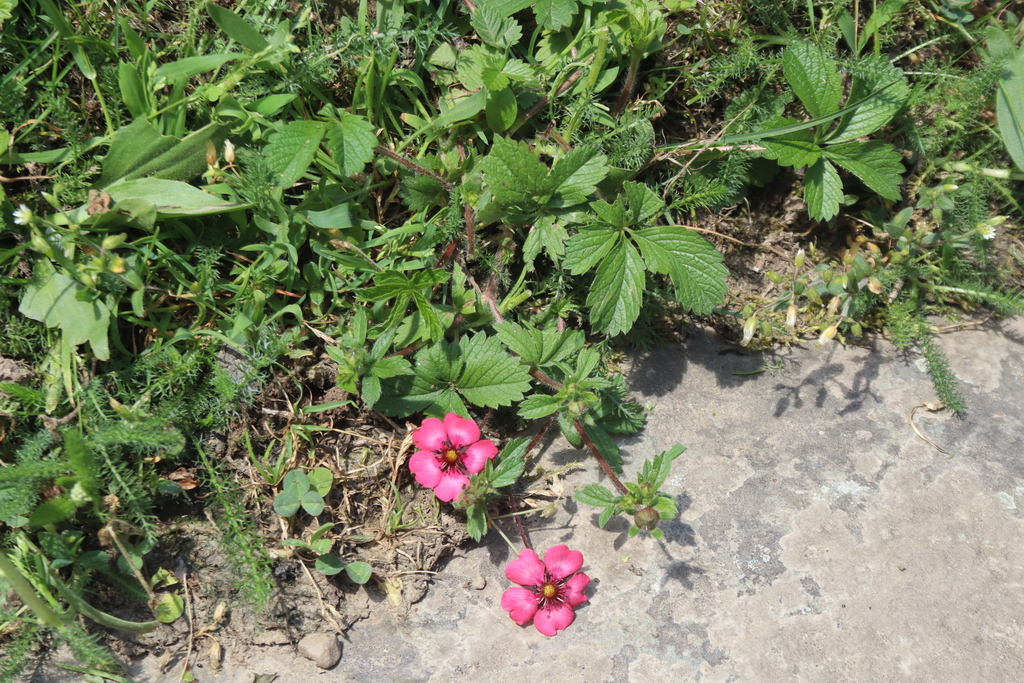
Nepalese cinquefoil is rated fire resistant, but the support is limited and should be treated as provisional.
FireSmart BC's call for more research qualifies its approval of this perennial as a fire-resistant plant. Its chart is a practical screening tool for plants used at different distances within the Home Ignition Zone, not a laboratory flammability scale. The research flag does not cancel the approval, but it does temper it: the recommendation is positive without being the last word.
Utah State University Extension also lists Nepalese cinquefoil as firewise for Utah landscapes. That judgment comes with a condition in the same source: the plant can be firewise when properly used and maintained. In other words, the listing does not promise that the plant will resist every exposure regardless of placement or care.
The two institutions agree. Nepalese cinquefoil is a reasonable fire-resistant choice based on the published guidance. Still, the strongest wording belongs with the evidence: it is recommended by two compiled or expert-curated plant lists, one of which expressly calls for more research.
Form
perennial
Rated in
British Columbia; Utah / Intermountain West
On this lot
1. Fire evidence and conditions
Fire evidence
Fire-resistant — location does not change the cited classification.
Fire-performance conditions
Fire ecology context
Placement evidence
Evidence regions
British Columbia; Utah / Intermountain West
Maintenance
Typed publication scope: 1 scope across 1 cited fire source
Utah State University Extension states that this fact sheet selects examples for Utah landscapes and that they require proper placement and maintenance. FireApproved publishes 83 exact source owners at Utah publication scope. The table is not a site-specific planting clearance.
2. Why this plant is relevant here
State distribution
Documented in WA, OR, ID.
Native range
Introduced / established
USDA hardiness
3. Legal, ecological, and broader status
Legal-list status
Seed-list status
Reported invasive here
Broader regional context
Federal context
How to read this page
The status above is computed from the cited rows below: independent recommendations can support a fire-resistant result, an avoid row can produce keep-away, and disagreement stays visible as conflict. Placement notes preserve each source’s own scheme rather than translating unlike rules into one scale. This is evidence about a plant, not permission to plant it in every part of the defensible space; Zone 0 remains noncombustible.
The evidence
Grouped by what each source concluded. Primary evidence rated the plant itself
(a lab, field program, or original curation); corroboration compiled or
republished another source's rating and resolves to its root lineage.