Enter your ZIP to see whether this is legal to plant in your state, and whether it survives your winter.
Chinese fountaingrass has a fire-prone rating, but that regional assessment does not settle a general fire-resistance verdict.
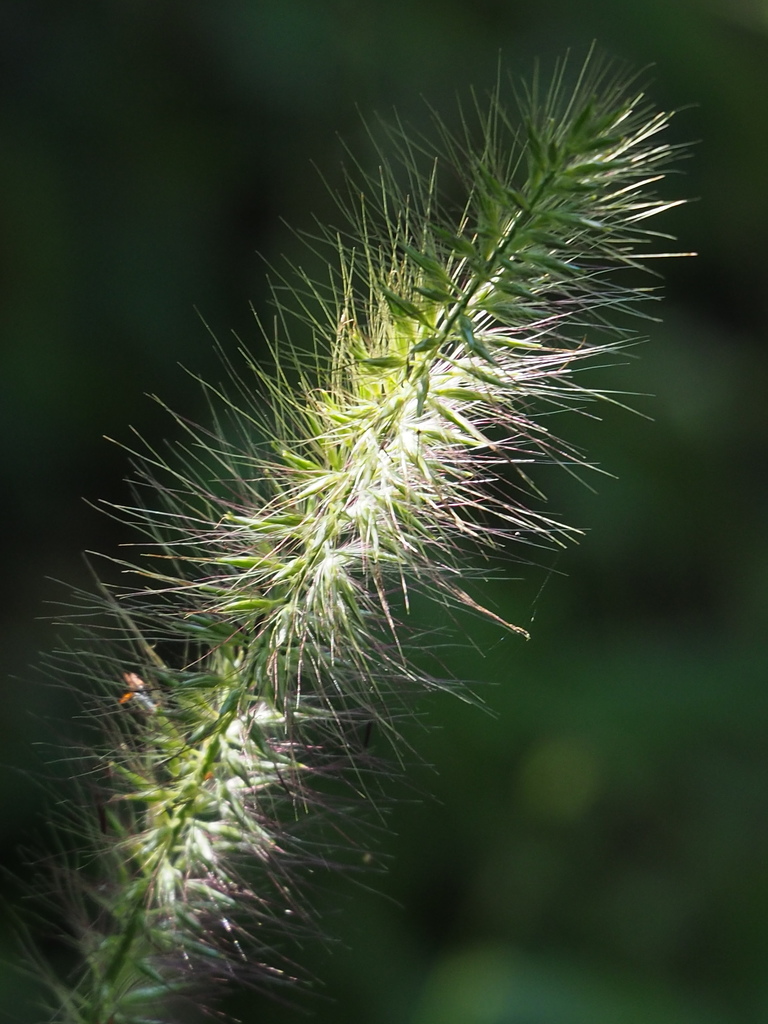
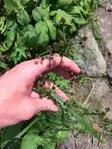
The University of Arizona Cooperative Extension places Chinese fountaingrass among Yavapai County’s fire-prone plants. It says plants in this group may ignite readily and burn intensely. Near a home, road, or driveway, the extension service calls for their removal or aggressive maintenance. That is a clear reason not to rely on this grass as fire resistant in those locations.
The same guidance allows fire-prone plants 30 to 100 feet from a structure when arranged in small, irregular clusters, with decorative rock or stepping stones breaking fuel continuity. This does not reclassify Chinese fountaingrass as resistant. It describes how Yavapai County homeowners may place such plants in the extended zone, and it is not a national planting rule.
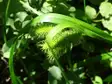
Reaching about three feet at maturity, Chinese fountaingrass is a low-water grass hardy to USDA zone 5a. Those characteristics do not change the extension service’s fire-prone classification. The fairest conclusion is not a blanket yes: treat it as fire prone under Yavapai County’s guidance, while recognizing that the broader fire-resistance verdict remains unsettled.
Form
grass
Mature height
~3 ft
Water need
low
Rated in
Yavapai County, Arizona
On this lot
1. Fire evidence and conditions
Fire evidence
Mixed evidence — location does not change the cited classification.
Fire-performance conditions
Fire ecology context
Placement evidence
Evidence regions
Yavapai County, Arizona
Maintenance
Typed publication scope: 1 scope across 1 cited fire source
Yavapai County (AZ footprint); partial normalized coverage · 2025-03-14
University of Arizona Cooperative Extension authors Bulletin 34 for Yavapai County. FireApproved publishes 198 exact source owners from its resistant and prone tables and keeps the county boundary visible. County publication scope is regional Arizona context, never statewide scope.
2. Why this plant is relevant here
State distribution
Documented in AR, AZ, IL, NC, NY, OH, PA.
Native range
Introduced / established
USDA hardiness
Documented minimum 5a; no upper limit is documented.
3. Legal, ecological, and broader status
Legal-list status
Seed-list status
Reported invasive here
Broader regional context
Federal context
How to read this page
The status above is computed from the cited rows below: independent recommendations can support a fire-resistant result, an avoid row can produce keep-away, and disagreement stays visible as conflict. Placement notes preserve each source’s own scheme rather than translating unlike rules into one scale. This is evidence about a plant, not permission to plant it in every part of the defensible space; Zone 0 remains noncombustible.
Plant hardiness evidence
These values describe the plant source. Your ZIP zone comes from the separate 2023 USDA
Plant Hardiness Zone Map. Whole-zone values stay whole-zone, and a single unresolved value
is not treated as a tolerance range. Different source boundaries stay separate: overlapping
statements are compared independently, while only ranges with no shared zone are called a conflict.
Source location: PlantCharacteristics record 24609, Temperature, Minimum (°F).
The evidence
Grouped by what each source concluded. Primary evidence rated the plant itself
(a lab, field program, or original curation); corroboration compiled or
republished another source's rating and resolves to its root lineage.
Listed as Fountain grass — Pennisetum alopecuroides. The bulletin says fire-resistant plants tend to resist ignition when irrigated and maintained, while fire-prone plants may ignite readily and burn intensely.