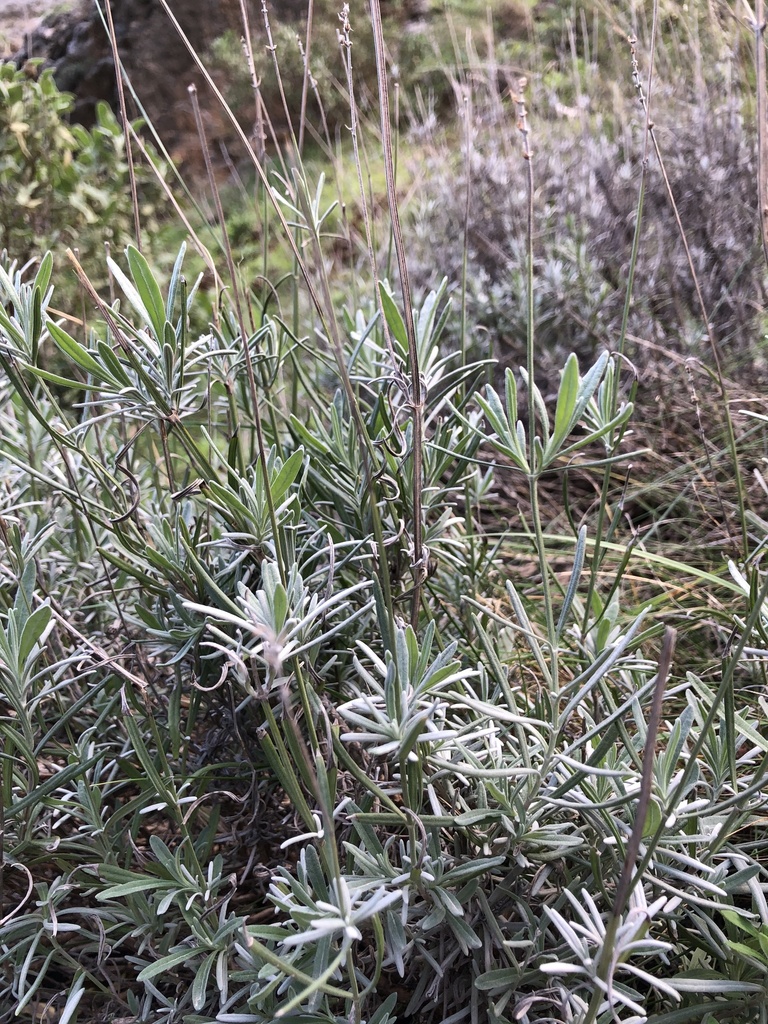
Enter your ZIP to see whether this is legal to plant in your state, and whether it survives your winter.
English lavender is fire resistant, with three independent fire and extension services placing it on the safer side of their guidance.
The Tasmania Fire Service rates it “Low Flammability,” the category acceptable inside a Building Protection Zone. Fire and Emergency New Zealand classifies it as having low to moderate flammability on a seven-level scale grounded in shoot-flammability testing. Michigan State University Extension also considers English lavender wildfire-resistant and recommends it for Michigan’s climate. Three of three assessments therefore support the fire-resistant verdict, despite using different methods and regional settings.
Those differences strengthen the conclusion without making the findings identical. Tasmania offers expert-curated planting guidance for fire-prone properties. New Zealand contributes laboratory testing of shoots, while Michigan supplies an expert-curated list intended for Great Lakes landscapes. Each source speaks within its own scale and region, yet all place English lavender on the recommended side.
English lavender, or Lavendula angustifolia, is a shrub in the Lamiaceae family. “Fire resistant” does not mean that it cannot burn; it means the plant receives comparatively favorable treatment in the cited systems. For a homeowner choosing vegetation near a house, the agreement across practical guidance and laboratory-based classification makes English lavender a supported fire-resistant choice.
Form
shrub
Rated in
Michigan / Great Lakes; New Zealand; Tasmania, Australia
On this lot
1. Fire evidence and conditions
Fire evidence
Fire-resistant — location does not change the cited classification.
Michigan State University Extension Bulletin E2948 is explicitly a list of wildfire-resistant landscape plants for Michigan and includes a Michigan-native field. FireApproved publishes 221 exact GBIF owners from 226 represented source rows and holds 15 complex or non-exact rows. This dated publication scope is not a current site-suitability determination.
2. Why this plant is relevant here
State distribution
Documented in NY, VT.
Native range
Introduced / established
1 sourced range or established record. This is not an invasive warning.
USDA hardiness
Documented range 5–9.
3. Legal, ecological, and broader status
Legal-list status
Seed-list status
Reported invasive here
Broader regional context
Federal context
How to read this page
The status above is computed from the cited rows below: independent recommendations can support a fire-resistant result, an avoid row can produce keep-away, and disagreement stays visible as conflict. Placement notes preserve each source’s own scheme rather than translating unlike rules into one scale. This is evidence about a plant, not permission to plant it in every part of the defensible space; Zone 0 remains noncombustible.
Plant hardiness evidence
These values describe the plant source. Your ZIP zone comes from the separate 2023 USDA
Plant Hardiness Zone Map. Whole-zone values stay whole-zone, and a single unresolved value
is not treated as a tolerance range. Different source boundaries stay separate: overlapping
statements are compared independently, while only ranges with no shared zone are called a conflict.
5–9 explicit range · whole zone precision · source stated
Source taxon: Lavandula angustifolia · accepted name match.
Source location: Table 1, perennial row.
Where its sources say to plant it
Placement rules below use each source's own distances or named zones, tied to its rating.
They are not interchangeable with the directory's current Zone 0 guidance.
Fire Resisting Garden Plants for the Urban Fringe and Rur…: acceptable in the Building Protection Zone [Texas Building Protection Zone] (with its recommendation)
The evidence
Grouped by what each source concluded. Primary evidence rated the plant itself
(a lab, field program, or original curation); corroboration compiled or
republished another source's rating and resolves to its root lineage.
Low Flammability Plants directory — Fire and Emergency New Zealand (plant flammability testing at Lincoln University) · 2026 · original sourcePrimary evidenceLab-testedlineage: lincoln-nz-tree