Enter your ZIP to see whether this is legal to plant in your state, and whether it survives your winter.
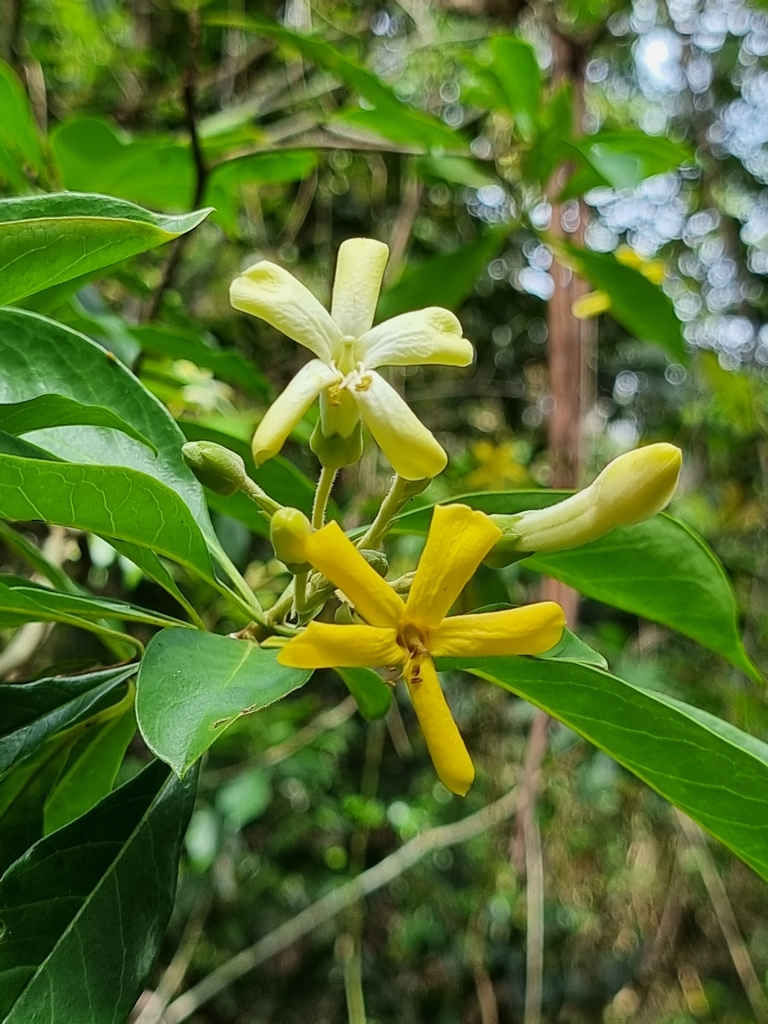
Native frangipani is rated fire resistant, with low-flammability findings and a warning that it can burn after drying.
Tasmania Fire Service includes Hymenosporum flavum in its Low Flammability group. Its brochure allows plants in that group within a Building Protection Zone and suggests them as replacements for more flammable plants. This is a planting recommendation tied to the service's landscape zones.
The Australian Plants Society Victoria supplies the distinction that matters during a fire. It calls native frangipani fire-retardant: plants in that class resist the initial flame wave but can burn once dried out. A favorable planting choice can therefore still become fuel as its condition changes.
Lesley Corbett's research summary describes the tree's flammability as very low to extremely low. Her advice for these evergreen plantings includes removing ground litter and dead branches, and keeping shrubs from forming a route into tree canopies. Wildlife Queensland also recommends native frangipani for fire-prone backyards. The recurring support makes it a useful candidate, with the drying warning and maintenance conditions kept together.
Form
tree
Region
Queensland, Australia; Tasmania, Australia; Victoria, Australia
Rated in
Global compilation (published in Australia); Queensland, Australia; Tasmania, Australia; Victoria, Australia
On this lot
1. Fire evidence and conditions
Fire evidence
Fire-resistant — location does not change the cited classification.
Global compilation (published in Australia); Queensland, Australia; Tasmania, Australia; Victoria, Australia
Maintenance
2. Why this plant is relevant here
State distribution
Native range
Introduced / established
USDA hardiness
3. Legal, ecological, and broader status
Legal-list status
Seed-list status
Reported invasive here
Broader regional context
Federal context
How to read this page
The status above is computed from the cited rows below: independent recommendations can support a fire-resistant result, an avoid row can produce keep-away, and disagreement stays visible as conflict. Placement notes preserve each source’s own scheme rather than translating unlike rules into one scale. This is evidence about a plant, not permission to plant it in every part of the defensible space; Zone 0 remains noncombustible.
Where its sources say to plant it
Placement rules below use each source's own distances or named zones, tied to its rating.
They are not interchangeable with the directory's current Zone 0 guidance.
Fire Resisting Garden Plants for the Urban Fringe and Rur…: acceptable in the Building Protection Zone [Texas Building Protection Zone] (with its recommendation)
Protect your home and wildlife: Top fire-resistant native plants for Queensland [wildlife-qld-article-section] (with its recommendation)
The evidence
Grouped by what each source concluded. Primary evidence rated the plant itself
(a lab, field program, or original curation); corroboration compiled or
republished another source's rating and resolves to its root lineage.